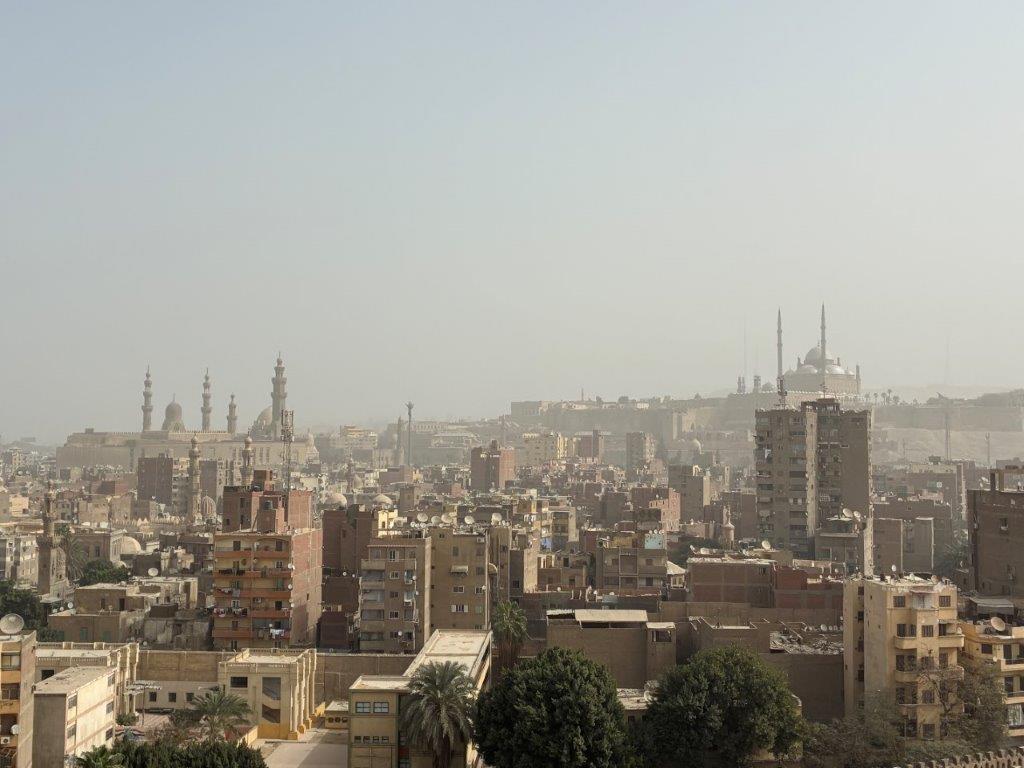
Cairo is a very busy city. The roads of Egypt’s capital are congested with cars whose drivers relentlessly blast their horns. Tuk tuk drivers careen precariously through narrow streets where cars can’t go, weaving around people carrying huge trays of freshly baked bread. But amongst the Cairo chaos, there are some incredible cultural sights to see and experiences to be enjoyed. My friend and I decided to stay in a hotel overlooking the pyramids in quieter Giza. But here’s how we spent a day in the city centre with some tips to help you navigate crazy Cairo.
 Getting to the city centre
Public transport is fairly limited in Cairo. There is a metro, but its three lines didn’t link up the places we wanted to visit. There are very cheap microbuses too, but they looked crowded and very unsafe! So we used Uber to order a taxi from our Giza hotel. The Uber app works fine, but drivers have a tendency to accept jobs and then cancel when a better one comes up. So it’s best to factor in time for that possibility. We were told the drivers are more likely to accept cash jobs, so I changed my Uber settings, but it didn’t seem to make much difference. You can, of course, always find someone offering a taxi on the street, but negotiating a price can be a hassle, and the cars sometimes look pretty unroadworthy. So I think Uber or another ride-hailing app is the best option.
Visiting the most historic mosque in Cairo
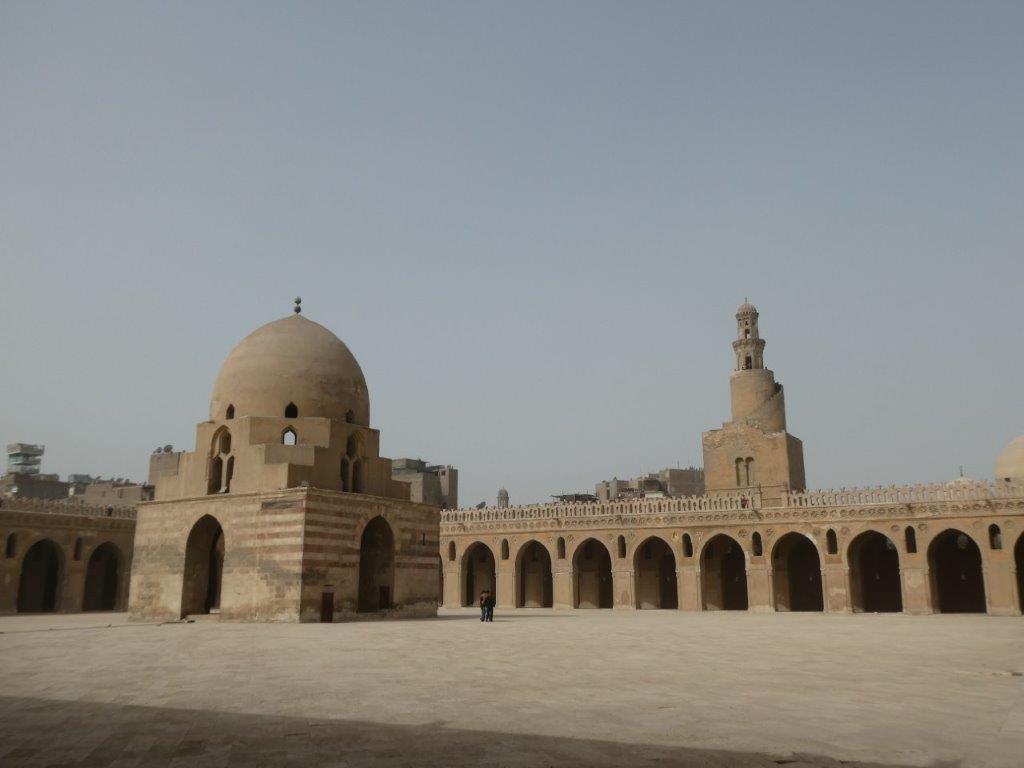
We were headed to Old Cairo, otherwise known as the Islamic Quarter. Our first visit was to the Mosque of Ibn Tulun, the oldest still functioning mosque in Cairo. There was no entry fee, but the ‘shoe man’ expected a larger-than-usual contribution. All of the attendants who look after your shoes in a mosque expect baksheesh (aka tips), so be sure to always carry small notes.
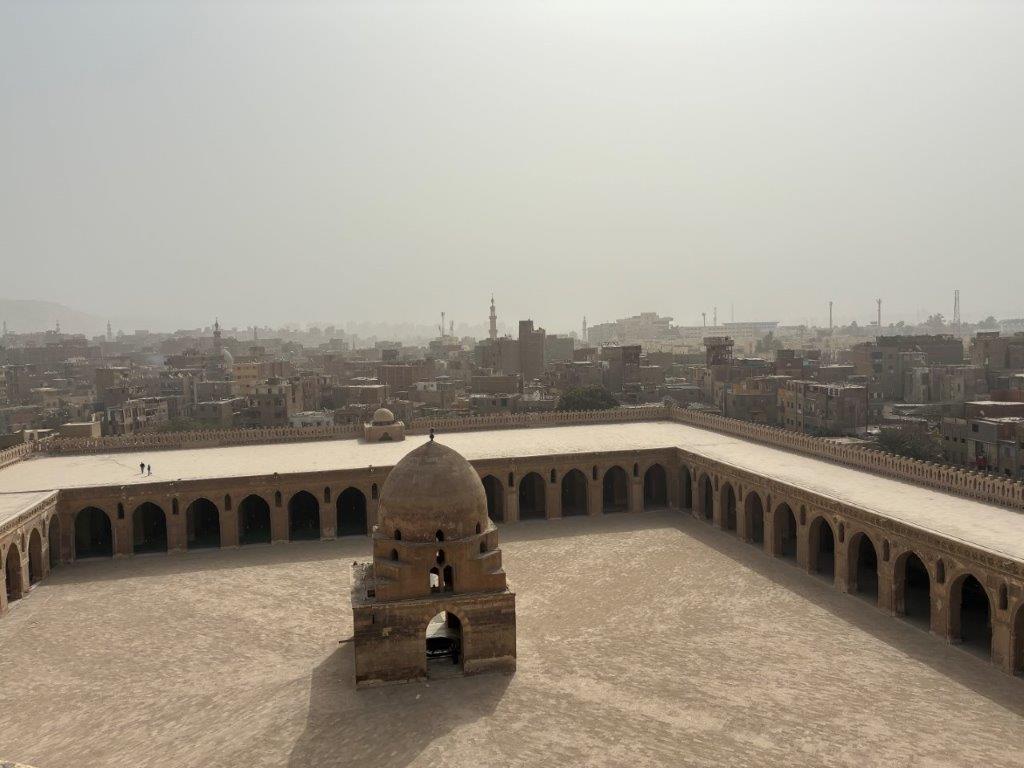
The mosque is huge, spanning 2.5 hectares and is well worth seeing. Its high walls are distinctive for the crenellations at the top, which look just like cut-out paper dolls. After visiting the large central courtyard, you can go back outside to walk around to the foot of the minaret. A climb up its spiral staircase rewards you with a view of the entire complex as well as far-reaching views of Cairo.
 Exploring the Mosque-Madrasa of Sultan Hassan
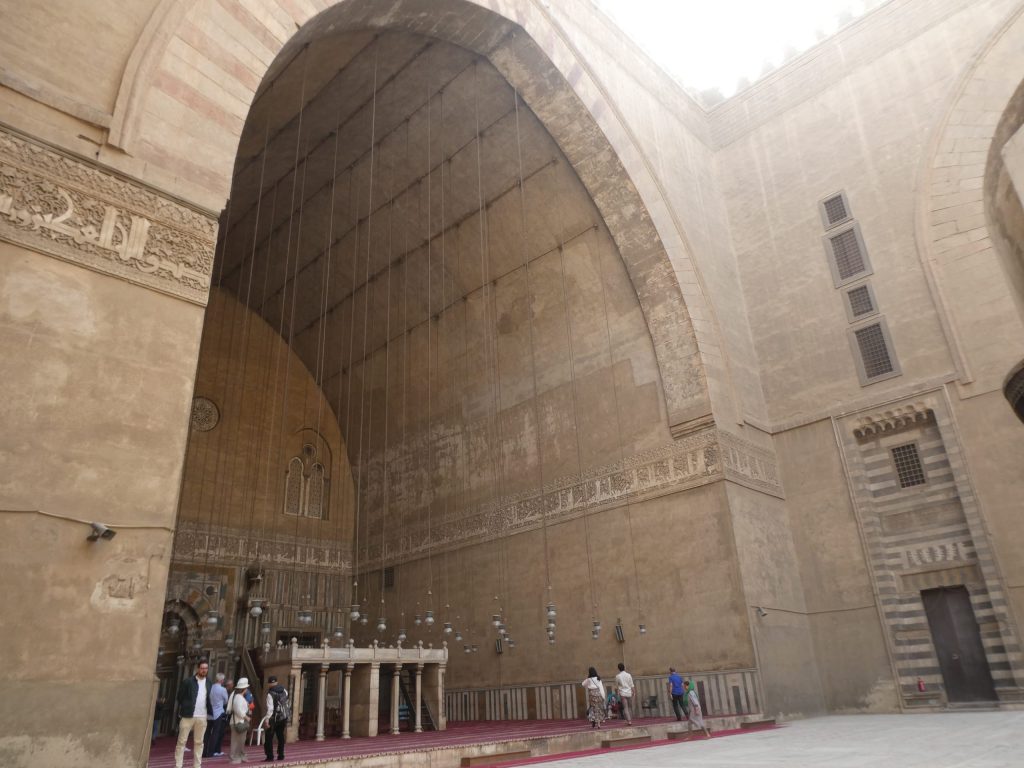
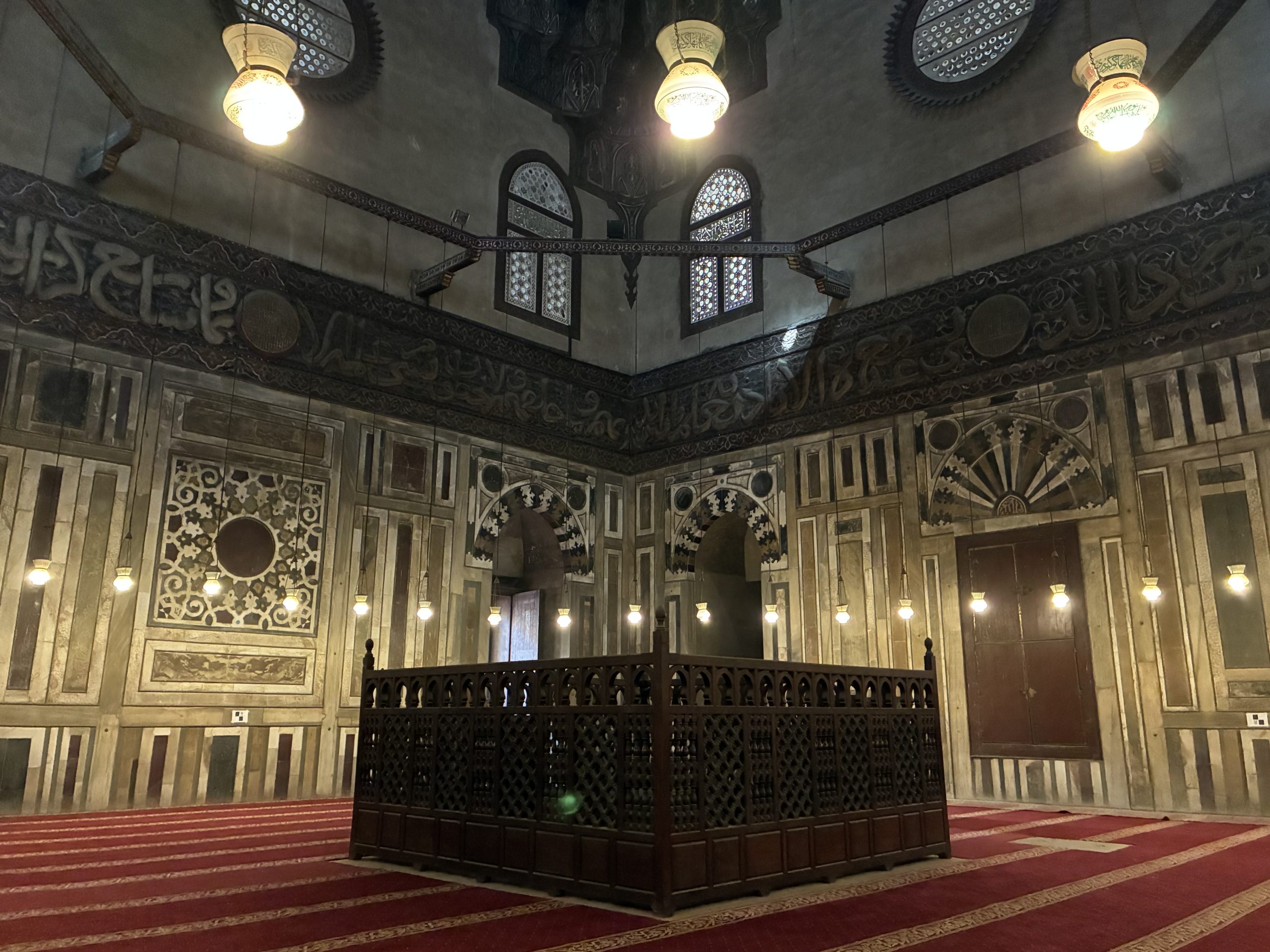
A short walk from Ibn Tulun is the more elegant Mosque-Madrasa of Sultan Hassan. It’s said to be the best example of Mamluk architecture in the city. The Mamluks were an enslaved caste of generals who overthrew the ruling class in 1250 and remained in charge of Egypt until 1517. They brought new architectural styles from Central and Eastern Europe, and many examples remain in Cairo. The Sultan Hassan mosque has a large central courtyard with an ornate fountain and is surrounded by four large iwans (vaulted chambers open on one side). Each iwan is dedicated to teaching one of the four main schools of Sunni Islam and has a curtain of hanging glass lamps. It’s an impressive sight, as is the Sultan’s beautiful mausoleum.
 Shopping in Khan El Khalili
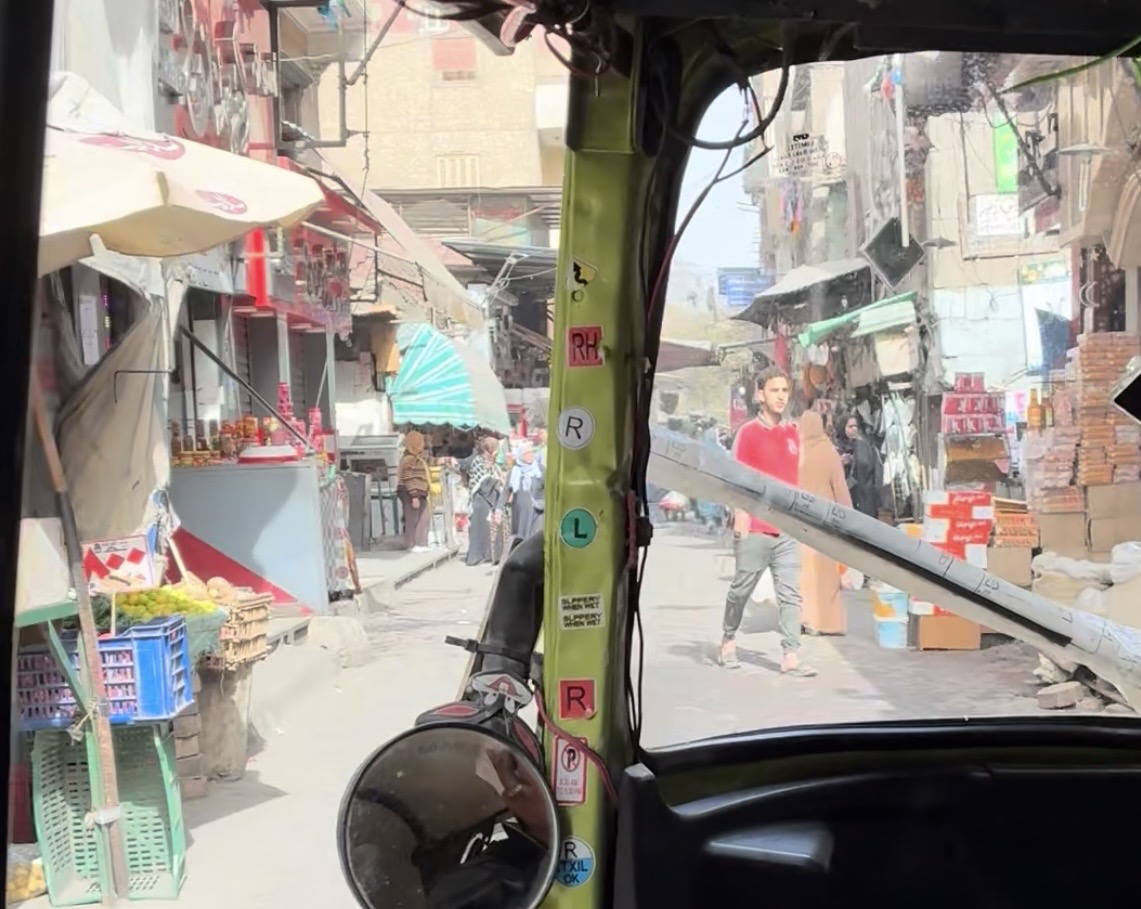
We originally planned to walk to Khan El Khalili market and visit the Amir Khayrbak Funerary Complex and Al-Azhar Mosque on route. But as I mentioned, getting around Cairo is slow, so as we had a food tour booked later in the day, our plans needed regular adjustment. In this case, we decided to hop in a tuk-tuk and to avoid the traffic, the driver took us down some back streets. It was a bit hairy, but we saw a great slice of city life.
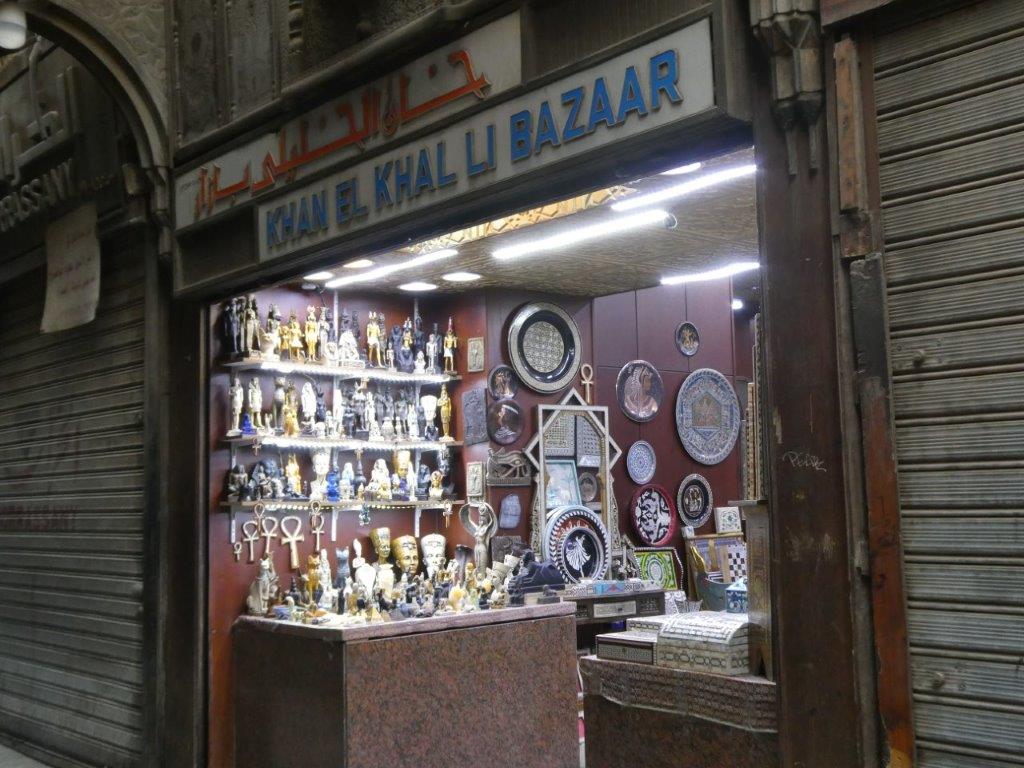
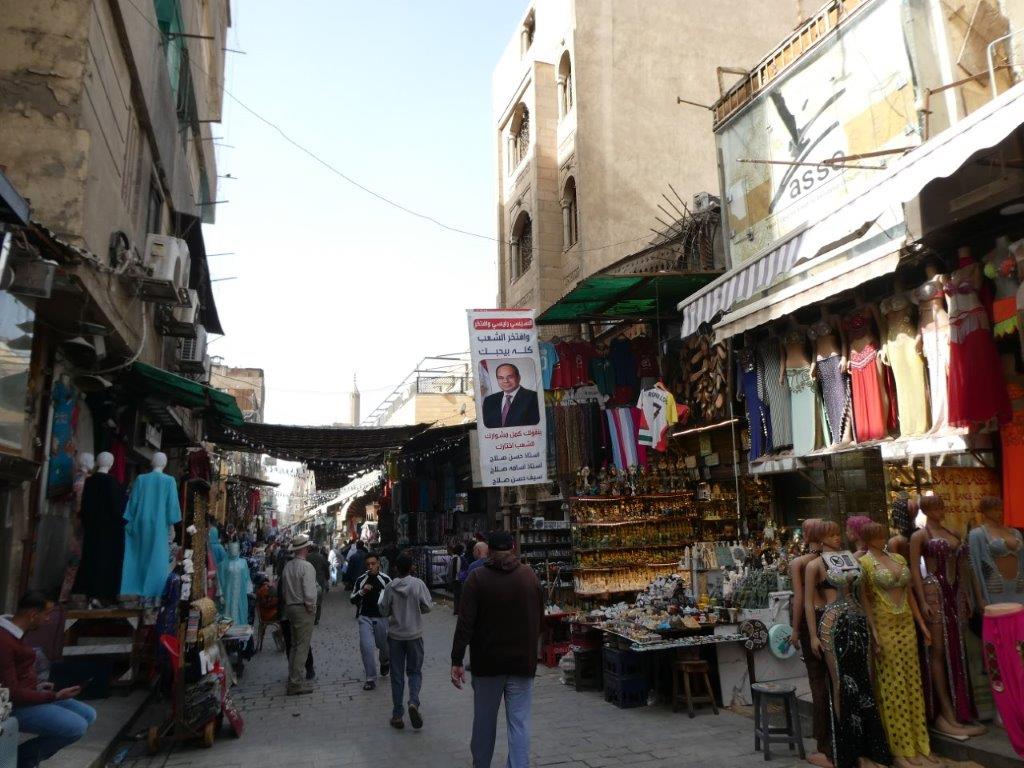
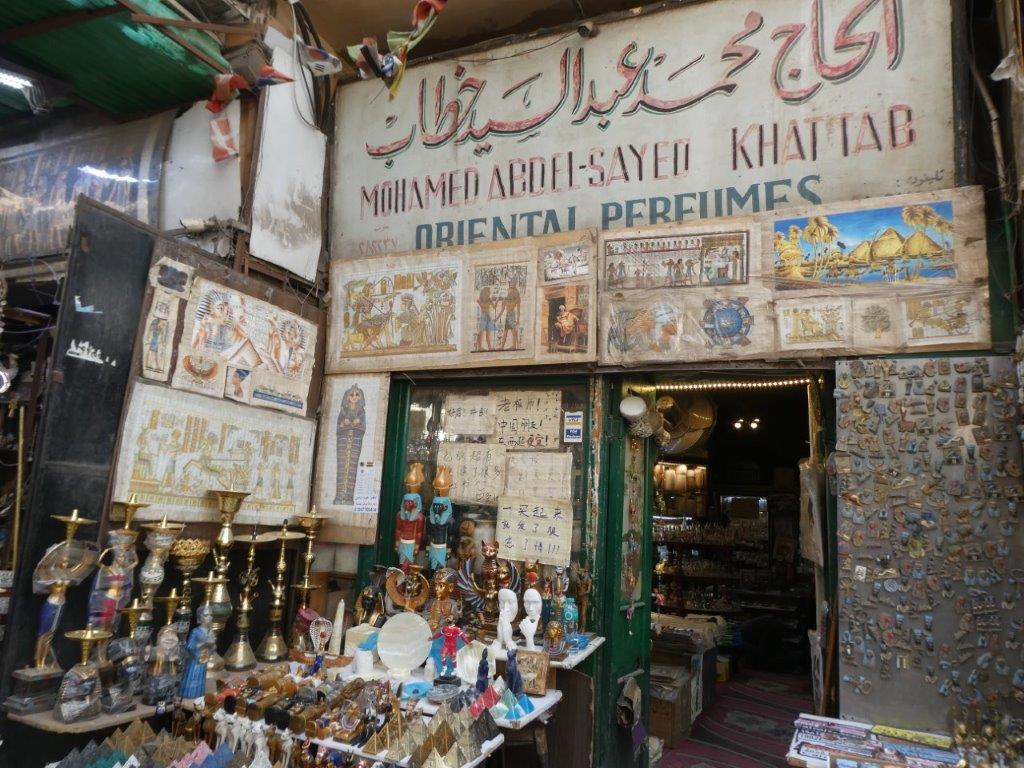
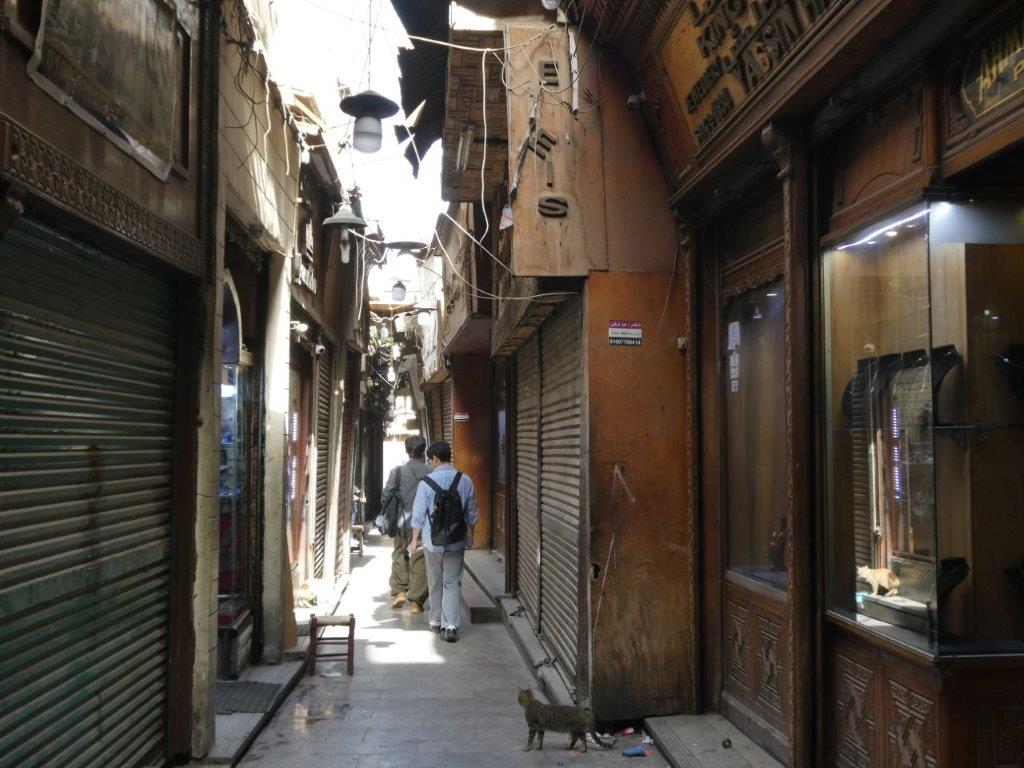
Cairo’s medieval market, Khan El Khalili, dates back to the 14th century and is a maze of narrow streets and courtyards packed with shops and stalls. Handcrafted products from rugs and intricately carved woodwork to ceramics and jewellery are on offer, alongside souvenirs galore. Shops open from 10am until late except on Fridays and Sundays when they open at noon or not at all. If you need a break, El Fishawy, Cairo’s oldest coffeehouse, is down a narrow passage off Sekat At Badistan.
 Discovering Cairo’s grandest old thoroughfare
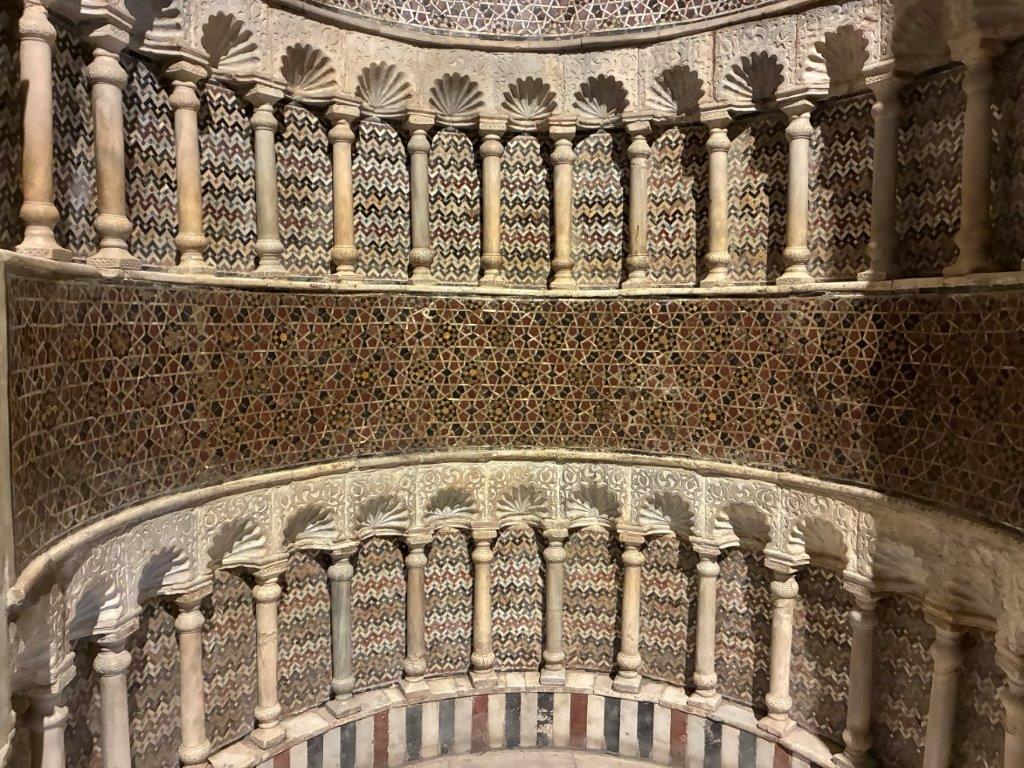
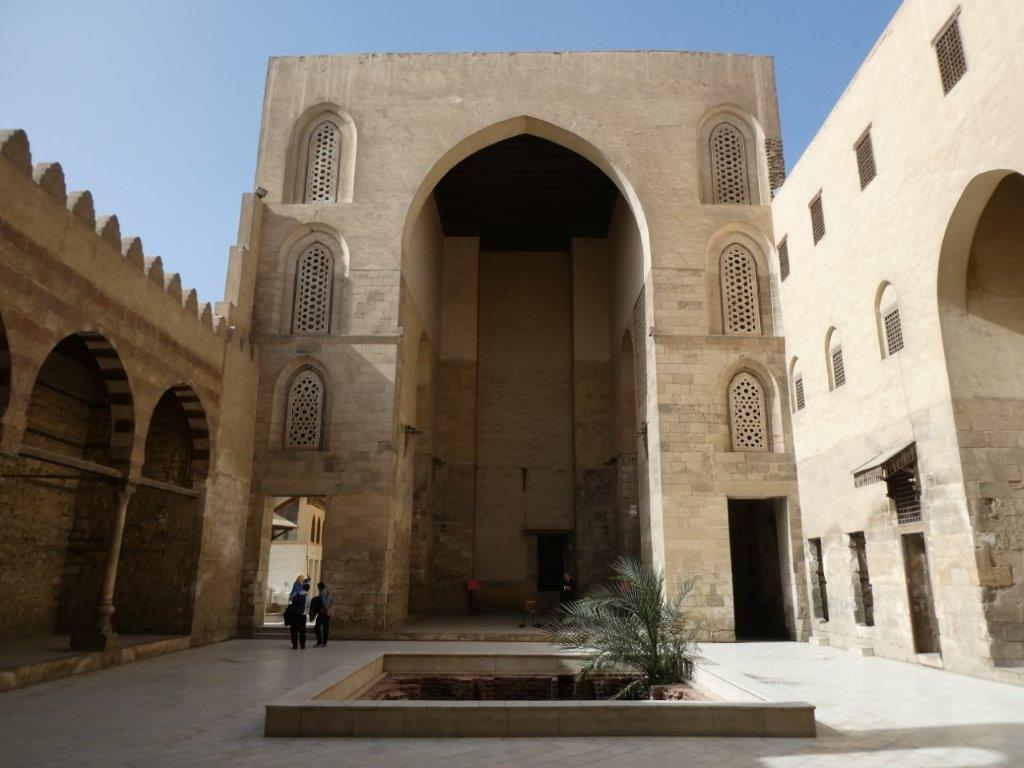
Just north of the market, you can explore the Palace Walk section of Sharia Al-Muizz Li-Din Allah, a once-grand street that was only used by Cairo’s elite. Also known as El Moez Street, it has an incredible collection of medieval Islamic architecture. There are lots of mosques, madrasas and mausoleums to wander in and out of, so we bought the multisite ticket in advance online. Just search for El Moez Street on the website.
The most impressive sight to see is the Mausoleum & Madrasa of Qalawun, a large religious complex built by Sultan Qalawun, who founded the Mamluk dynasty. As well as a beautiful mausoleum and a madrasa, the complex also included a hospital that was one of the most cutting-edge medical facilities of its era.
 Navigating our way to El-Tahrir Square
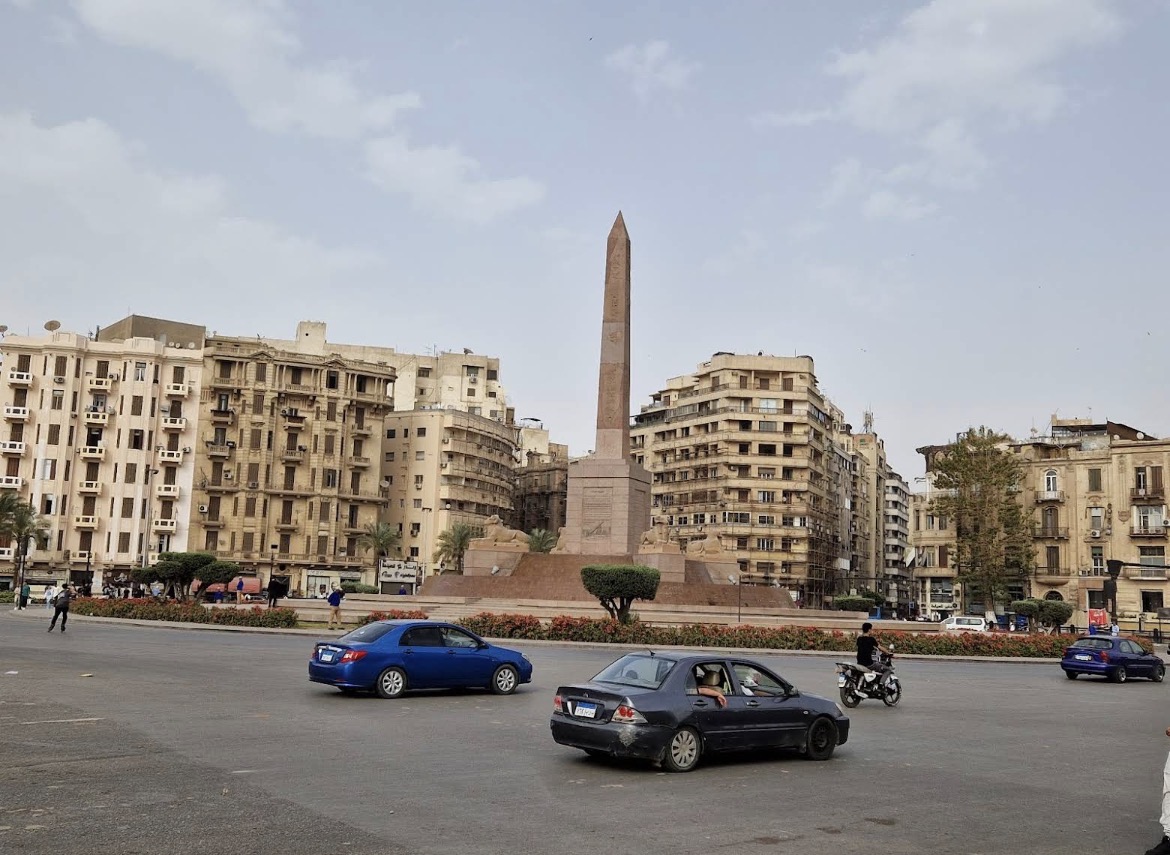
To meet our food tour group, we needed to head to El-Tahrir, the square that sits at the centre of Downtown Cairo. Famously, it was the site of huge demonstrations during the Arab Spring uprisings when Egyptians wanted to oust President Mubarak. He was forced to resign after 18 days of protests in El-Tahrir Square and around the country.
However, getting there was not easy! There was gridlock in the streets around Khan El Khalili, so getting an Uber proved impossible. My advice is to do as we did and start walking. Once we cleared the worst of the traffic, a tuk-tuk pulled up alongside us. The driver had clearly spotted our need for urgency and royally fleeced us on the price. But it was still cheaper than cabs at home, so it’s all relative, and we were happy to pay it. Until we realised tuk-tuks couldn’t go all the way to the square (we think because of their emissions), so we had to walk the last five minutes. Another learning, but we got there and only 15 minutes late!
 Getting a taste of Egyptian food on the Downtown Cairo Food Tour
Getting to our food tour meeting point was well worth the effort, as it was excellent. My friend and I often book food tours at the start of the trip. We find it a good way to try local foods and venture into eateries that we might not be brave enough to try on our own. The Downtown Cairo Food Tour is run by Bellies en-Route, a female-owned company with expert foodie guides. They aim to introduce people to Egypt through food, showcasing classic dishes and visiting local family-run cafes and food stands.
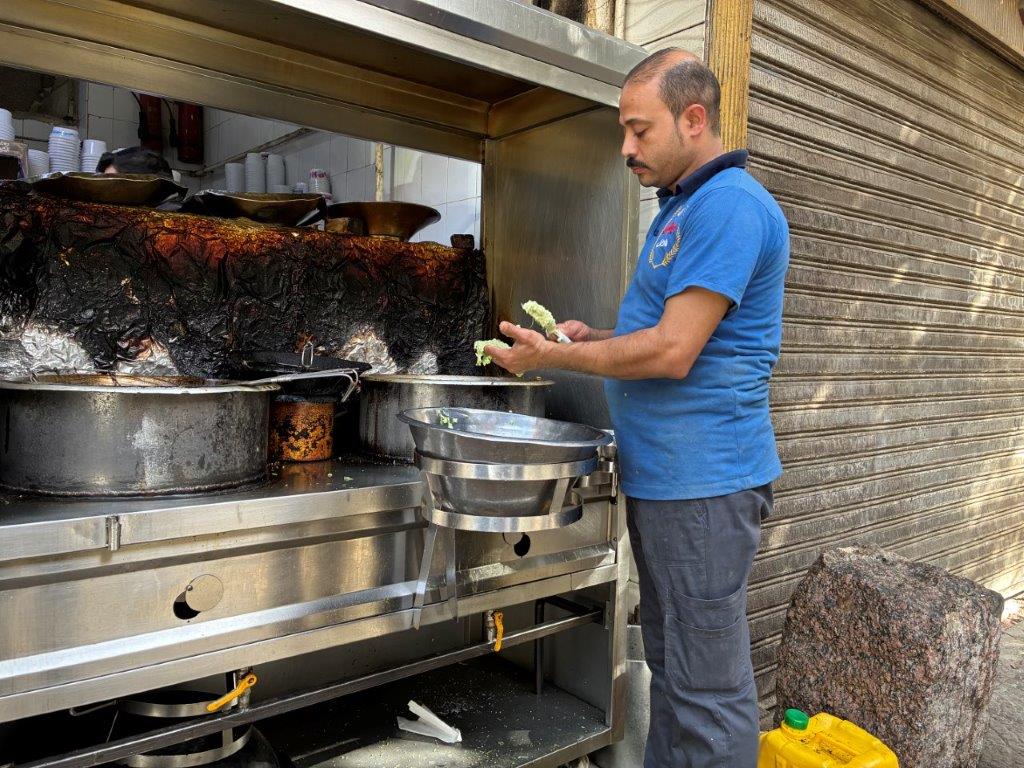
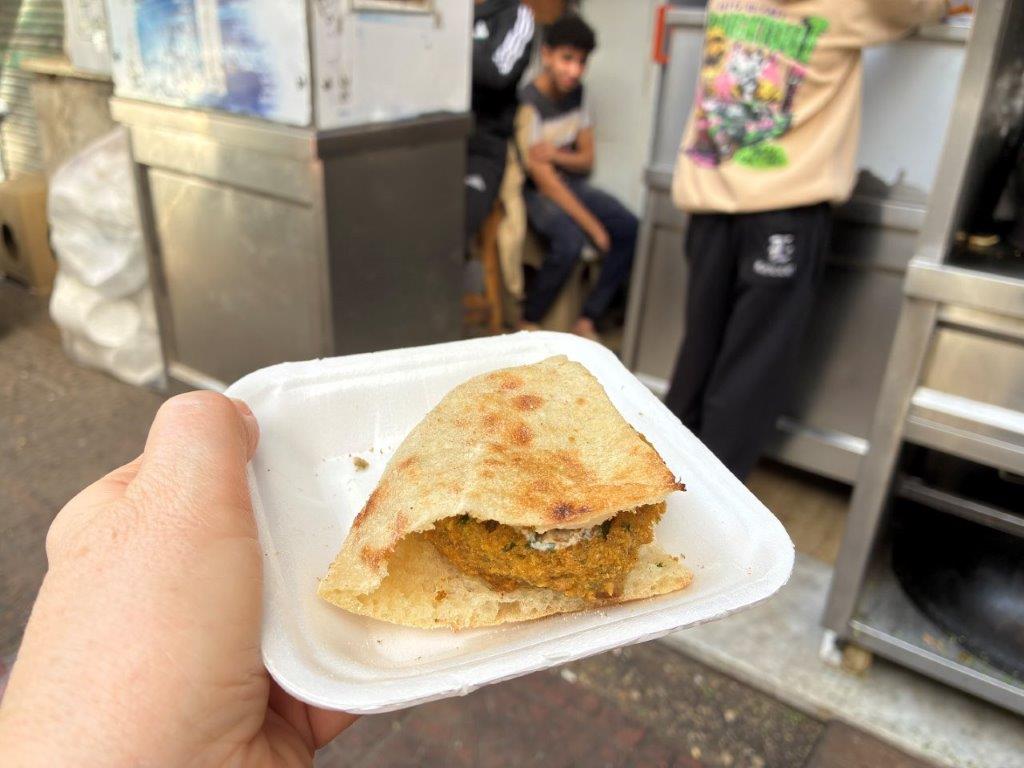
Our first stop was to try Egyptian Taamiya, aka falafel. But it’s different to normal falafel because it’s always made with fava beans rather than chickpeas. We watched as the beans were thrown into a machine with fresh herbs, onions, leeks, and spices. Once ready, the batter was shaped into little patties and fried, then served in bread. It was delicious, and I’m not normally a lover of falafel!
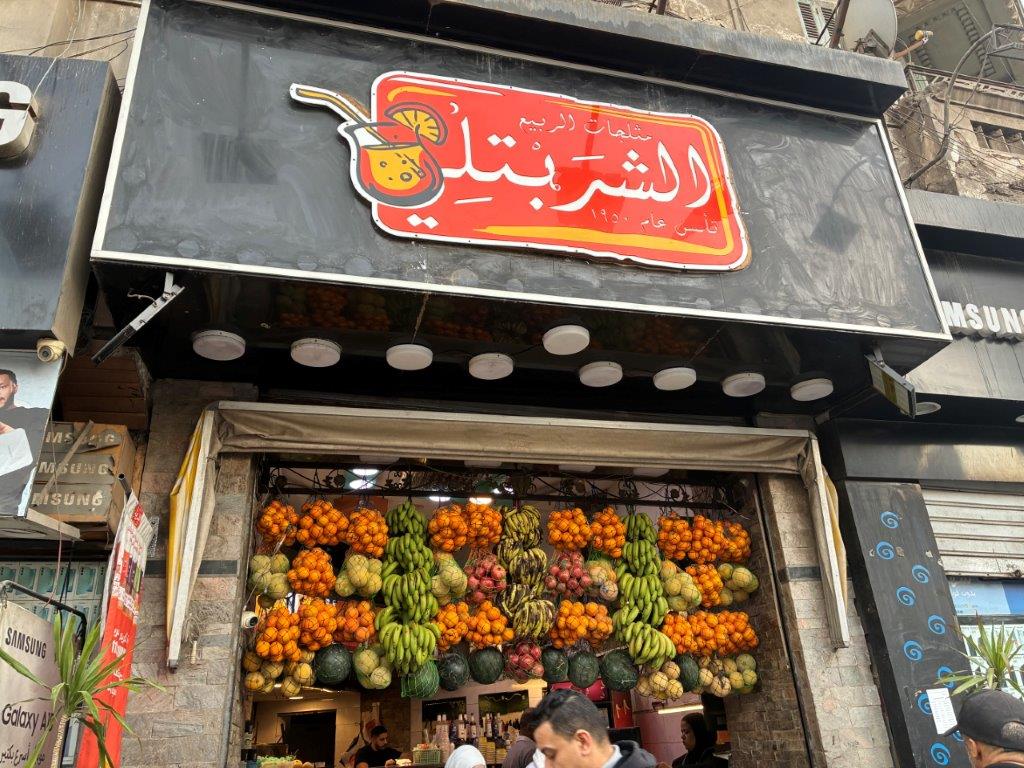
 After that, we walked around Downtown Cairo, stopping off at a variety of places to eat and drink. It included tasting Arabic coffee, which looks more like tea because it’s made with a very lightly roasted bean. And a fun juice tasting at El Sharbatly, where we had to guess the flavours of many different juice shots. Juice bars are a huge part of Egyptian culture due to the heat. Another great stop was Fish & Chips. Needless to say, it was nothing like an English fish and chip shop, and we loved the range of starters we had, accompanied by fish-shaped rice and Molokhiya, an iconic green Egyptian soup made from jute mallow leaves.
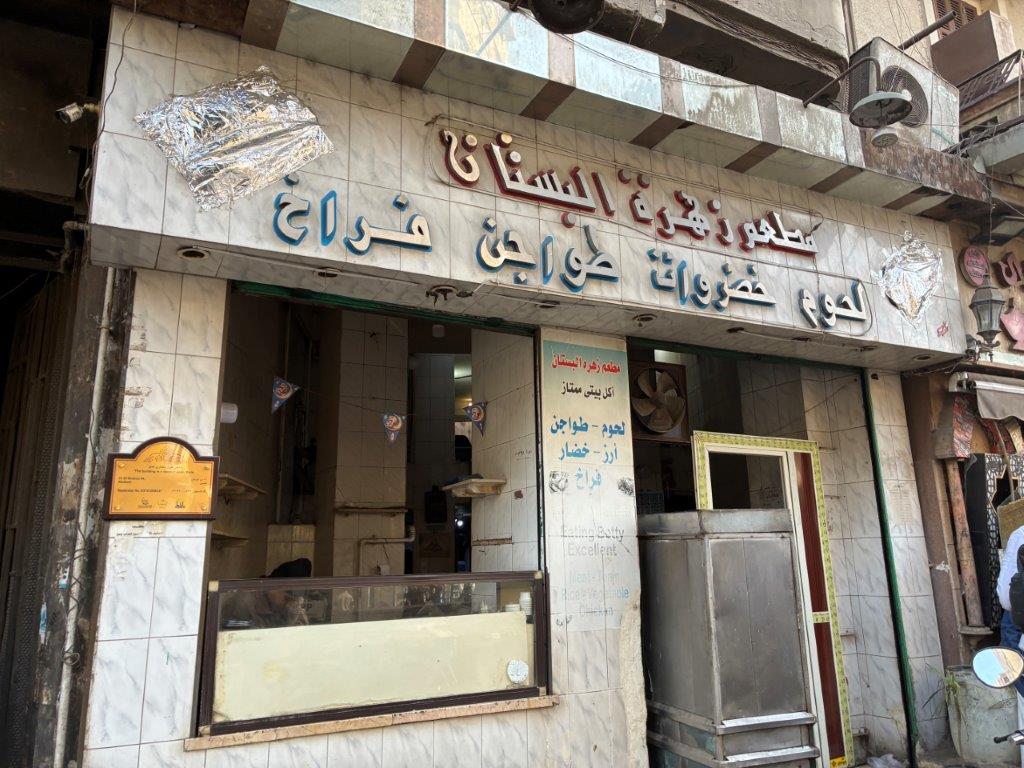
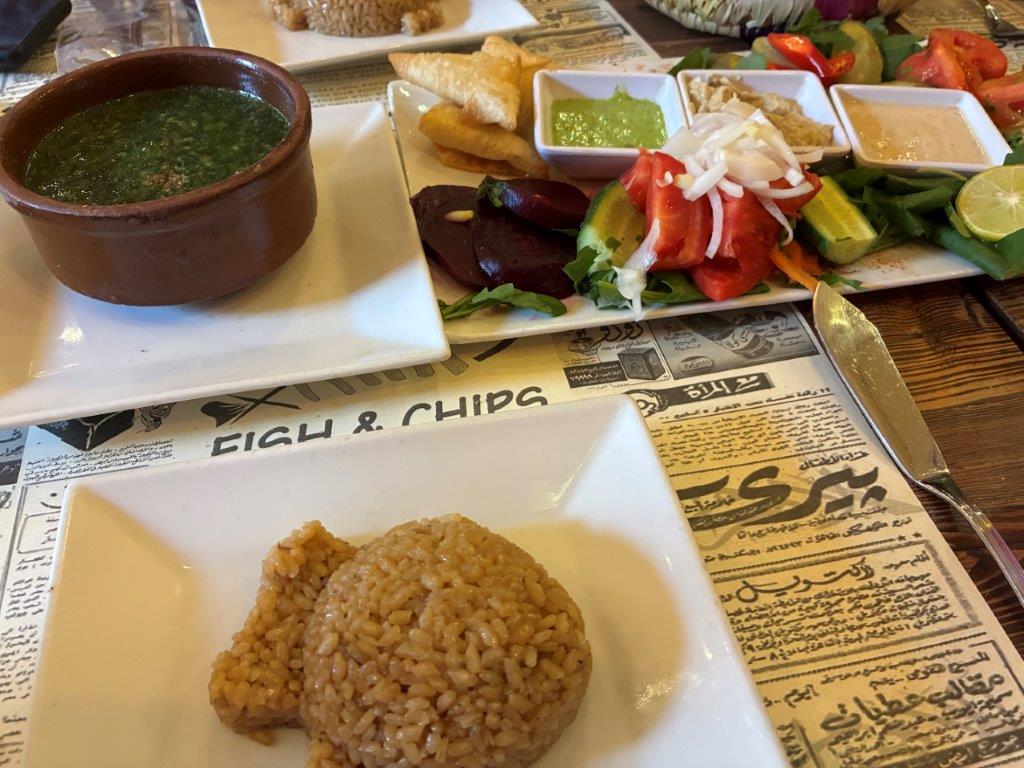 We also went into a cafe for a classic Egyptian meal of vegetable stew and rice. It didn’t really look like a cafe and definitely wasn’t somewhere we would have ventured without a guide. It’s also where we learned that meat in Egypt refers only to lamb and beef, not poultry. My friend and I had told the guide that we don’t eat meat, rather than saying we are vegetarians, as we eat fish. But she thought that meant we would eat the chicken served up at this cafe. Fortunately, it was served alongside the stew, not in it!
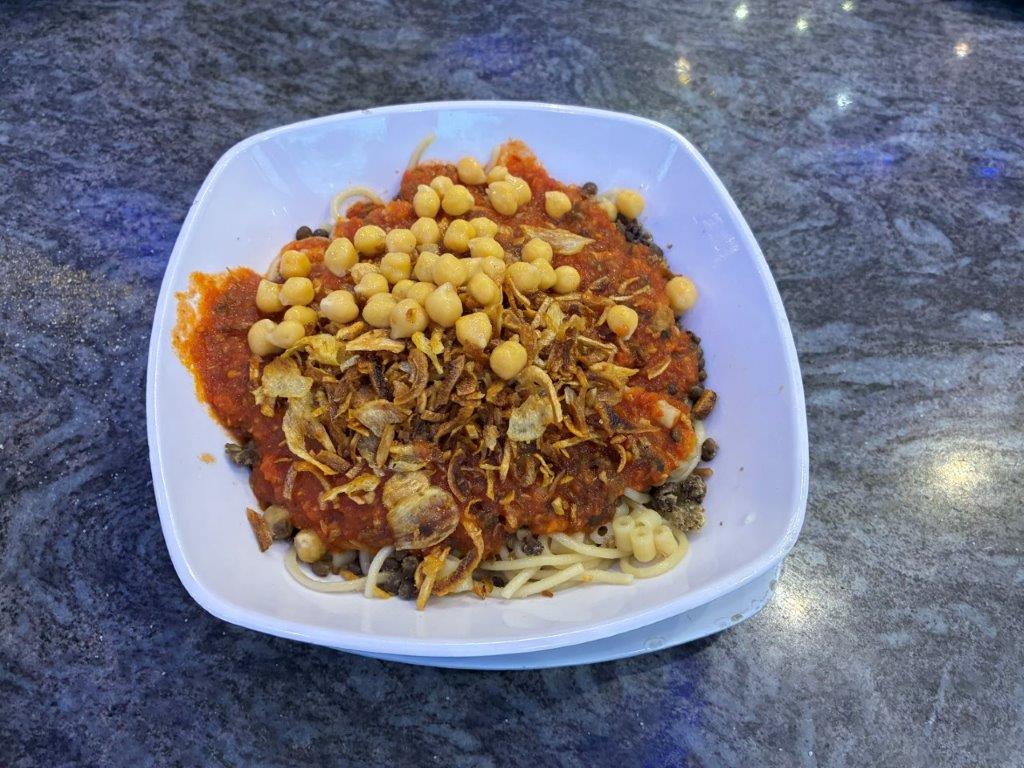
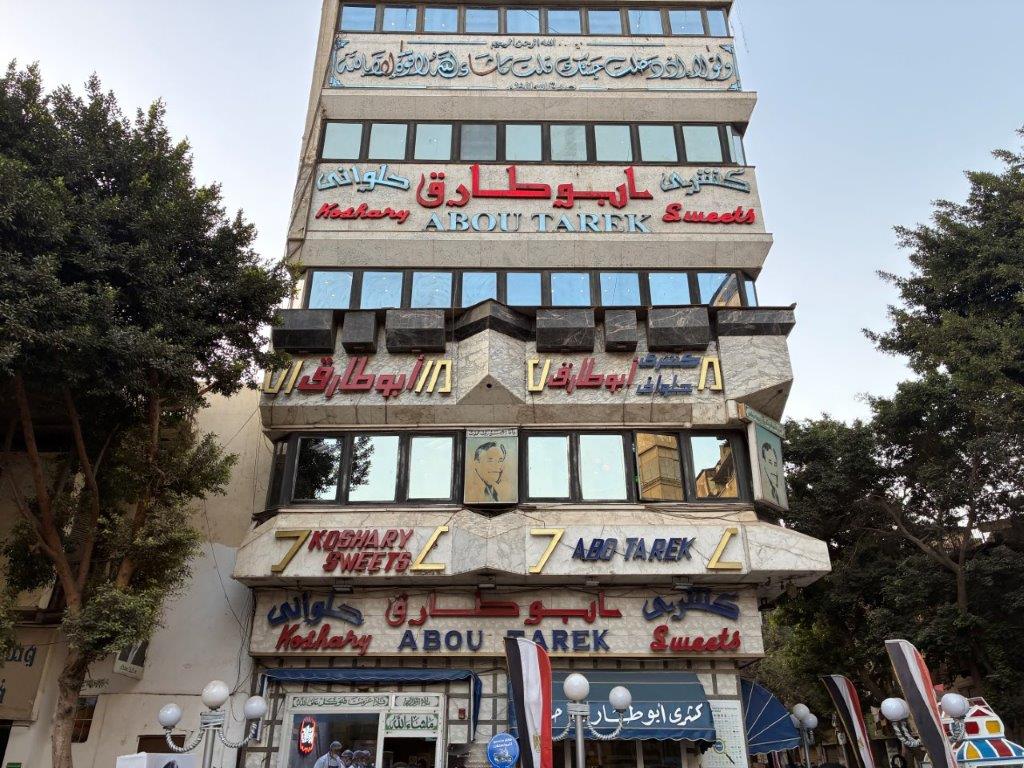
Luckily, Egypt’s favourite food, koshary, is vegetarian, and we loved having it at Abou Tarek, a koshary restaurant spread over five floors. Koshary is made with macaroni, spaghetti, vermicelli, lentils, rice, chickpeas, and fried onions. It’s then topped with tomato sauce and a special garlic vinegar dressing called da’ah. Very filling and very cheap.
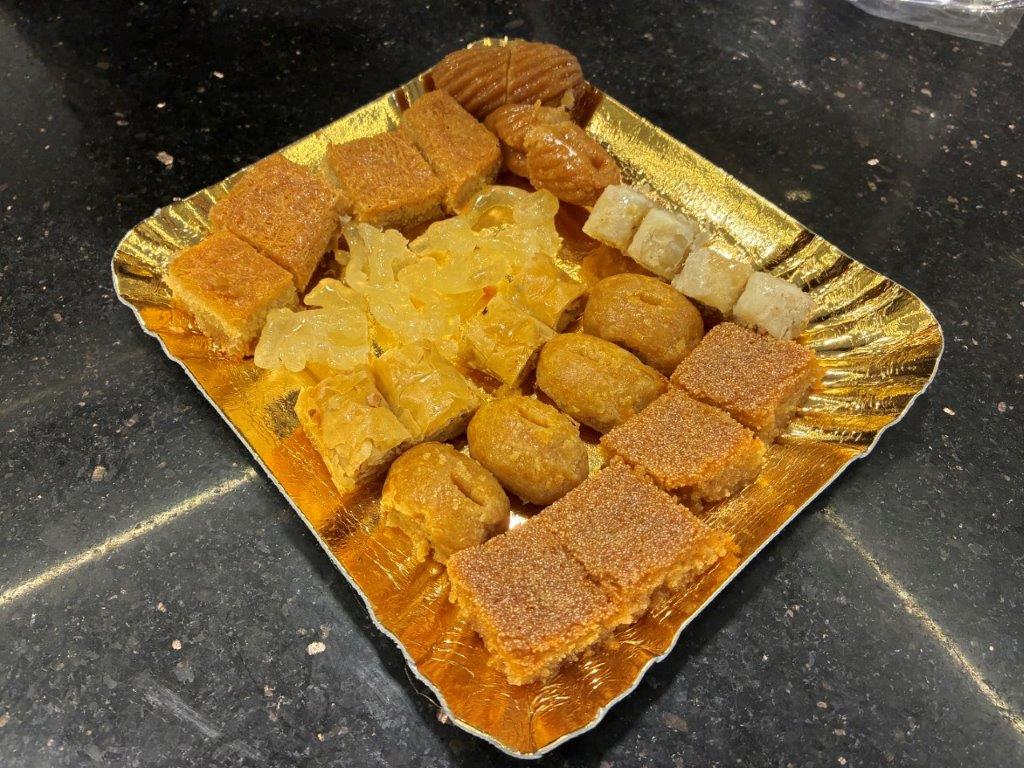
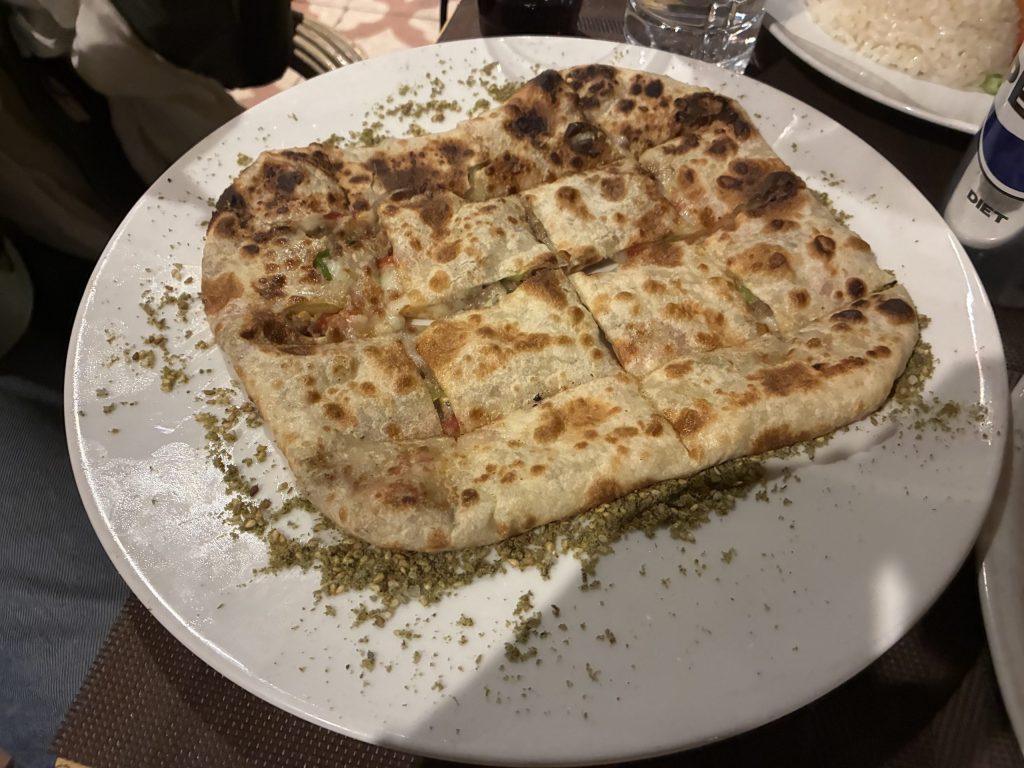
 By the time we reached the dessert stops of the tour, we were feeling pretty full, but we tried a few of the sweet treats offered at El Valero. As with Middle Eastern sweets, they were drenched in sugar syrup, butter or ghee and were extremely sticky, so not my favourites. But we also popped to a stall to try feteer, an Egyptian pastry made with flour, water and lots of ghee. After cooking, the dough is similar to a croissant, and in this case, was topped with sugarcane molasses. It was nice, but the photo below is a feteer I had later in Luxor that was filled with mushrooms and cheese, and it was delicious.
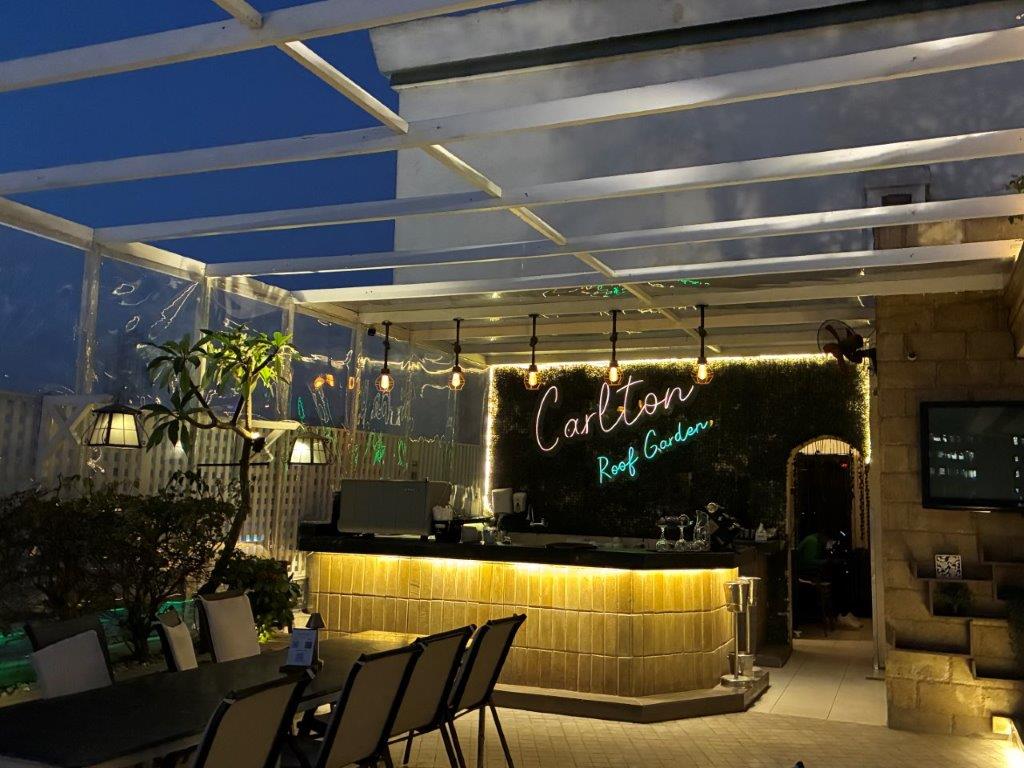
The tour then ended with drinks at the Carlton Roof Garden. It’s at the top of a 1930s hotel and is a great place to get an alcoholic drink in Downtown Cairo. Most Egyptians are Muslim, so alcohol doesn’t tend to be sold at local restaurants. But despite the offer of wine, we went for mint tea to help with digestion!
 Getting a flavour of Downtown Cairo
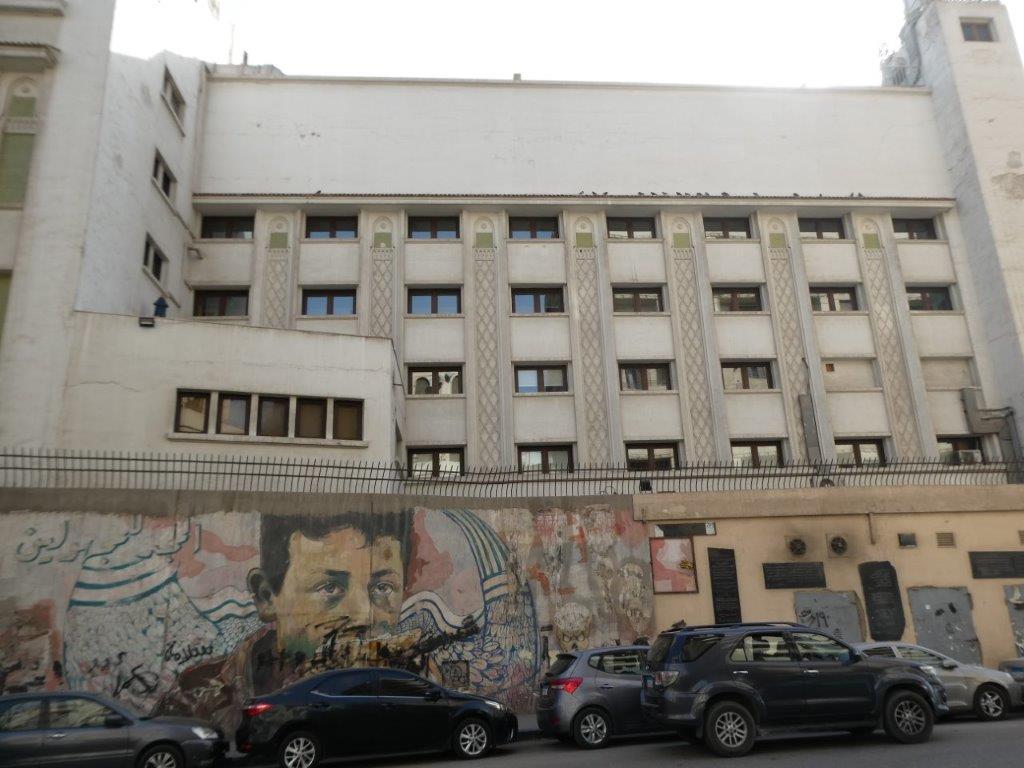
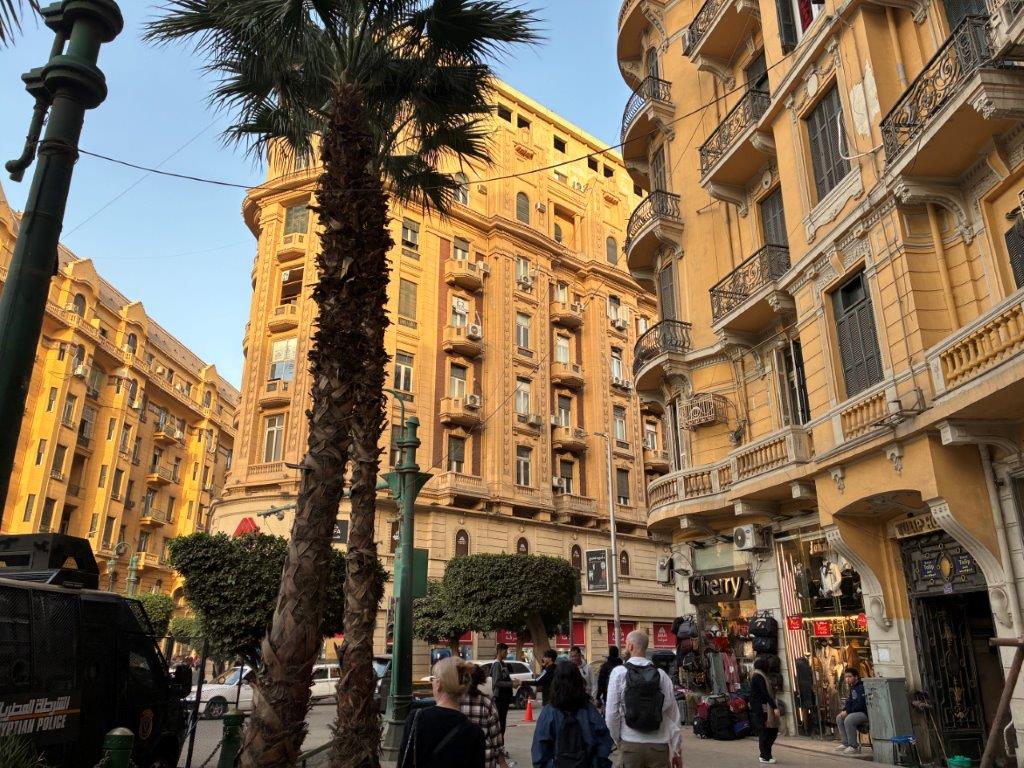
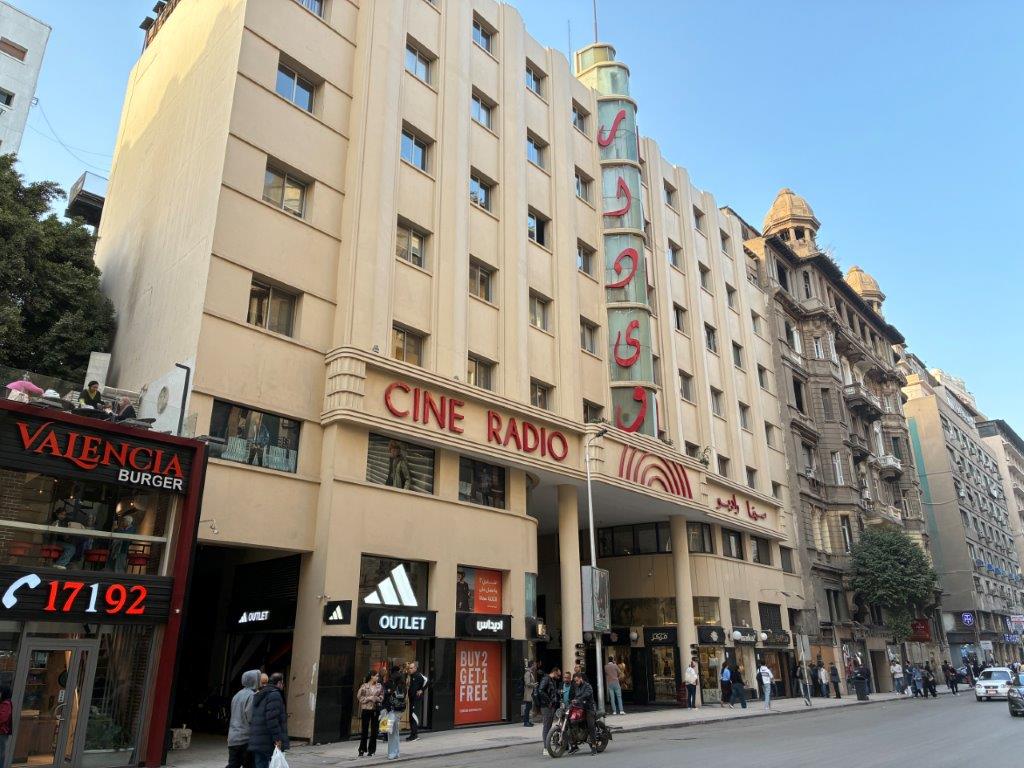
Because we walked between all of the stops on the food tour, we also got to explore the downtown area. That included seeing one of the remaining revolutionary murals on the wall of the American University near El-Tahrir Square. Most were whitewashed or demolished by the government. We also walked through Talaat Harb Square, which is known for its lovely French neoclassical architecture and popped into Cinema Radio (to use the clean toilets!). It was originally built in 1932 and has recently undergone a renovation thanks to a heritage-focused property developer. So it’s now a cultural hub of event and exhibition spaces, restaurants, cafes and shops. And evidently, there are more Downtown Cairo glow-ups to come.
 So that’s how we spent a day in central Cairo, and while there is certainly plenty more to see and do, we weren’t sure we’d have wanted to spend much longer there. We were quite pleased to get back in an Uber and head across the Nile to our Giza hotel, ready for the following day’s visits to the pyramids and the new Grand Egyptian Museum. Watch this space for a post about that very soon. I’ll be adding that and more posts about my trip to the Egypt section of my blog.
Discover more from TRAVEL COCKTAIL
Subscribe to get the latest posts sent to your email.