Abu Simbel is one of Egypt’s most iconic sights, but is it really worth the lengthy round trip from Aswan? In my opinion, yes, it is. Here’s why I think so and why I don’t think hiring an on-site guide is worthwhile.
What is Abu Simbel?
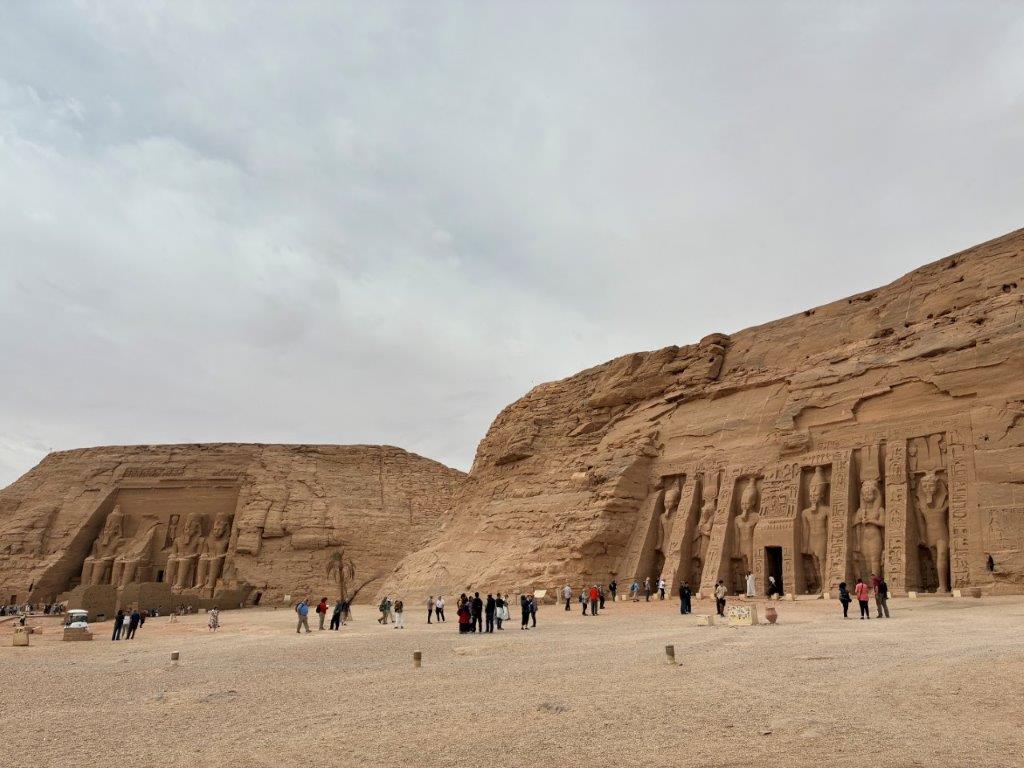
The Temples of Abu Simbel are one of the most spectacular sights in Egypt. The two temples are located in a stunning setting overlooking Lake Nasser, about 140 miles south of Aswan and close to the border with Sudan. The Great Temple was built by the famous pharaoh Ramses II between 1274 and 1244 BCE as a magnificent monument to himself. Next to it, Ramses built the smaller Temple of Hathor, dedicated to his favoured wife Nefertari.
The temples were originally carved out of a mountain on the west bank of the River Nile. But when plans for the Aswan High Dam were finalised in the 1950s, it became clear the temples would be lost. So a UNESCO rescue campaign was initiated to move the monuments piece by piece, 65m above their original location. Each was given its own concrete dome covered in sand and rocks to give the appearance of the original cliffs. An extraordinary feat of engineering that undoubtedly matched the original construction!
 How to get to Abu Simbel
There are a few different options for getting to Abu Simbel. If you have plenty of time and money, some companies run cruises from Aswan to Lake Nassar culminating in a visit to the Abu Simbel temples. I’m sure it would be an amazing approach, akin to Death on the Nile.
There are also flights from Aswan to Abu Simbel, but these are quite costly, and there’s limited availability. You also need to get from the tiny airport to the site 5km away, so it’s best to book it as a package. As a result, most people travel to Abu Simbel by road from Aswan, either on a group tour or in a private car. The latter is a bit quicker, taking around 3.5 hours each way.
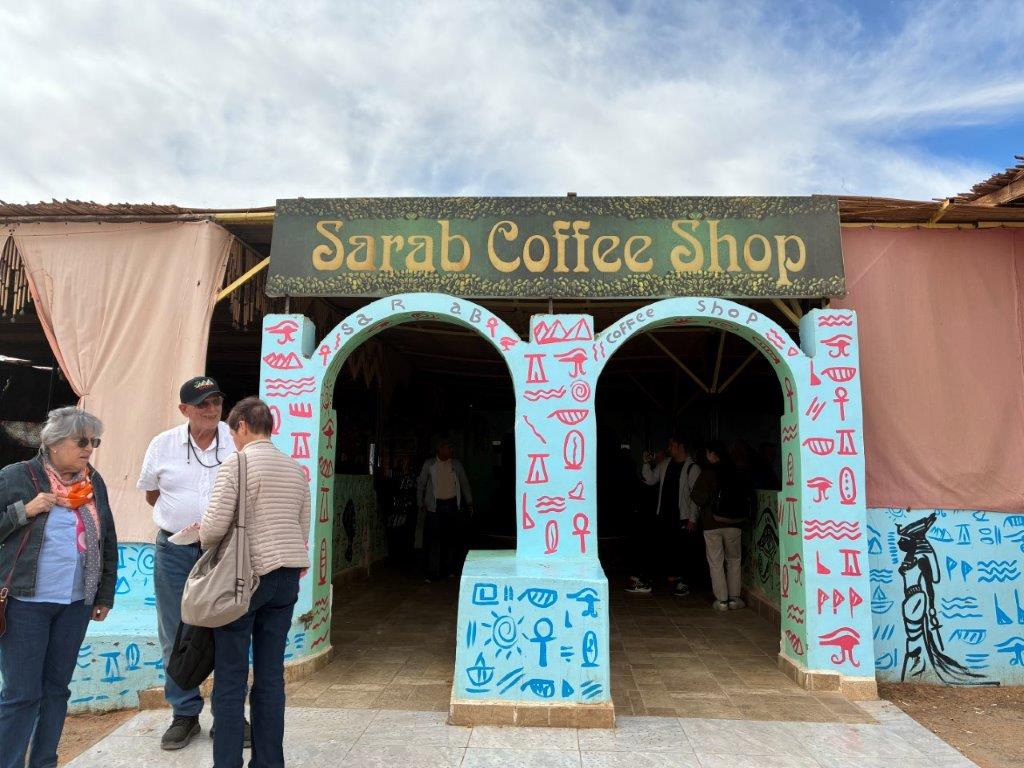
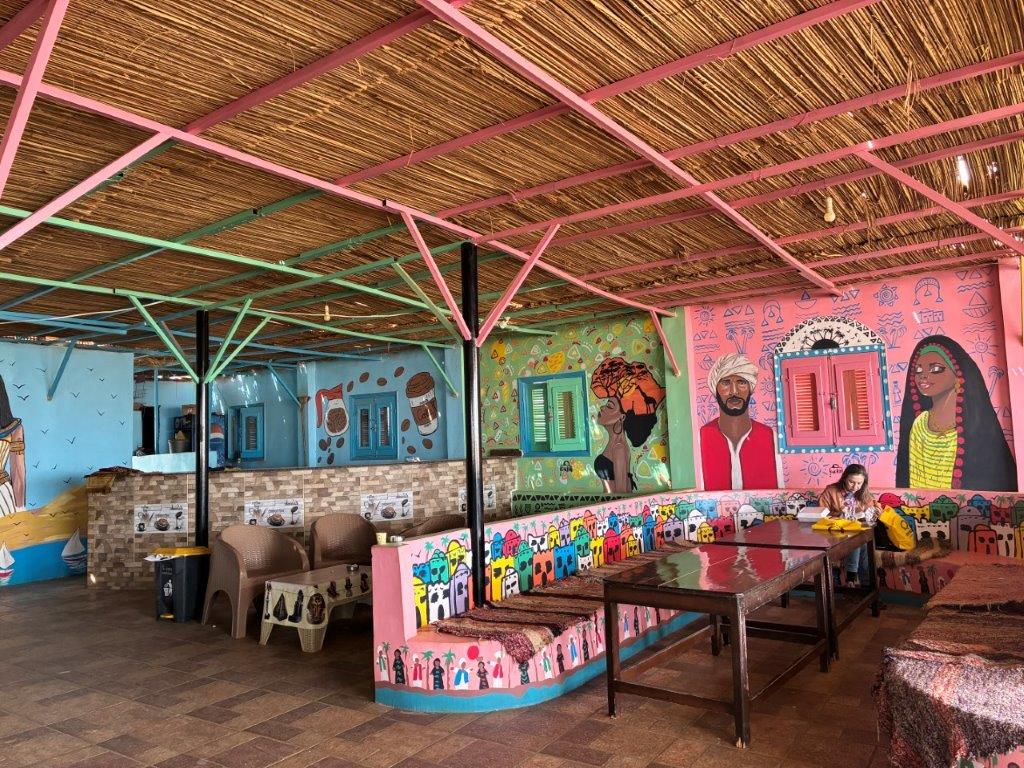
My friend and I like the flexibility of not being in a group, so we chose the private car option. We left Aswan at 7.00am and arrived around 10.30am, when we found the site wasn’t as busy as we expected. En route, we’d noticed quite a lot of coaches going back towards Aswan. We later learned from a friend we met on our travels that he went down to Abu Simbel the day before his visit, hoping to beat the crowds with an early start. He found the opposite was true, as there was already a multitude of coaches on the site when he arrived at 6.00am! So we were glad we hadn’t spent the night in Abu Simbel. And although our day trip journeys were pretty long, we found the time went by quickly. We also stopped off at a large coffee shop so that both ourselves and, more importantly, the driver could have a break and use the clean bathrooms.
I booked through Viator, but later realised it would have been cheaper to book directly with the company which provided the tour, Emo Tours Egypt. One thing to note is that road trips require a police permit. The driver will arrange this, and in our case, he picked up the paperwork at his office after collecting us. So you need to book at least one day in advance.
Do you need a tour guide for Abu Simbel?
There’s a range of options offered when you book a private tour, and we chose the one that included the entry fees and a guide. But I wouldn’t recommend it. Guides are not allowed inside the temples, and we found ourselves on what felt like a ‘conveyor belt’. The guide met us once we were inside the complex, walked us down to the temple, talked through a pack of photos of the Ramses II temple at great speed and then left us to it. He didn’t meet us before we went into the Temple of Hathor, so we only heard about what was inside that one after we came out! And we spotted him with at least two other sets of visitors, hence the conveyor belt analogy.
Our view was that we would have been better off just reading about the temples in our guidebooks or online. The guide’s assistant did get our tickets for us, but we could have easily bought them in advance online or from the ticket office. I imagine if you go on a coach tour, you might get a better guide who travels with you. But if you opt for a private transfer, then the DIY approach is sufficient.
The Great Temple of Ramses II
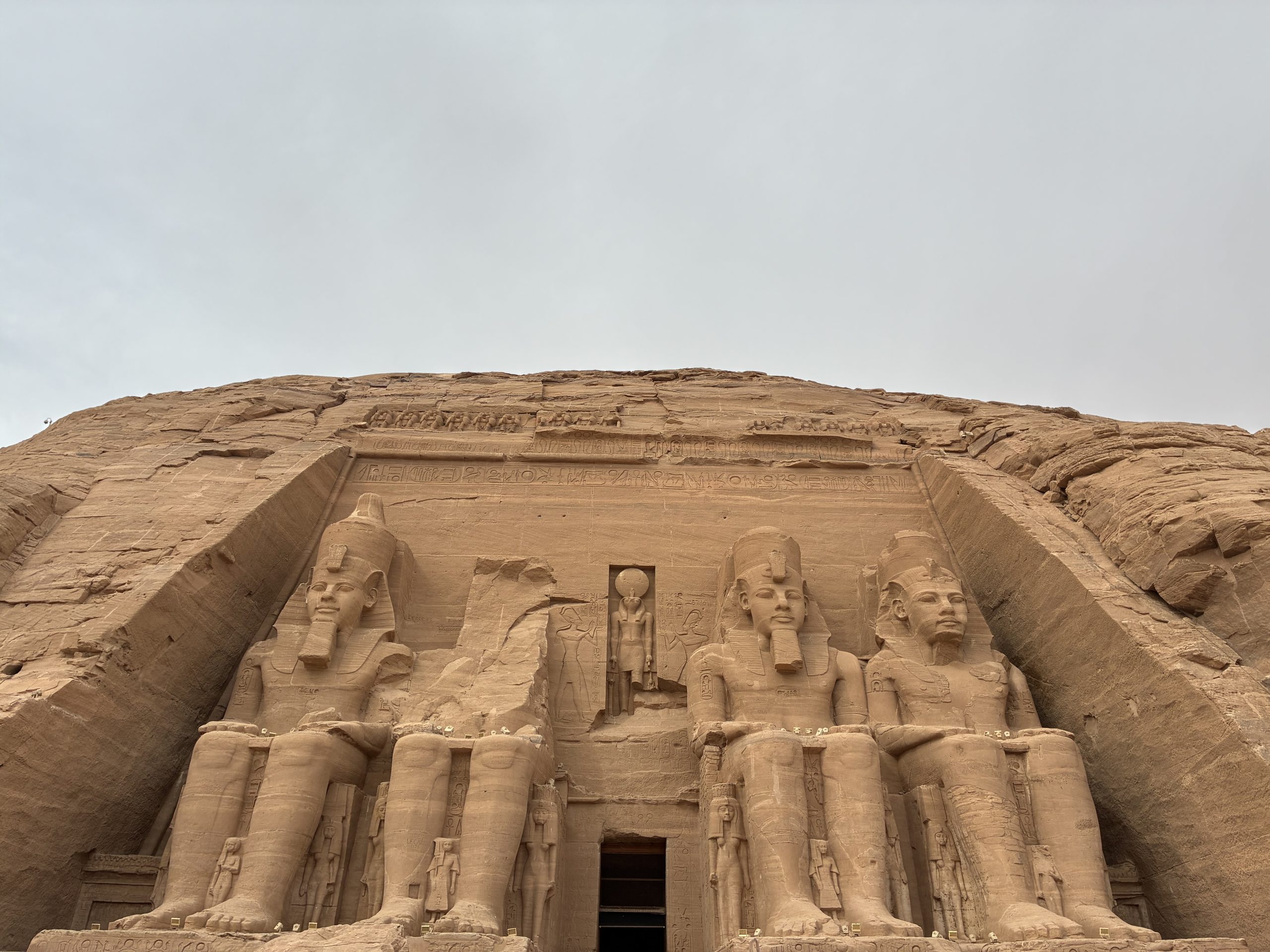
Onto the temples themselves, and the Great Temple of Ramses II is by far the most spectacular and where you’ll want to spend most of your time. Your first sight of it will be the facade’s four vast colossi. Each one depicts the pharaoh king and is 20m high. In the centre is falcon-headed Ra-Horakhty, the sun god, while the small figures between Ramses’ legs are some of his children, his mother and his favourite wife Nefertari.
 When you go through the temple’s massive door, you enter the Great Hall, where you’ll be dwarfed by eight vast statues that support the ceiling. All around the walls are carvings of battle scenes, where, of course, Ramses is always the victor.
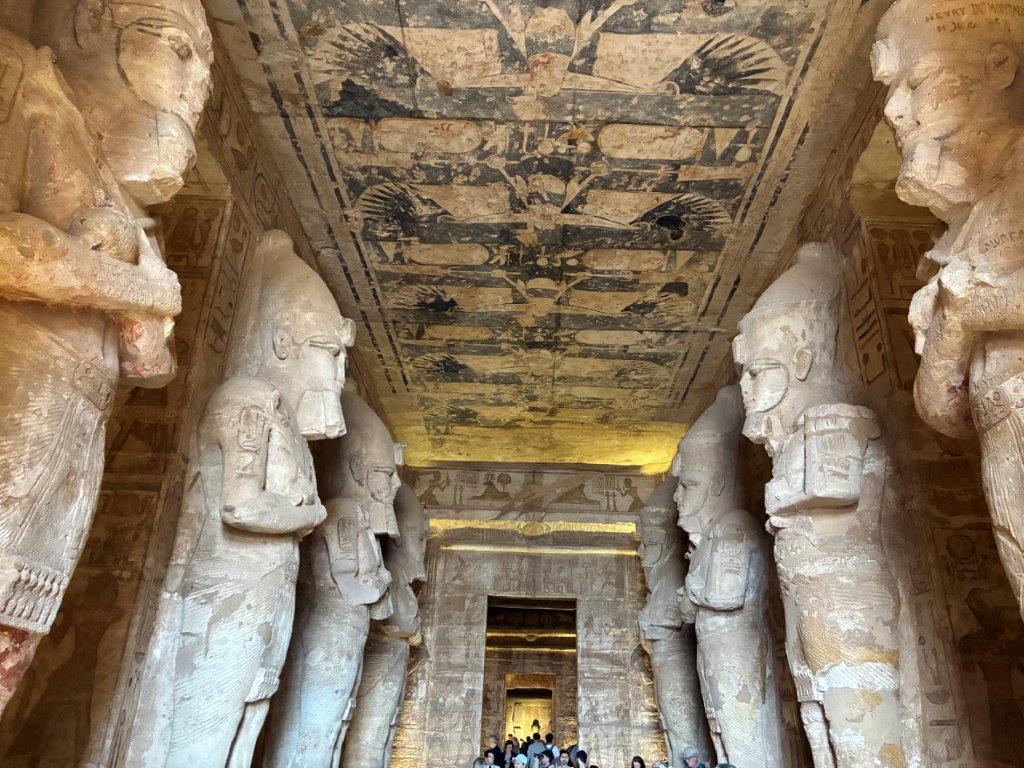
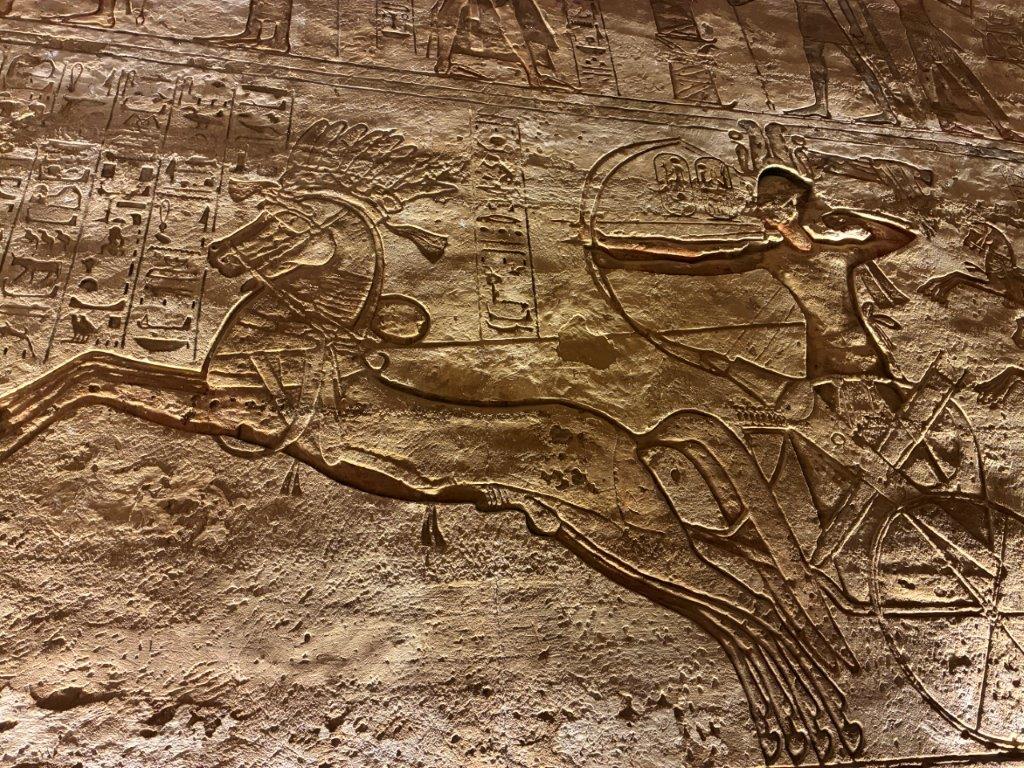
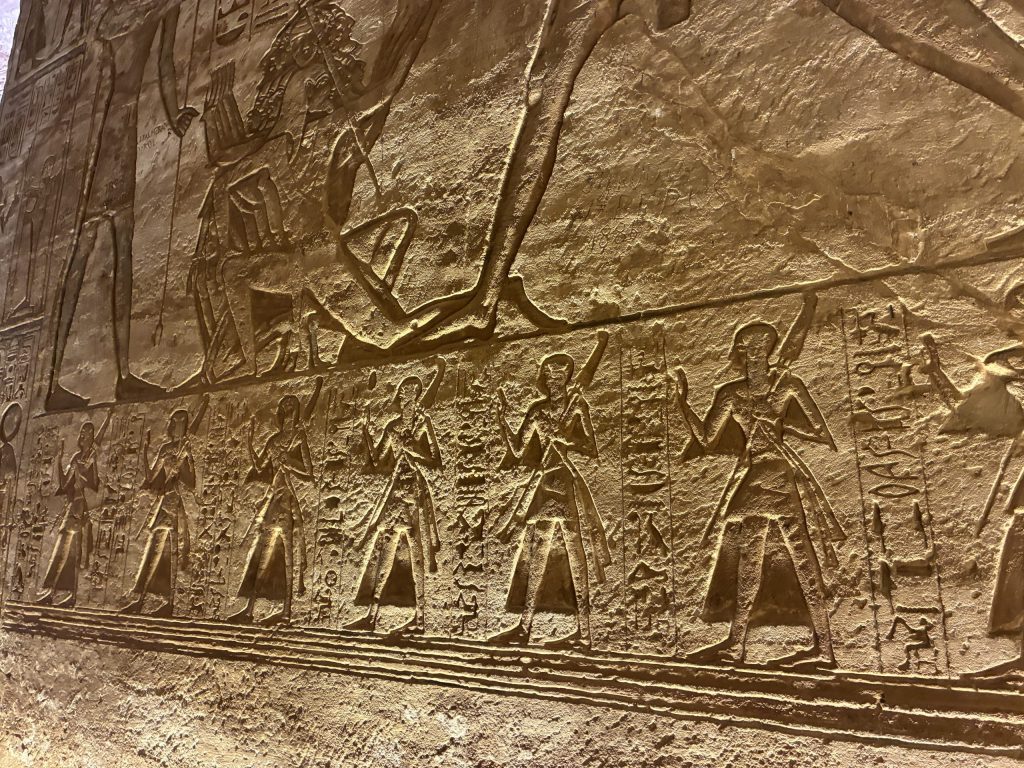
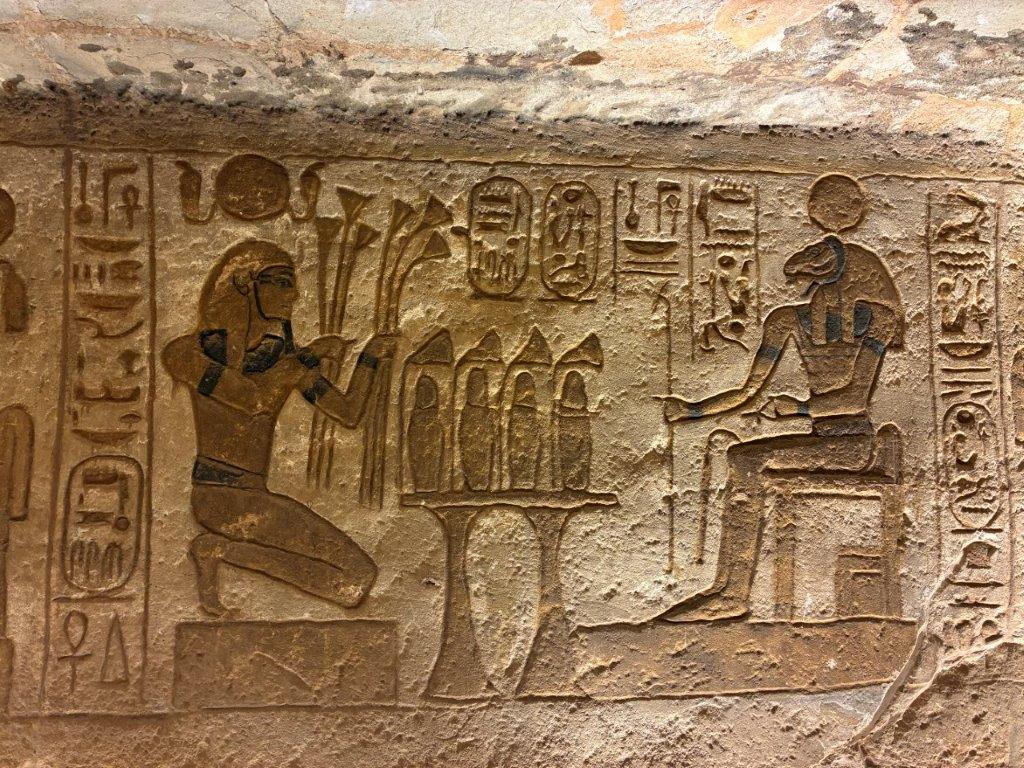
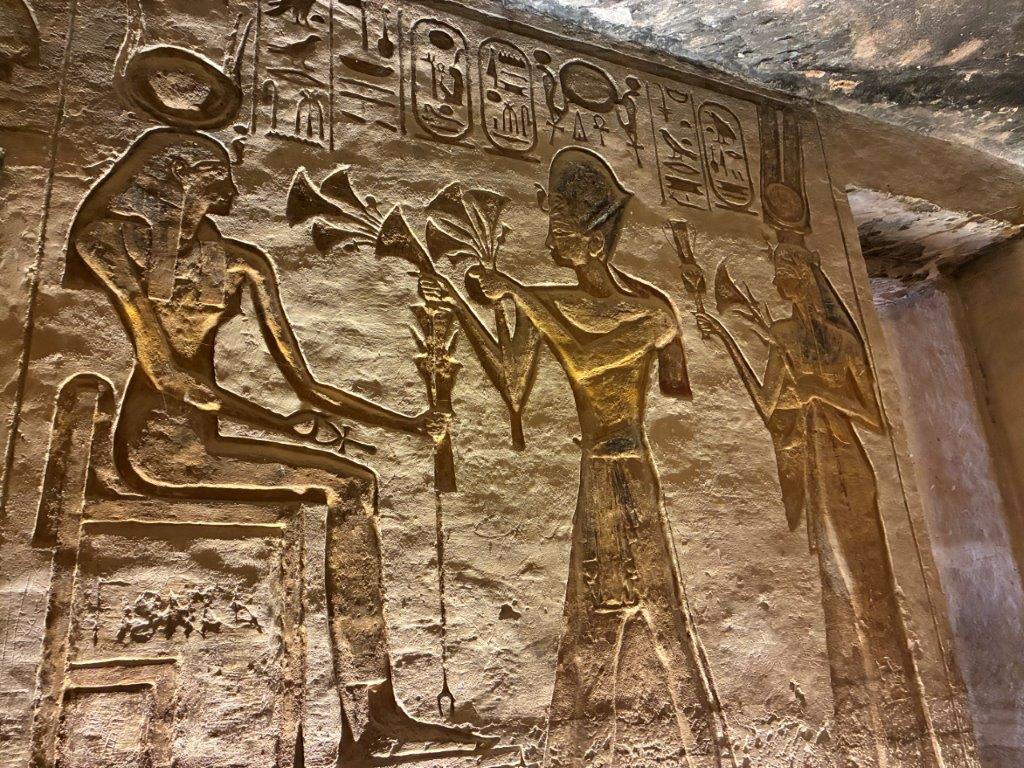
Leading off the Great Hall, also known as the hypostyle hall, are a series of smaller chambers. These are narrow rectangular rooms with reliefs on the walls depicting scenes of offerings to the gods. They aren’t all as intricate as other carvings, but are well worth spending time on. Many of the gods we heard about during our time in Egypt are easily identifiable on the chamber walls.
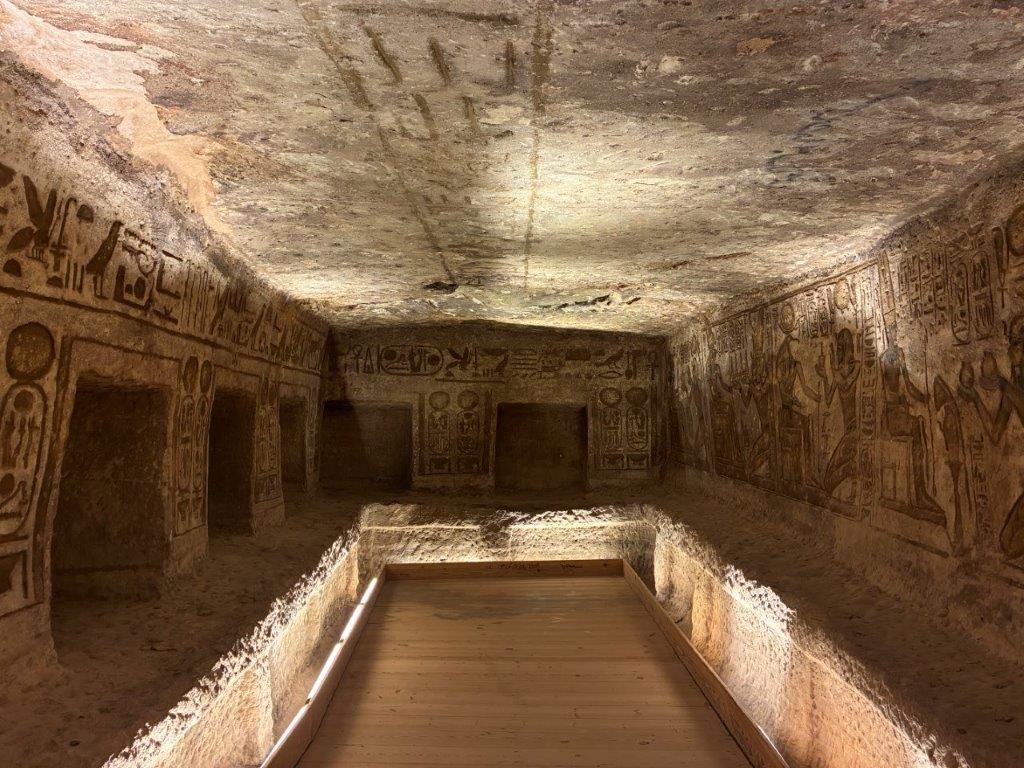
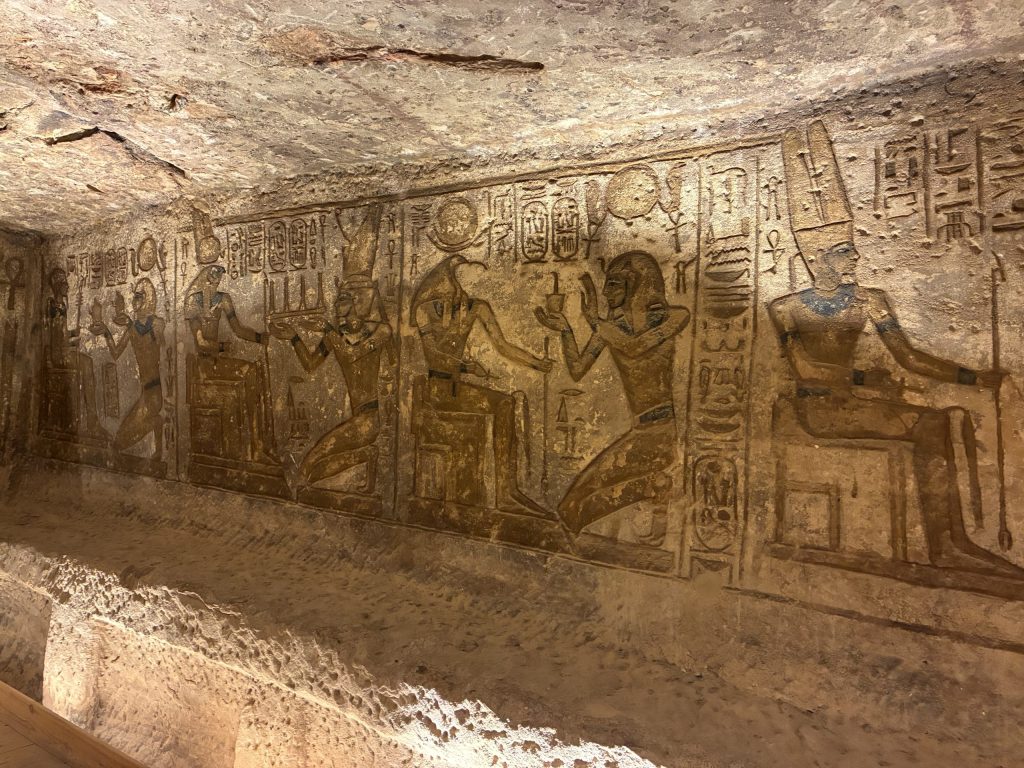 Continuing inside, there is a vestibule where Ramses and Nefertari are shown making offerings to the temple gods Ra-Horakhty and Amun-Ra.
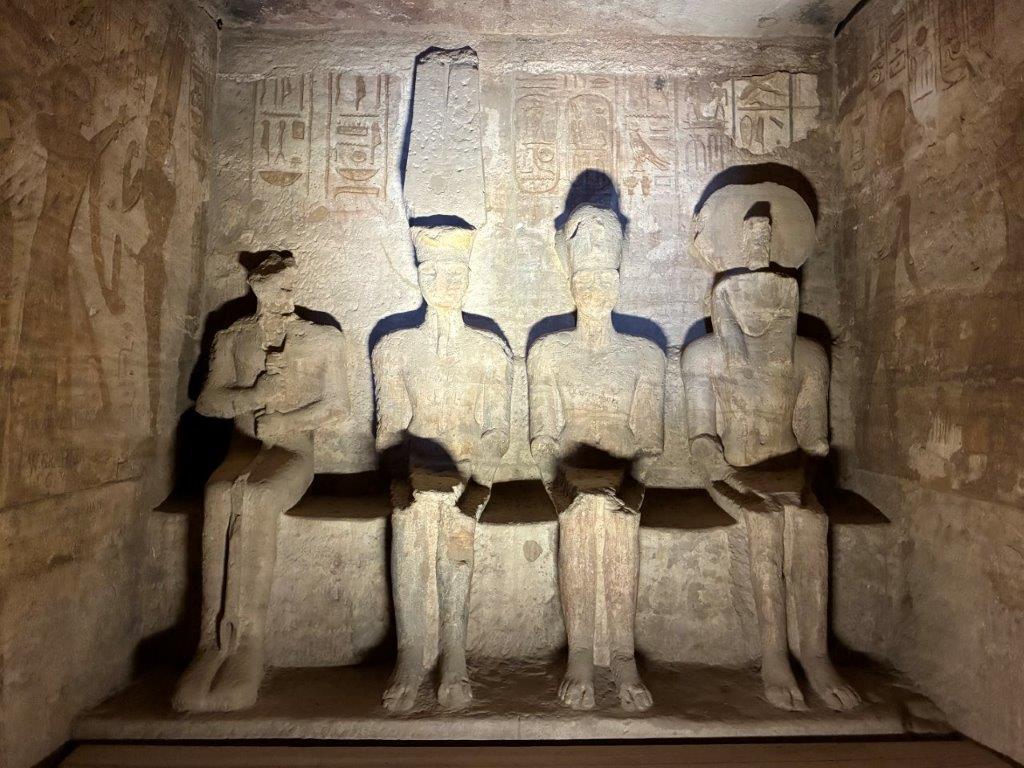
 Then, at the end of the temple is the inner sanctuary. Inside are four rock-cut sculptures of (from left to right) Ptah (the creator god), Amun-Ra, Ramses II, and Ra-Horakhty. It’s believed that the temple was positioned so the sun’s rays would illuminate the sanctuary on the solar alignment festivals, starting with Ramses’ face.
 The Temple of Hathor
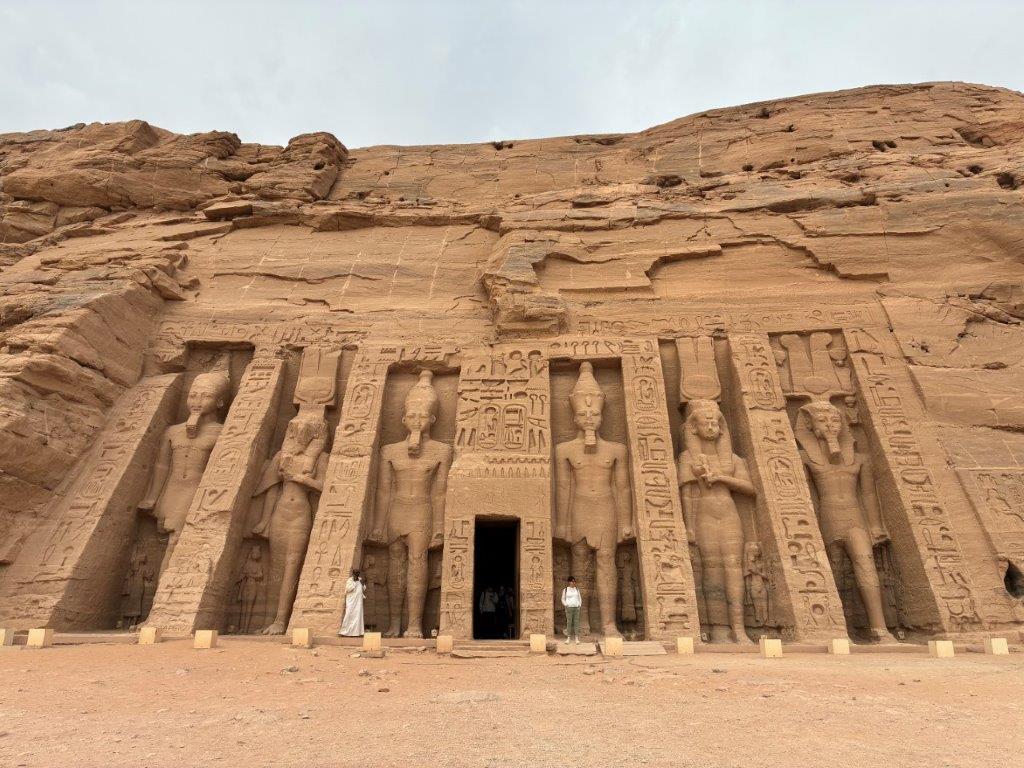
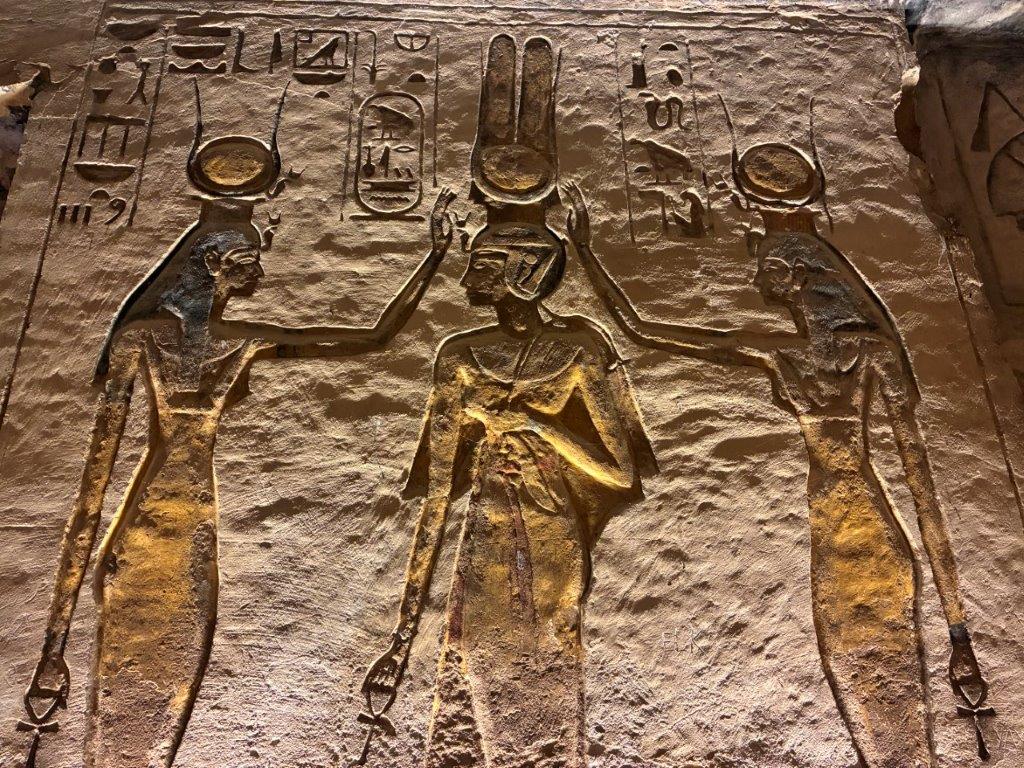
Next to the Great Temple of Ramses II is Abu Simbel’s second monument, the Temple of Hathor. This smaller temple is dedicated to Nefertari and to Hathor, the goddess of love, fertility, motherhood and music. Its facade is also impressive with six 10m-high statues of Ramses and Nefertari, who is dressed as the goddess. Unusually for Ancient Egypt, the queen is shown at the same scale as her husband.
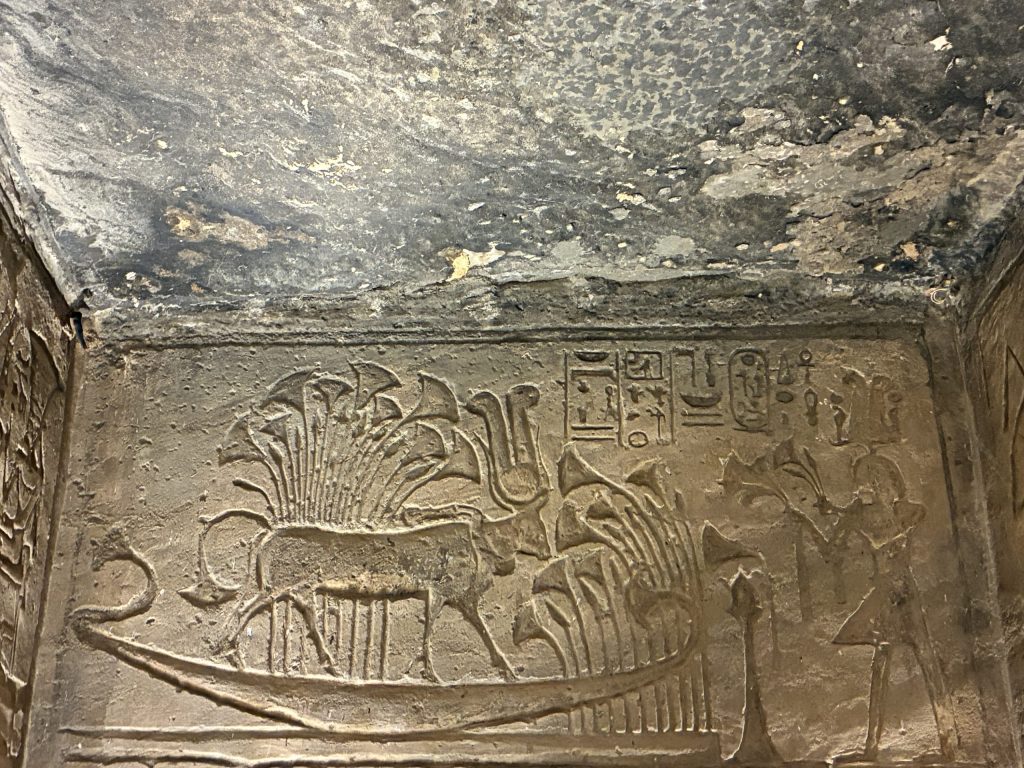
 The inside of the temple is much smaller than the Great Temple, but there are some lovely wall carvings showing scenes of the pharaoh and his favourite wife. At the rear of the temple, there is a pair of beautiful reliefs on either side of the chamber showing Hathor afloat on her sacred barque (sailing ship).
 Close to the temples is a small (overpriced) shop and a visitor centre where you can learn more about the Abu Simbel Temples and the UNESCO rescue project. There are also plenty of stalls selling souvenirs, snacks and drinks on the way out. In addition, Abu Simbel village has a range of places to eat if you want to spend longer in the area. However, do bear in mind that the road back to Aswan is closed to tourists at night. I’ve heard that it can be at 5pm or 6pm, and in my experience, timings in Egypt are rarely consistent. So I’d err on the side of caution.
But that aside, and despite the lengthy round trip from Aswan, I definitely think Abu Simbel is well worth a visit as there’s nowhere quite like it!
For more about my trip to Egypt, check the Egypt section of my blog, where there are posts about Cairo, Giza, Aswan, Luxor and a fabulous dahabiya cruise on the River Nile.
Discover more from TRAVEL COCKTAIL
Subscribe to get the latest posts sent to your email.