Auschwitz-Birkenau isn’t a tourist attraction. You won’t find a fancy restaurant or a gift shop selling fridge magnets, and it’s not the place for holiday selfies. But it’s a memorial and museum that you should try to visit while staying in Kraków or another nearby town. It’s only by seeing it that you can fully appreciate the full horror of the Holocaust. Something that can’t be forgotten if it’s to be avoided in the future.
 How to visit Auschwitz-Birkenau
Unfortunately, for a time, unscrupulous tour companies were selling tours to Auschwitz-Birkenau, claiming you would leave Kraków at a normal time, like 8am. Then the night before, the time would change to 4am due to ‘booking issues’. On arrival, people realised they didn’t actually have an entry ticket. So they had to join a queue and sometimes wait hours for their tour.
Auschwitz-Birkenau has put a stop to this by no longer issuing tickets at the site. Instead, organised groups and individual visitors can reserve entry cards at visit.auschwitz.org up to three months in advance. Every entry ticket must be in the name of the person visiting, who needs to show matching ID on arrival.
This is how my friends and I bought our tickets. And we did it as soon as the date we wanted was released for sale, to ensure we got on an English tour at our preferred time. You can book a free entry ticket to visit without doing a tour, but the slots are towards the end of the day. The actual timings vary by season.
To get there our Airbnb host in Kraków booked transport for us with a taxi firm that sent a large air-conditioned people carrier for the four of us. So it was a very comfortable 1-hour, 20-minute journey. Alternatively, Bolt and Uber are both available in Kraków. And you can also get to Auschwitz-Birkenau by public transport. The closest train station is Oświęcim, which is a 15-20 minute walk from the entrance. There are also buses from Kraków, so look at the various options to decide what works best for your budget.
What to wear and take with you
Clothes and footwear – it’s important to be respectful at a memorial site, so do dress appropriately. And wear trainers or other footwear that’s comfortable for walking up and down lots of stairs and over uneven ground. A rain mac or umbrella is also a good idea if rain is forecast, as the tour will continue regardless and almost all of the Birkenau site visit is outside. There’s also no shade there, so on a hot day sunscreen and a hat are a good idea.
Food and drink – as mentioned, there are no restaurants on the memorial site, just a small cafe in the car park and a few vending machines selling drinks and snacks. So as it’s quite a long visit and you have the journeys either side, it’s a good idea to take food and drinks with you. As our driver waited there for us, we were able to leave a packed lunch with him to eat during the break between visiting the two sites.
Photos – you can take photos at Auschwitz-Birkenau, so take a camera or phone, although you’ll need to put the latter on silent mode while on the tour.
What to expect at Auschwitz 1
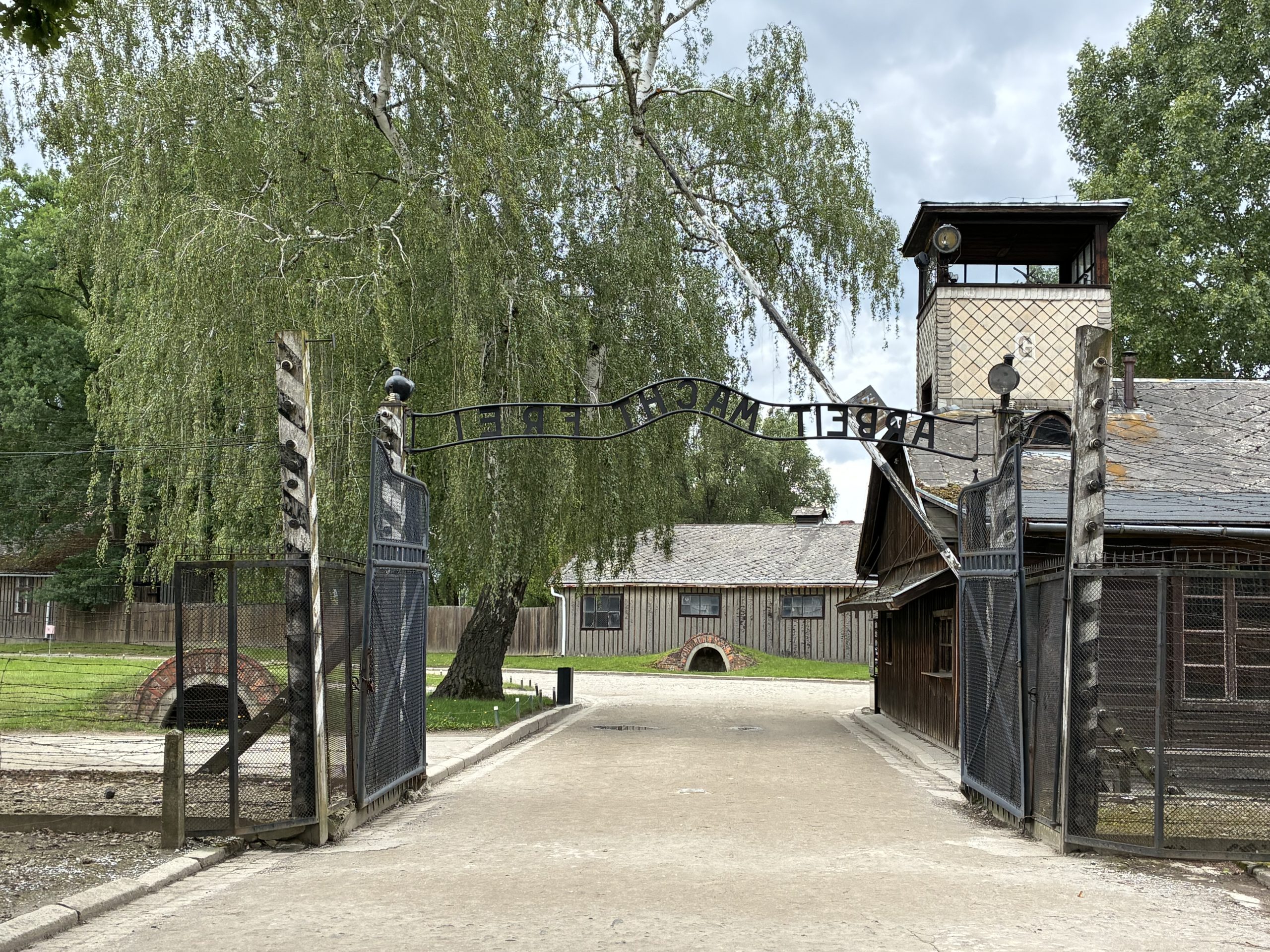
As indicated by the name, there are two sites to visit at Auschwitz-Birkenau. The tour starts at Auschwitz 1, and we were there for just under two hours. The first thing that struck me was that once you are through the gate and inside the barbed wire, it all looks quite normal. The site was originally an army barracks, and the buildings are red brick and sit in tree-lined avenues. They totally belie what went on inside them.
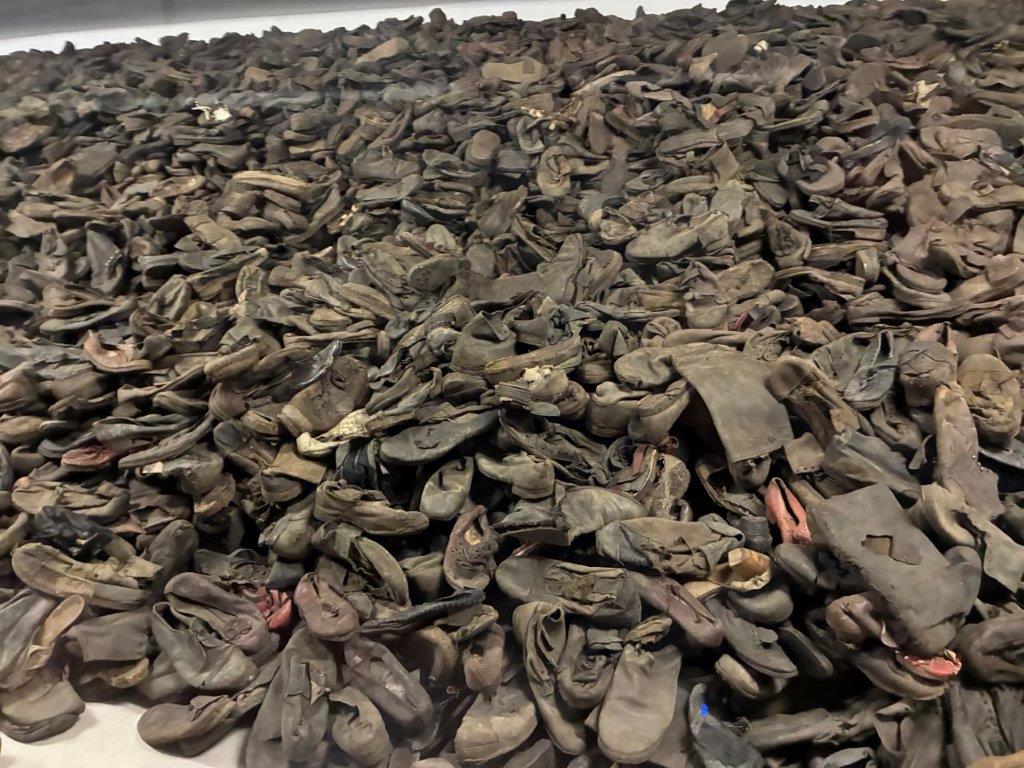
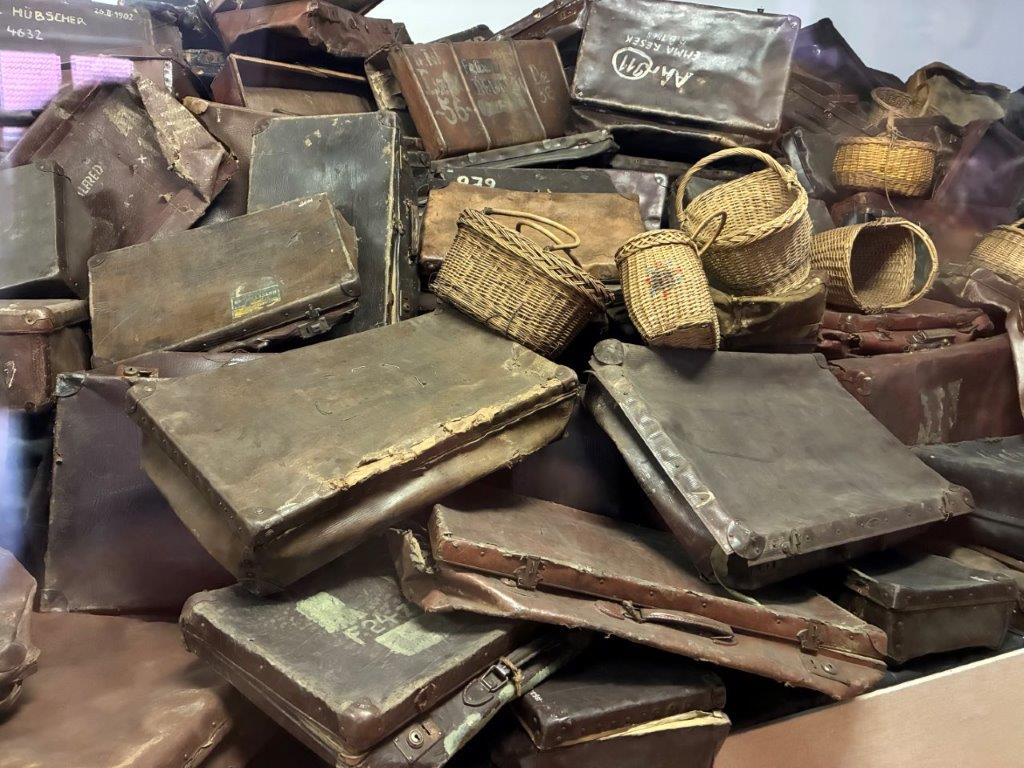
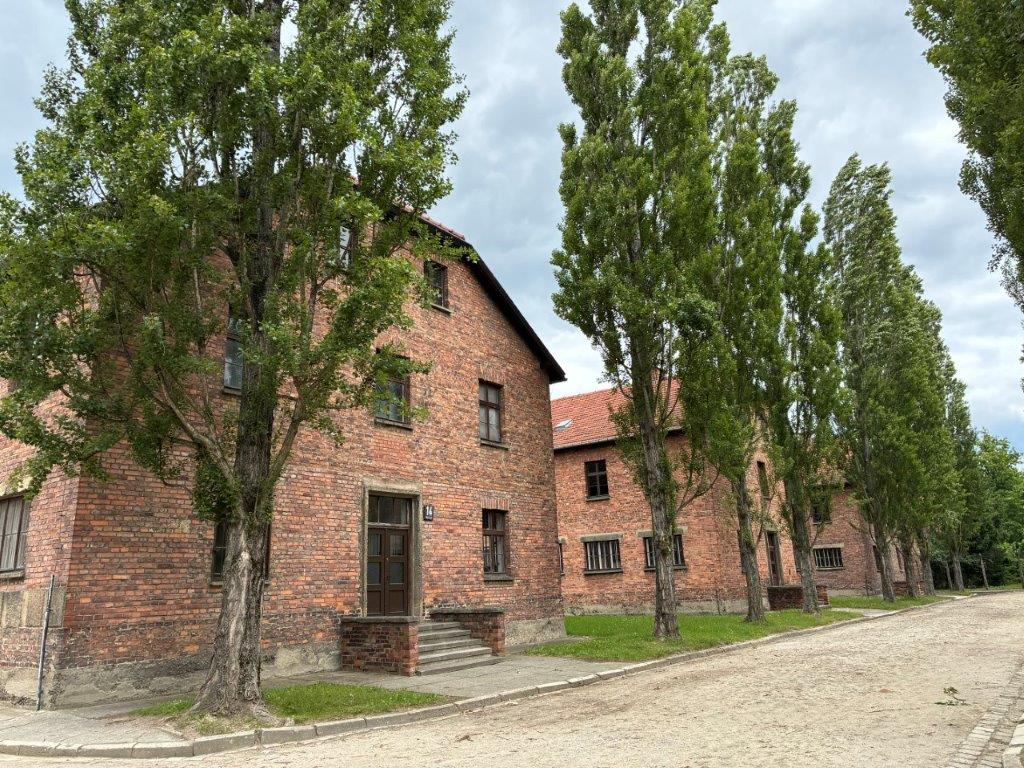 The tour guide takes you into a number of the blocks where exhibits cover the history of the camp. There are some pretty awful things on display, like piles of shoes and luggage in Block 5 that belong to the people who were massacred. The large pile of women’s hair was one of the most upsetting to me.
 In Block 6, there are thousands of photos of the people who died, as well as paperwork which indicates their nationality and ethnicity and why they were taken to the camp. For Jews, that section was left blank as the Nazis needed no reason other than their ethnicity. We also went into the building where the experiments took place. This is where they gassed small groups of people in the basement to work out how much gas they needed for the mass killings in the gas chambers.
On the way out, there is a bookshop where you can buy books to help further your knowledge and understanding of what took place. Then you hand back your headphones and have 15 minutes to use the restroom or grab a bite to eat before boarding the shuttle bus to the second site.
What to expect at Auschwitz II-Birkenau
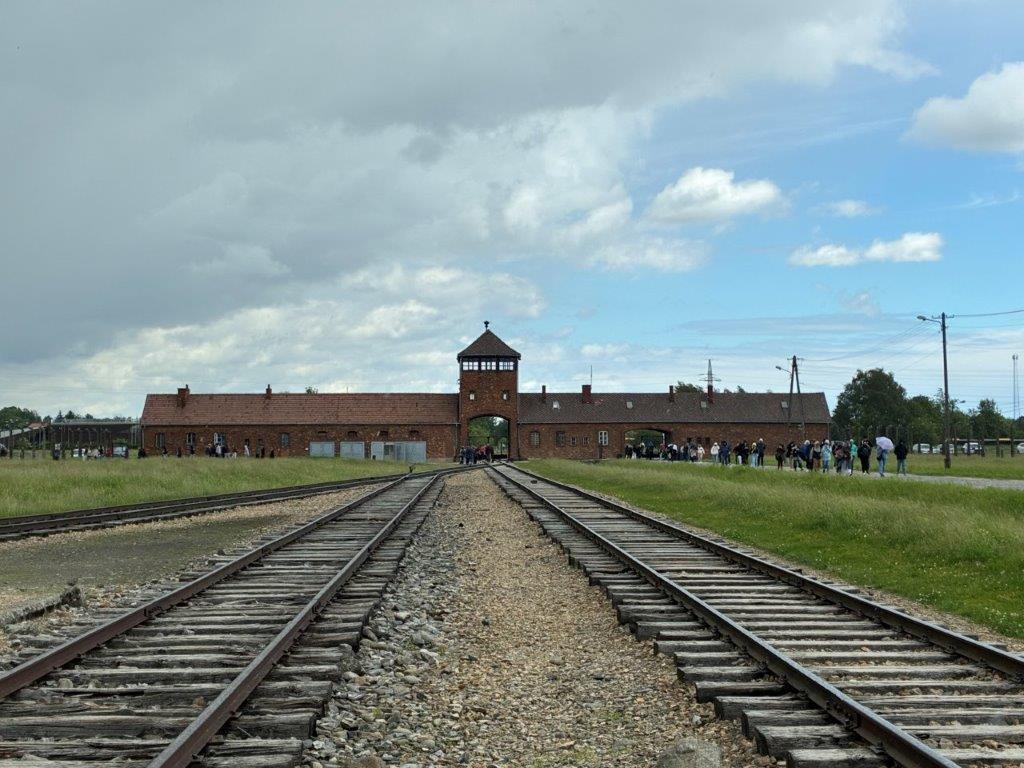
Auschwitz II-Birkenau is 3km away and was the site of the worst horrors of the holocaust. The large gatehouse and tower at the entrance were known as the Gate of Death. Trains carrying thousands of people passed through its central archway and onto the tracks leading to the camp’s selection ramps. This is where the Nazi soldiers would separate people into those who would initially stay at the camp and those who went straight to the gas chambers.
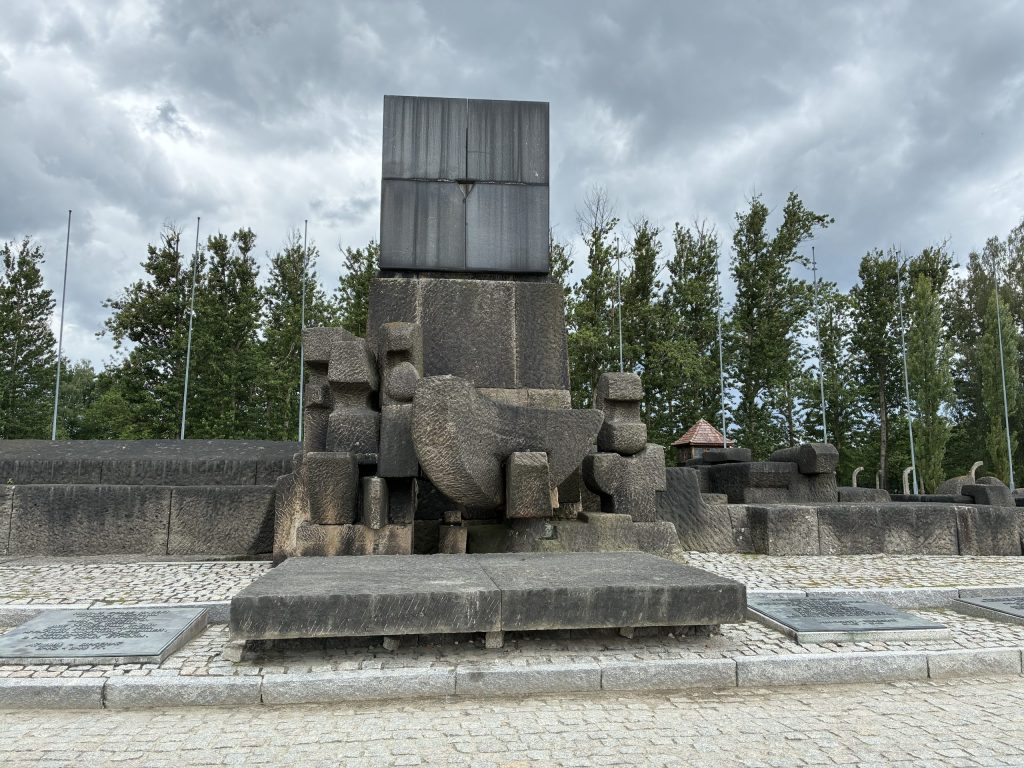
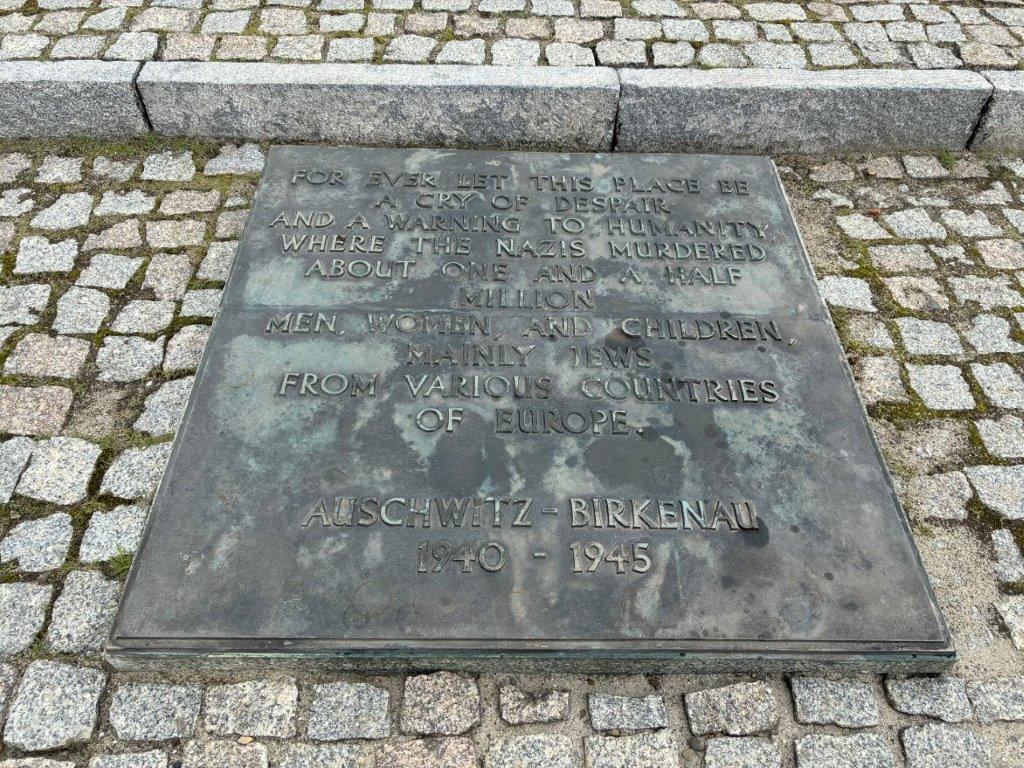
At the far end of the site, you can see the remains of one of the chambers. Close by is a memorial to the lives lost, along with a plaque inscribed with a clear message that begins, “Forever let this place be a cry of despair and a warning to humanity”.
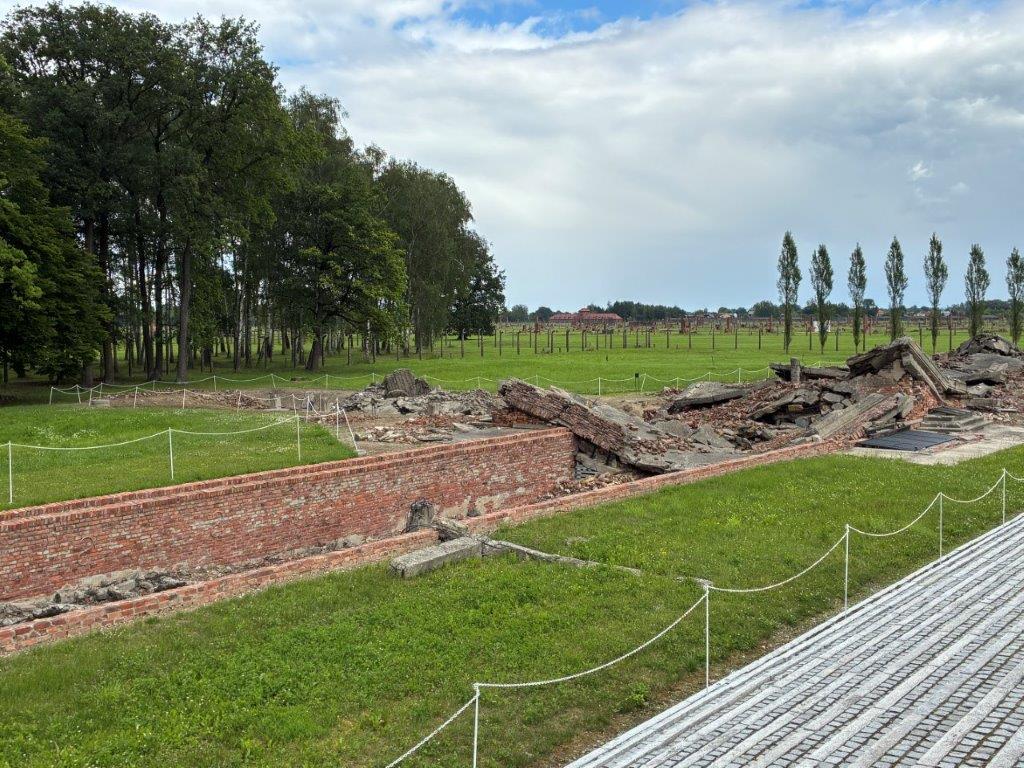
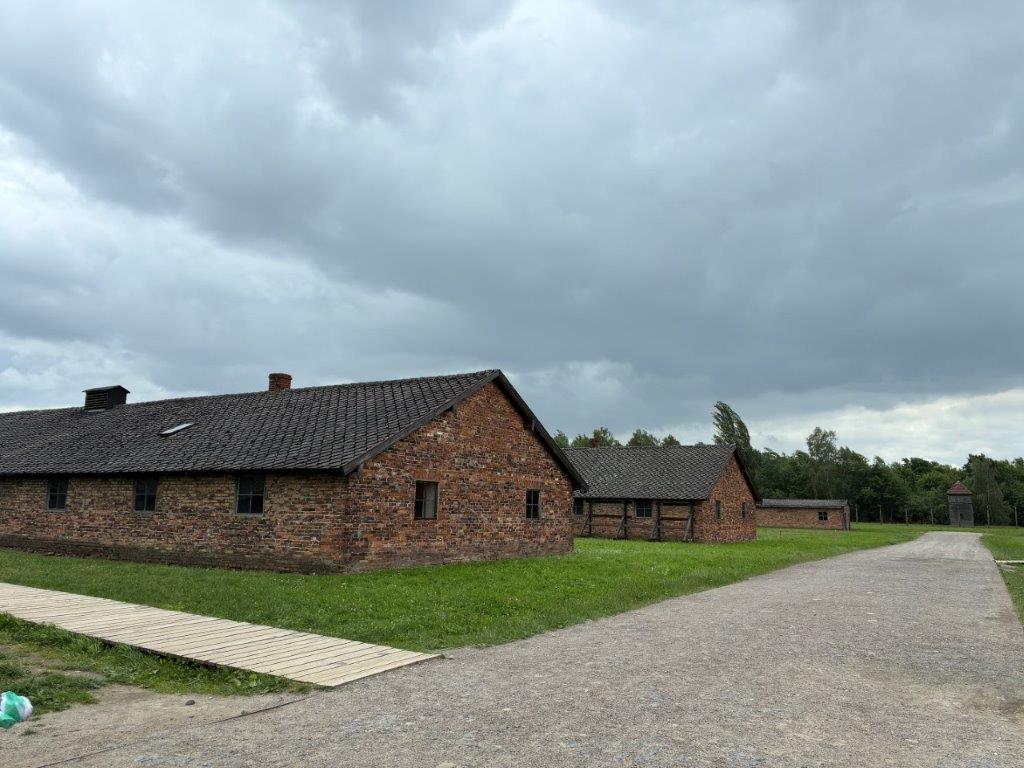
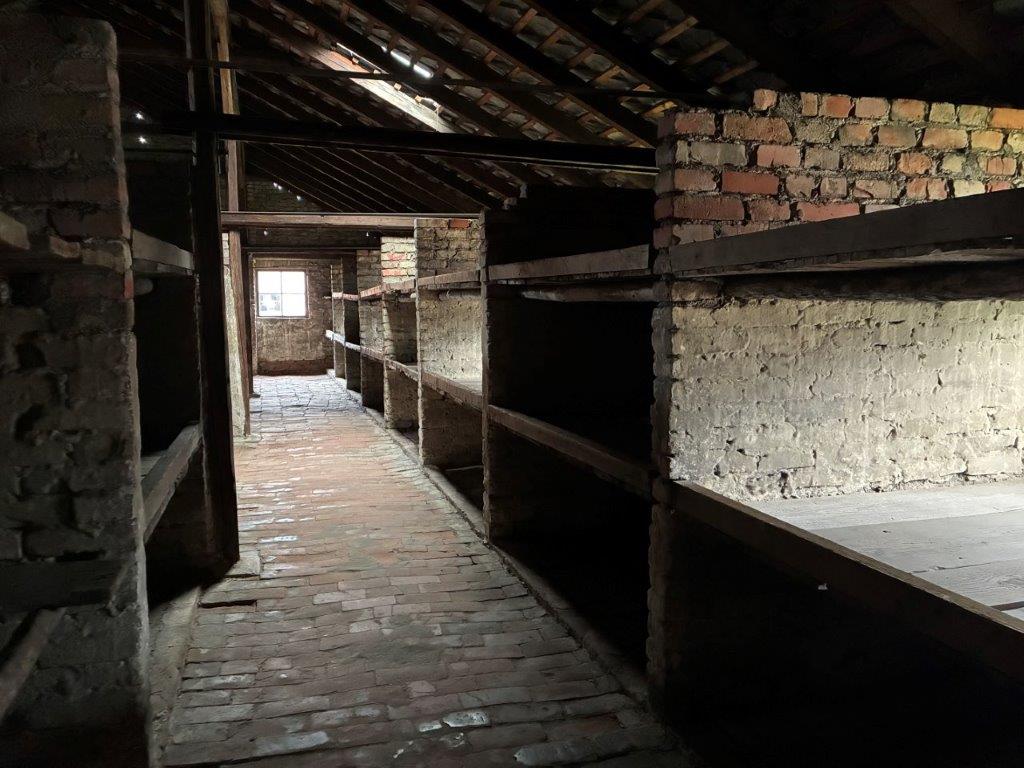
 The Birkenau site was purpose-built for the mass extermination of Jews in 1941, so it was much larger than Auschwitz 1. Most of it was destroyed by the Germans as they retreated, but some of the watchtowers and buildings remain. We were able to go inside one to see the appalling conditions that people lived in. The ‘beds’ were wooden platforms on three levels, and on each one, three people would have to squeeze in and lie side by side.
 We were at Auschwitz II-Birkenau for around an hour and then caught the shuttle bus back to the main entrance where our car was waiting. It was a quiet journey back to Kraków after such a sobering visit. But it had been a stark reminder that 1.5 million people were brutally murdered at Auschwitz-Birkenau because of a twisted ideology. So it was a visit that we all felt had been an important one to make.
To read about my stay in Kraków, visit the Poland section of my blog, where more posts will also be added about the other Polish destinations on my trip.
Discover more from TRAVEL COCKTAIL
Subscribe to get the latest posts sent to your email.