Dahabiya wasn’t a word I’d ever heard of until I started planning a visit to Egypt. Now it’s up there as one of my favourites after a Nile cruise that was the standout experience of my two-week trip. Here are 10 highlights of the magical few days I spent cruising from Aswan to Luxor.
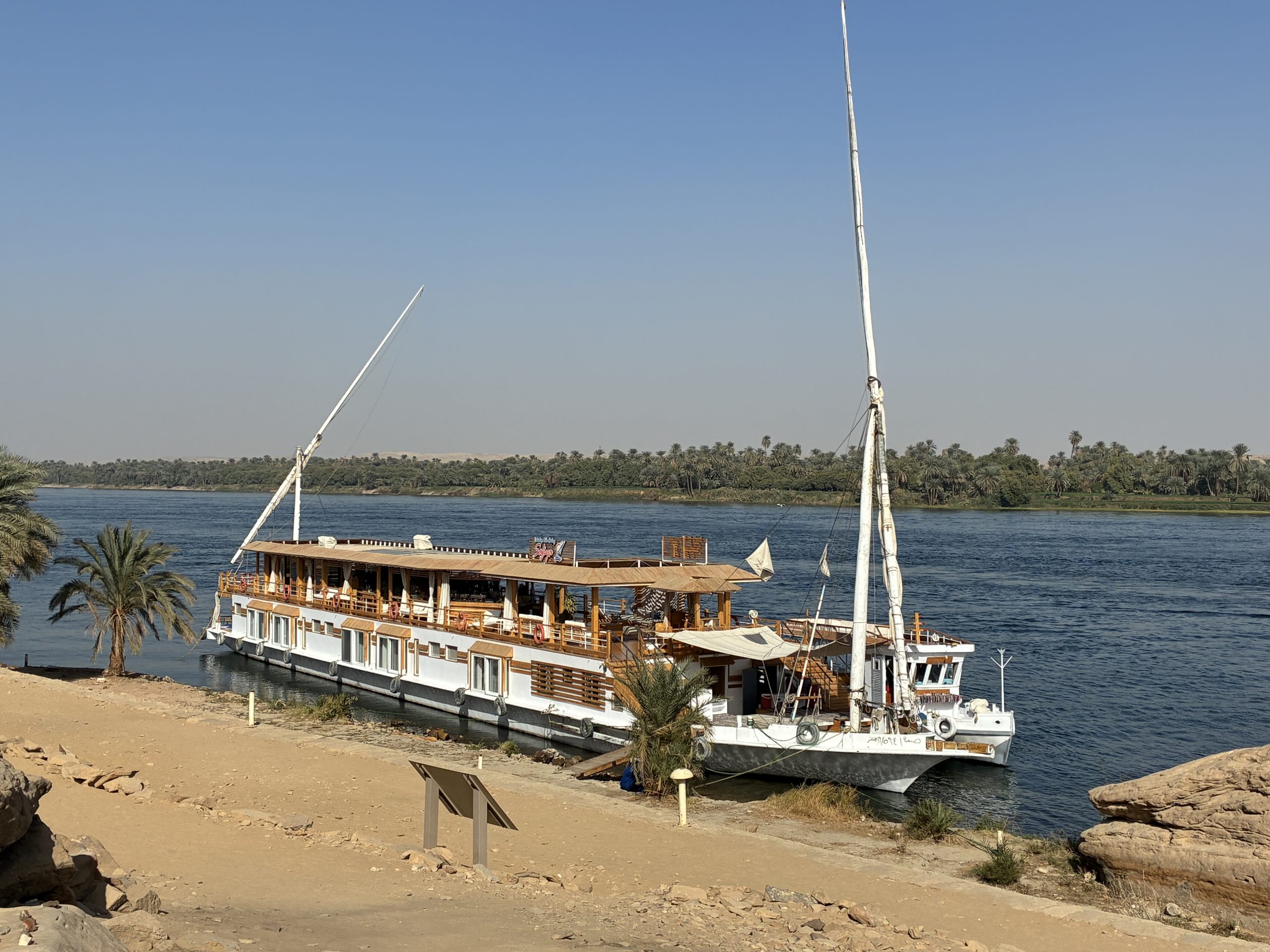
1. The gorgeous wooden dahabiya Safiya 2
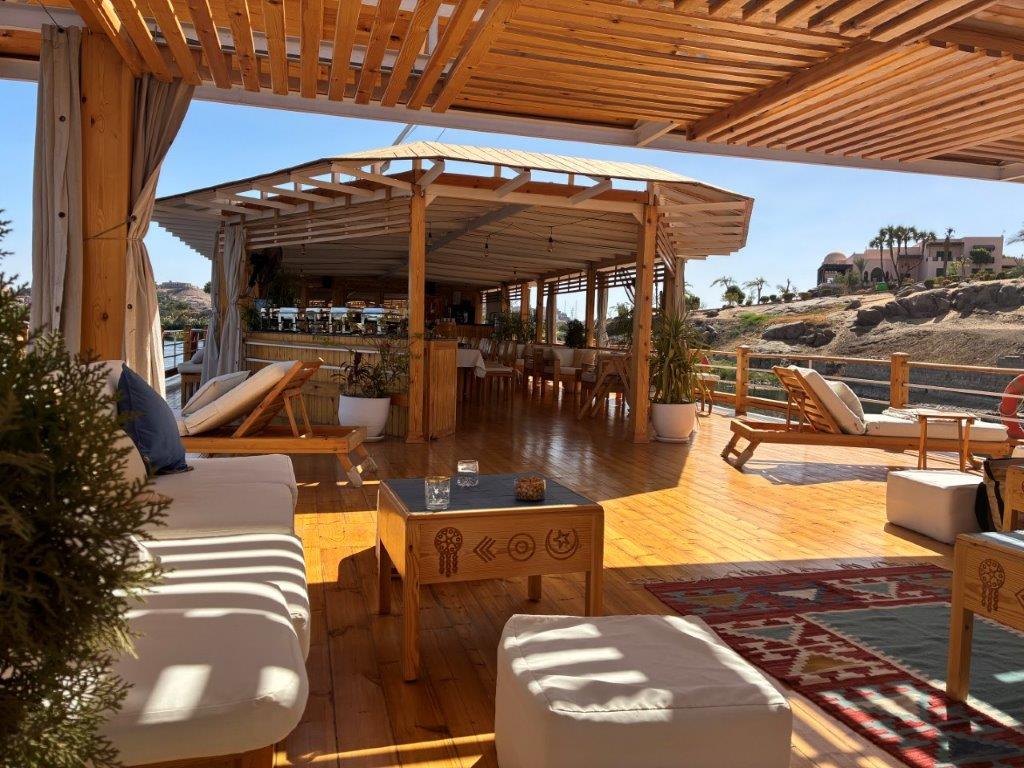
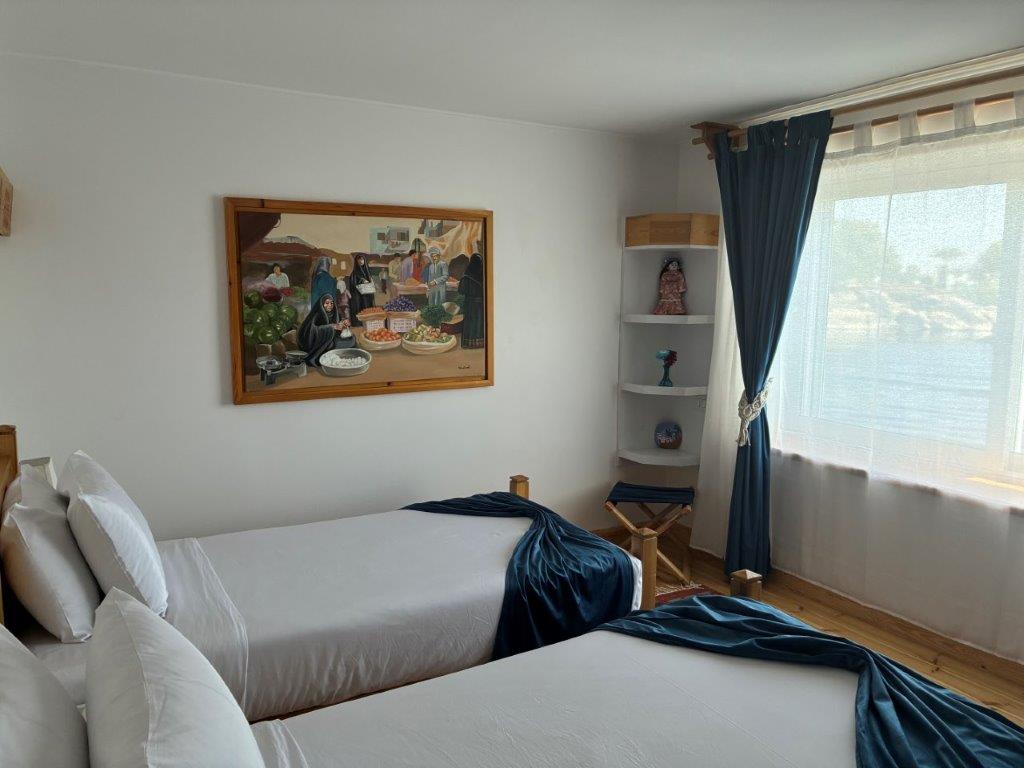
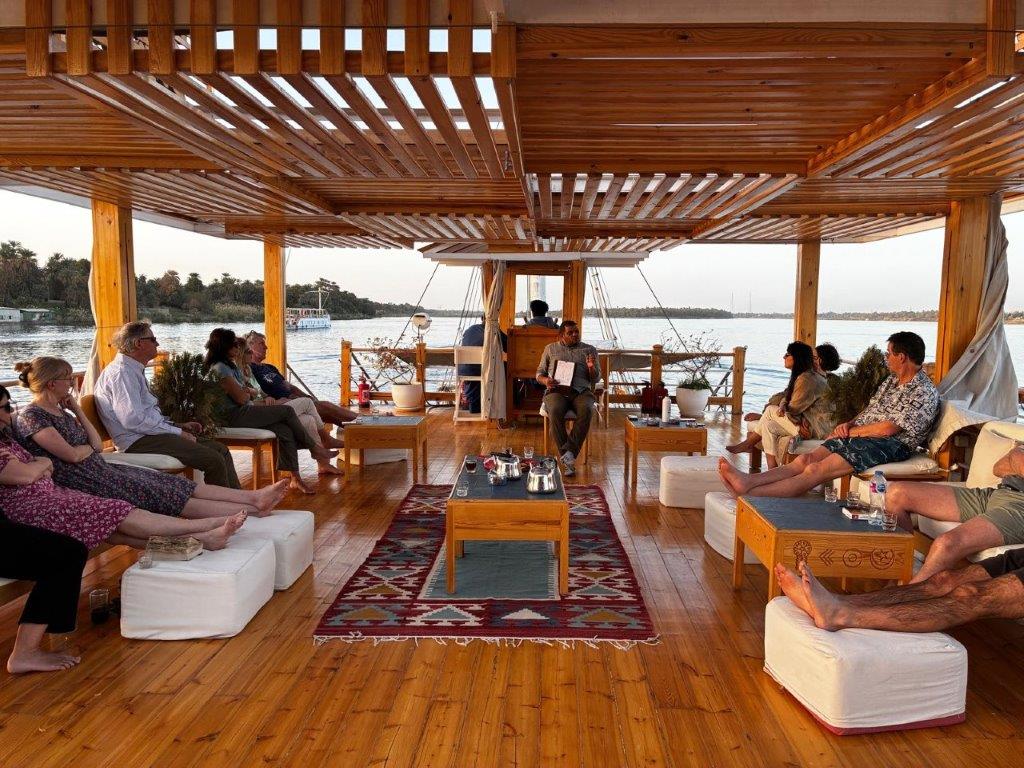
After looking at options for cruising the Nile, the big boats didn’t appeal to me. Then I read about traditional dahabiya boats, and booked a four-day/three-night cruise with Dahabiya Nile Sailing. We were collected from our hotel in Aswan and taken to a nearby dock to get on a boat that took us to Safiya 2, our dahabiya home for the next few days. And what a beautiful home it is. A traditional two-masted sailing boat, but with modern facilities. The 10 cabins are lovely with huge picture windows, and the deck areas are filled with comfortable, varied seating options.
 2. Slowly gliding along the Nile
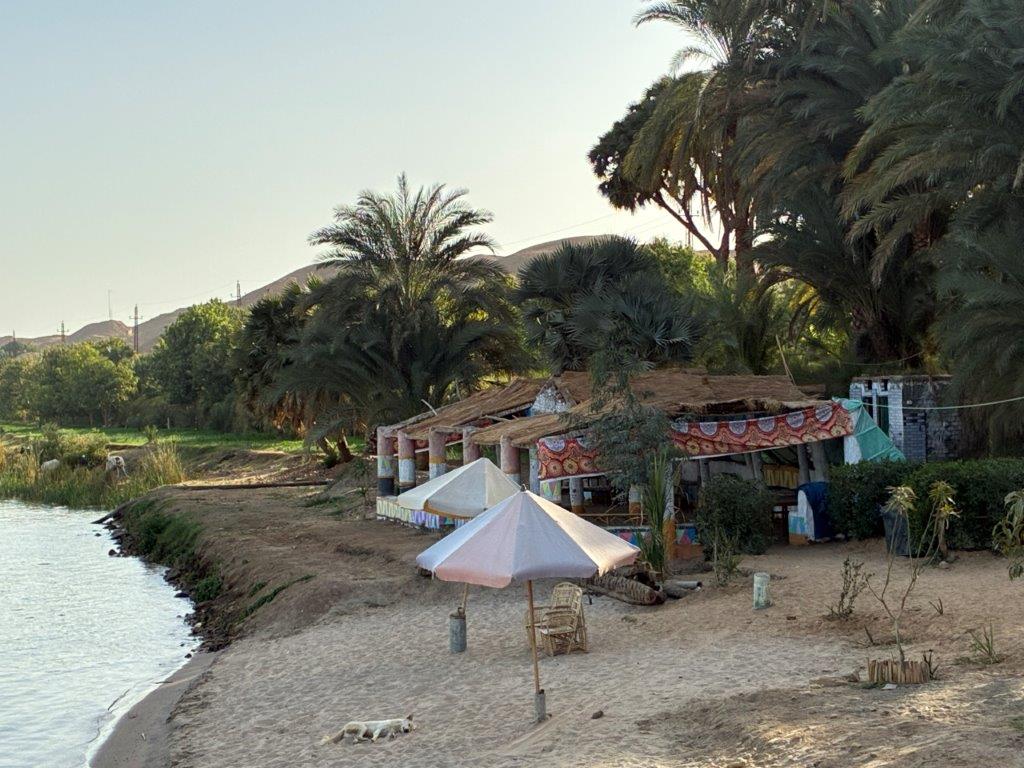
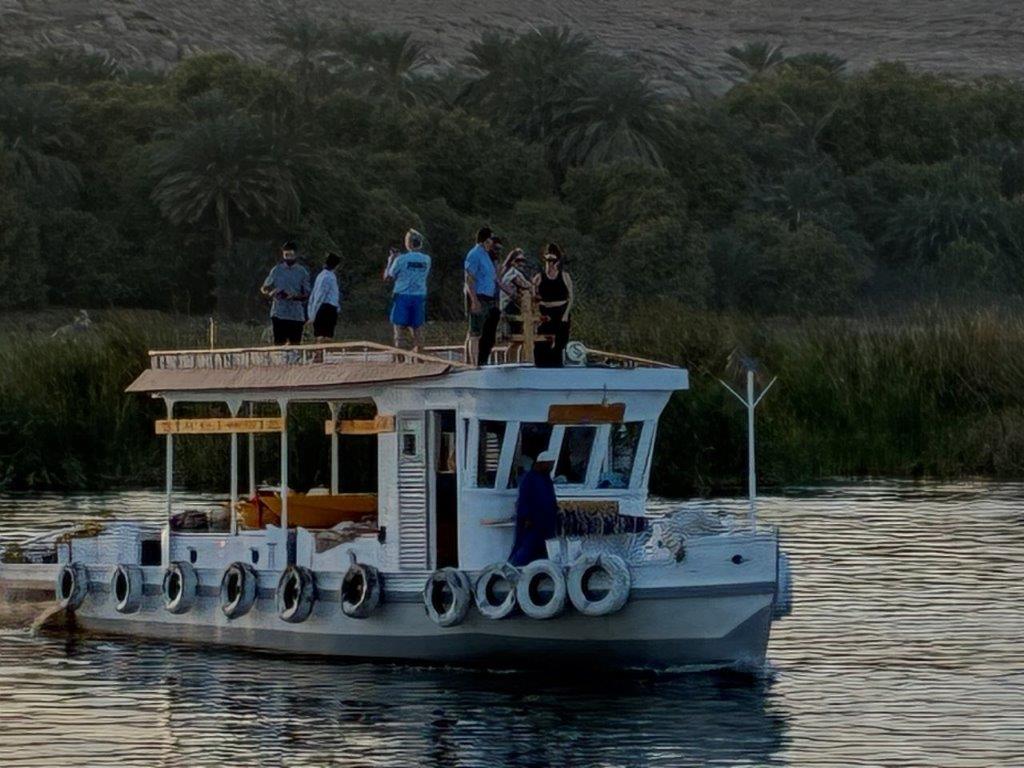
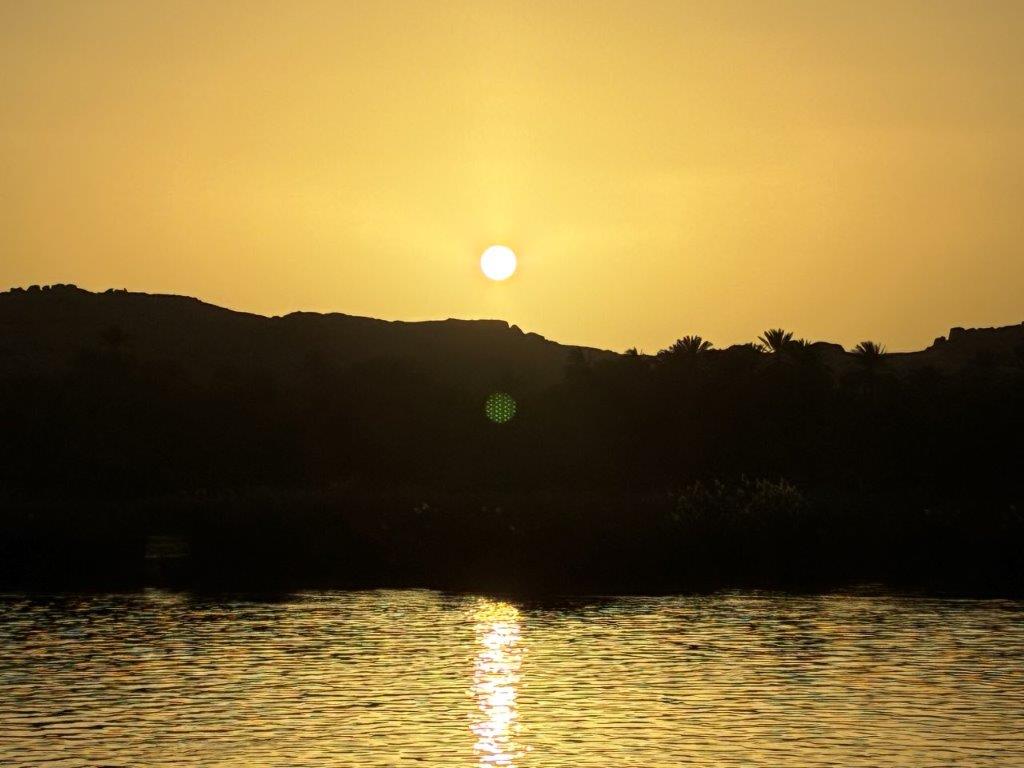
Once on board and checked into our cabin, we had lunch and then got a taste of what sailing on a dahabiya is like. Simply put, it involves slowly gliding along the Nile and mooring up in places the big boats can’t go. We were able to stop off at small beaches on Nile islands and swim or paddle in the famous river. Due to limited wind, the dahabiya has a tug boat which pulls it most of the time. So going out for a ride on that was also an option. As was sitting on deck to watch the sun go down every evening.
 3. Visiting one of Egypt’s largest camel markets
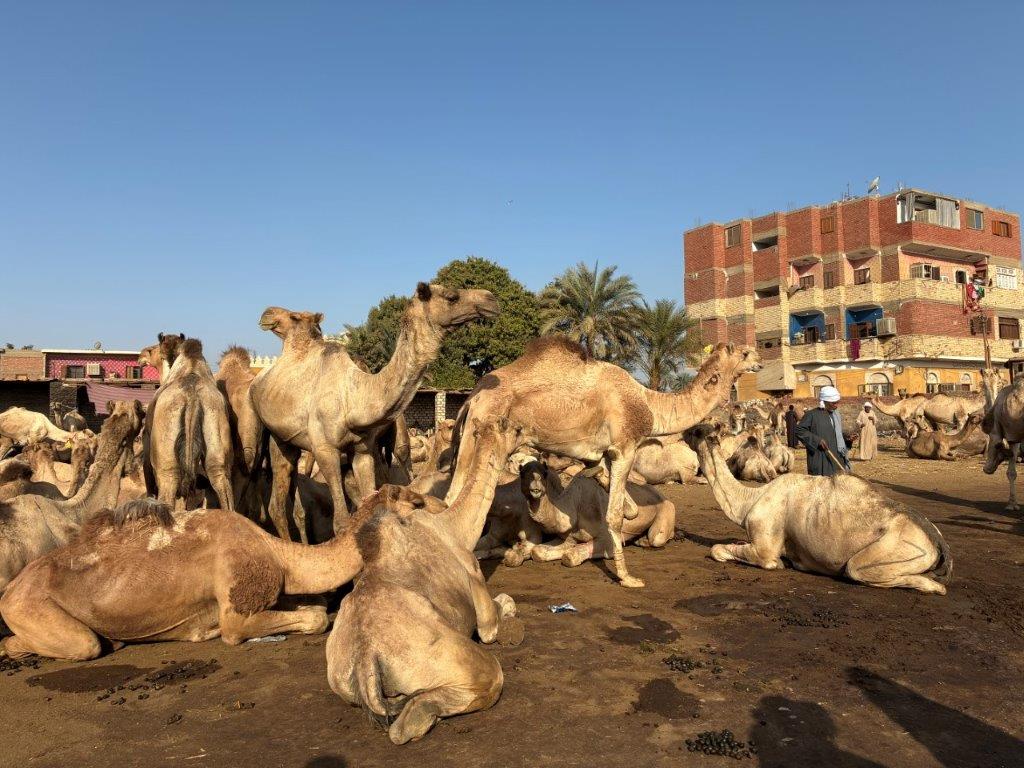
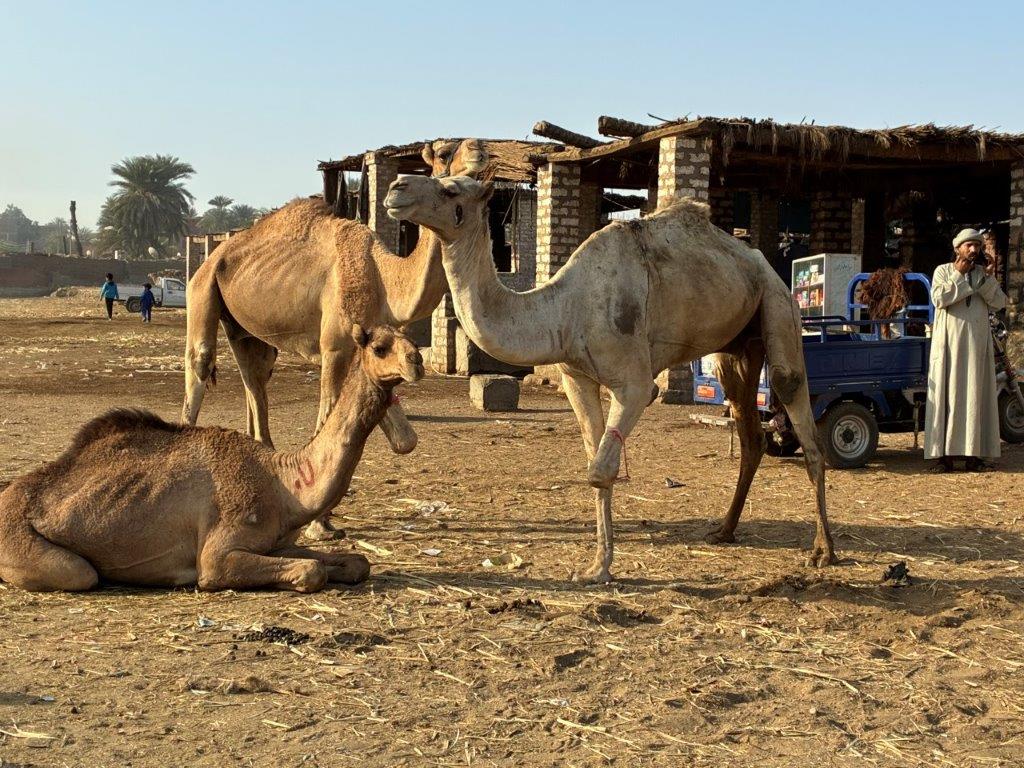
Daraw’s camel market isn’t on the itinerary for larger boats, but we were able to moor up and hop in trucks to take us there. Daraw is one of Egypt’s largest camel markets and has been in operation for centuries. The main market is held on Saturday mornings, which is when we visited. So it was busy with plenty of camels for sale and traders bartering. Most of the camels come in caravans from Sudan, and many go on to another market to be sold or slaughtered for meat. But some will be taken away and fattened up to be brought back and sold for a profit a few weeks later. We were surprised to learn that a camel costs $2,000 US dollars and many Egyptians consider it a good way to invest and grow their savings.
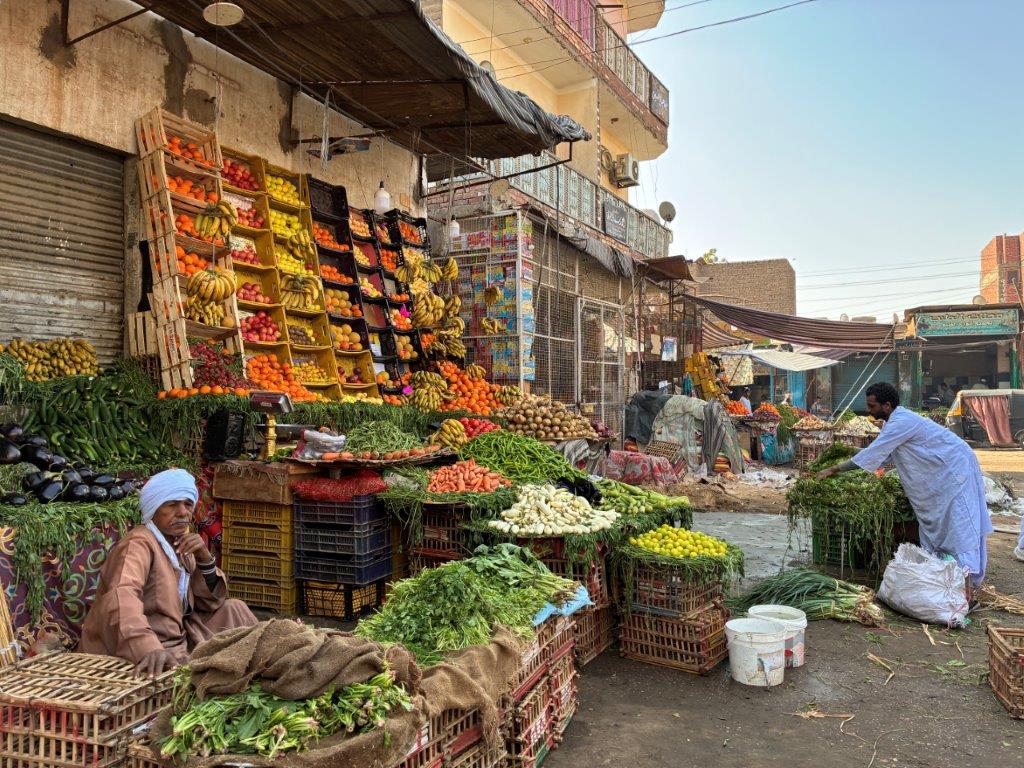
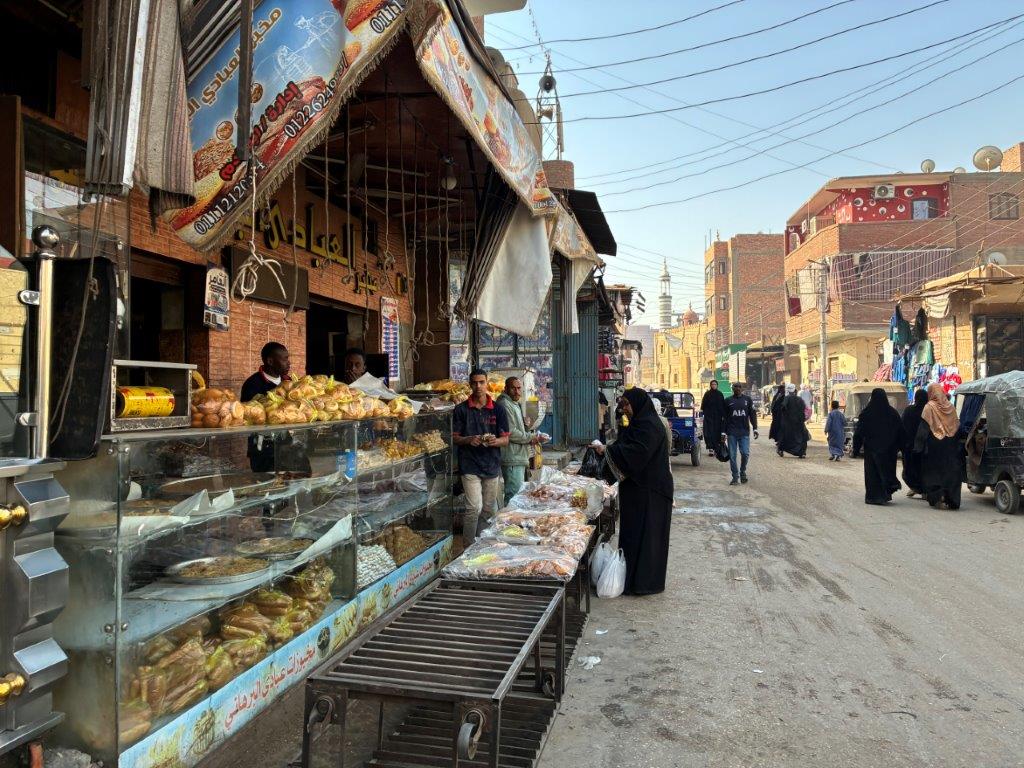
After seeing the camels, we went into Daraw town centre to visit a cafe and a more traditional market. At that one, traders were selling locally grown fruits and vegetables as well as freshly baked bread and pastries.
 4. Walking the quarry where temple stones were mined
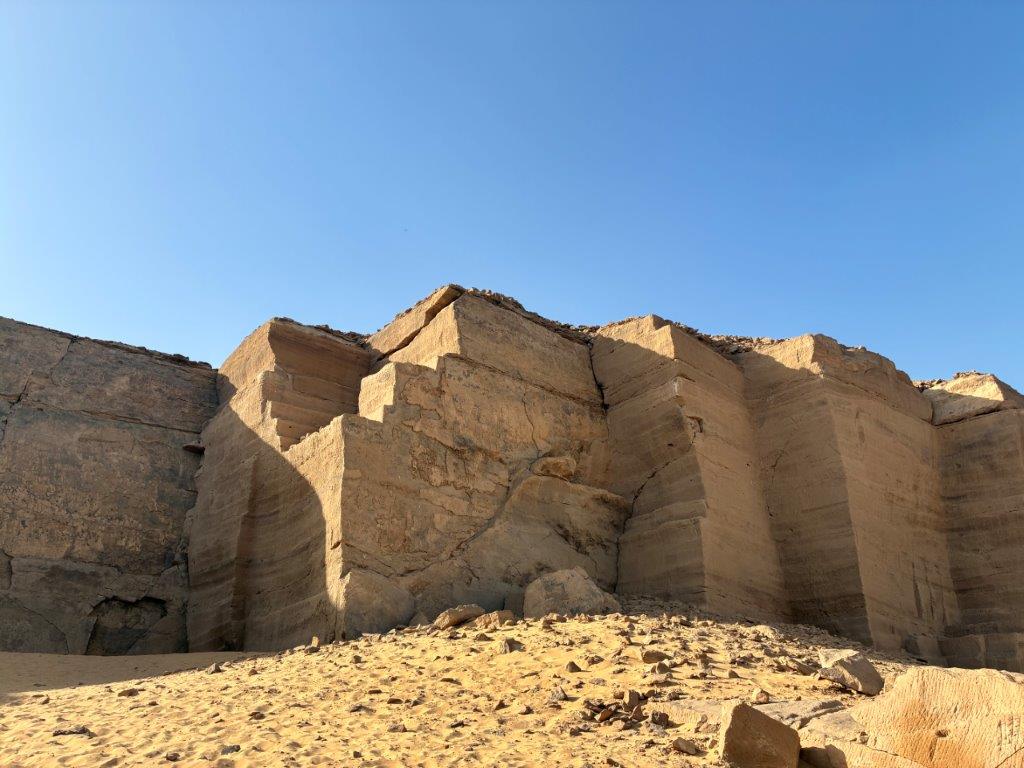
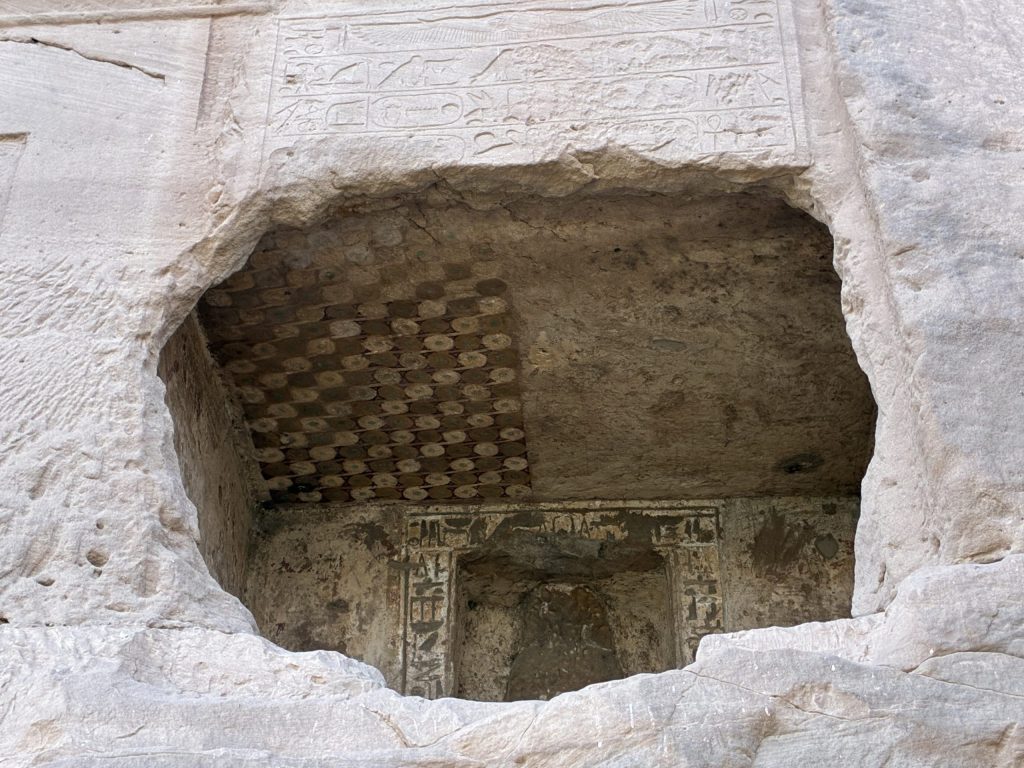
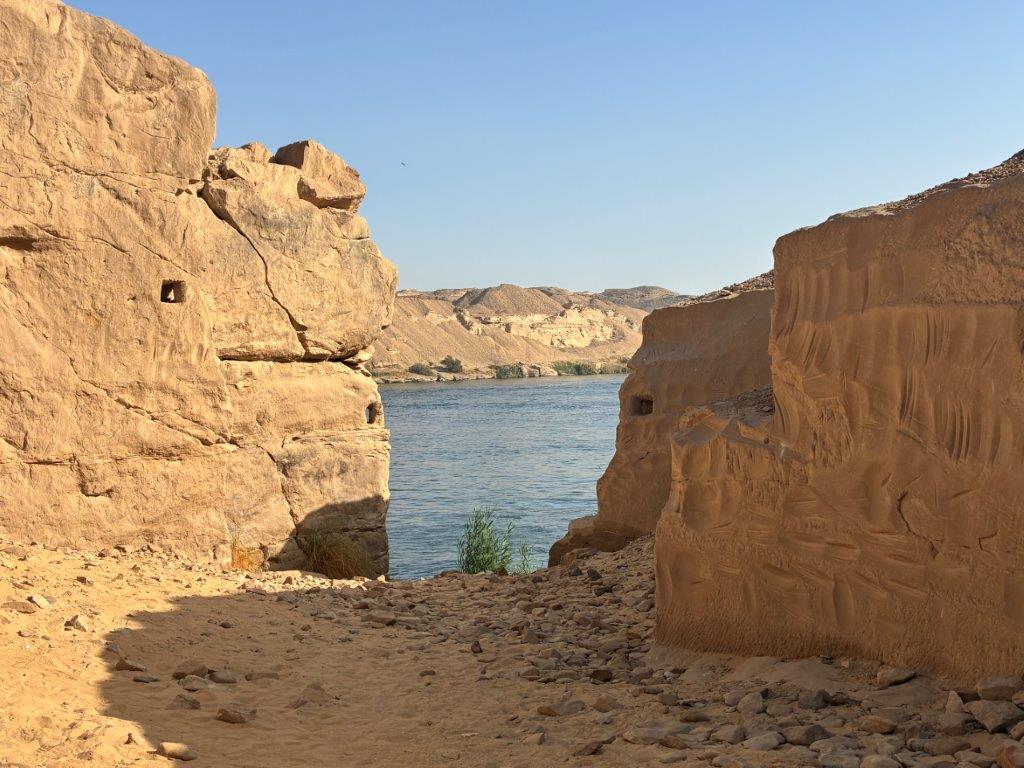
A trip along the Nile involves visiting spectacular temples like Esna, Edfu, Luxor and Karnak. Another place a dahabiya can visit that bigger boats can’t is the quarry where the sandstone for the temples was sourced. Gebel el-Silsila was once the world’s largest sandstone quarry, where huge blocks were cut out of the hillsides. We walked along to see a small temple cut out of the rockface where labourers would have worshipped. And an opening in the rocks where blocks would have been taken down to the river to be floated to their destination.
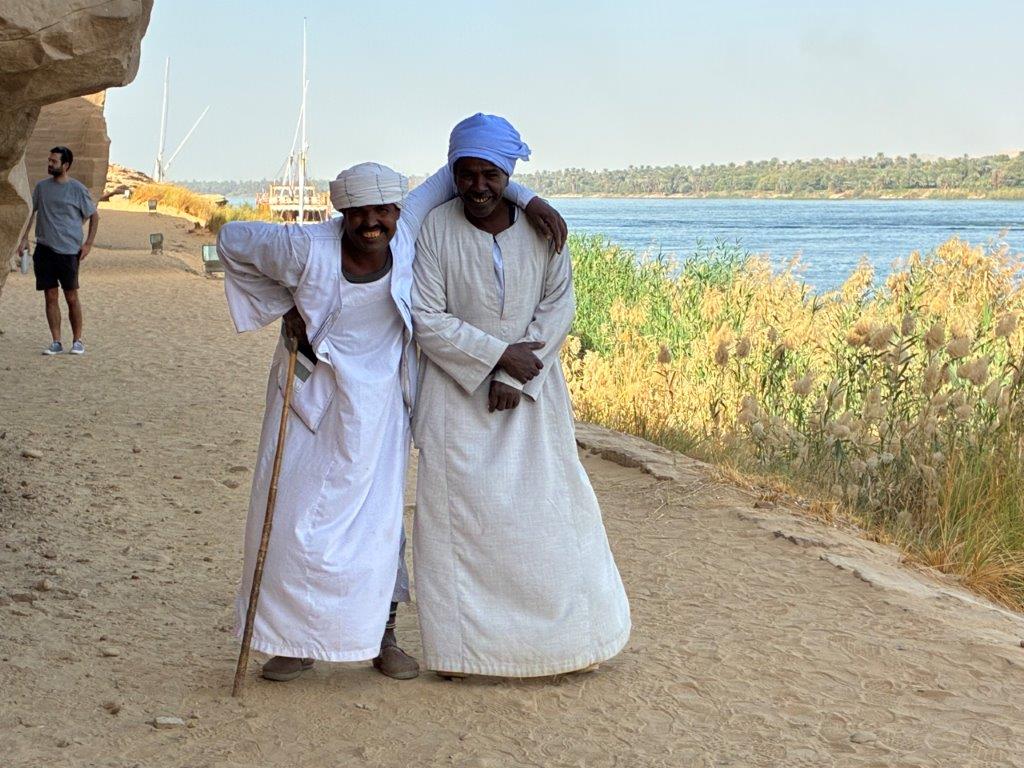
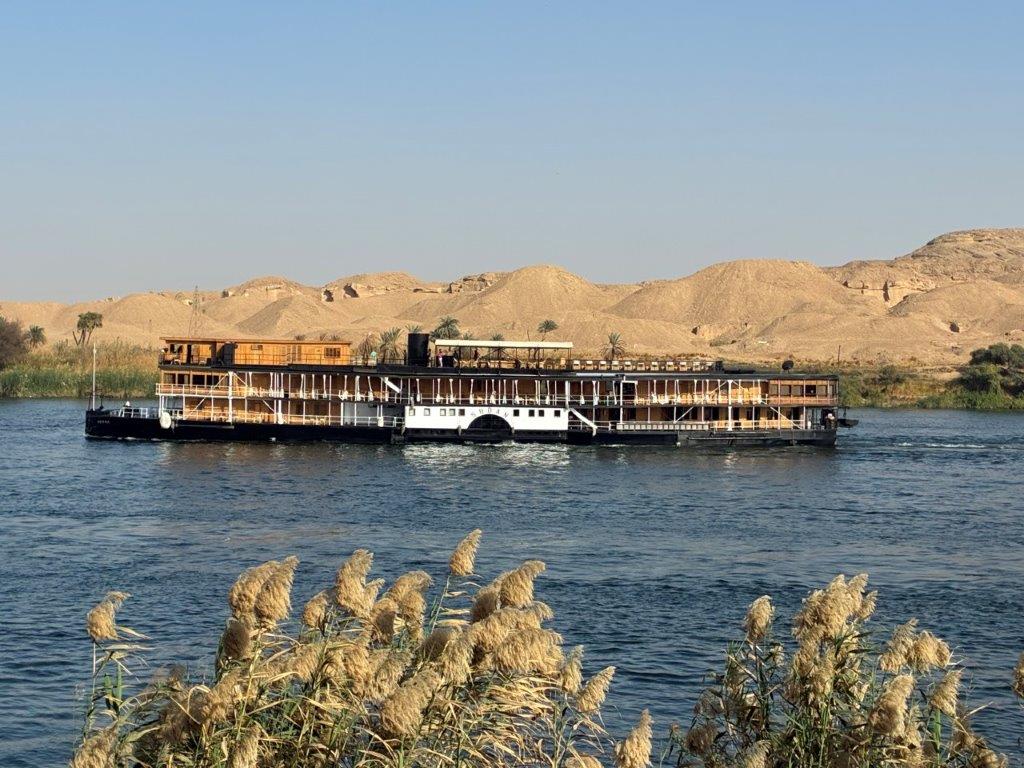
We also met a couple of cheeky site guardians who were desperate to have their photos taken! And spotted the SS (Steam Ship) Sudan, the boat taken by Agatha Christie in 1933 when she started writing Death on the Nile.
 5. Learning about island life from a local family
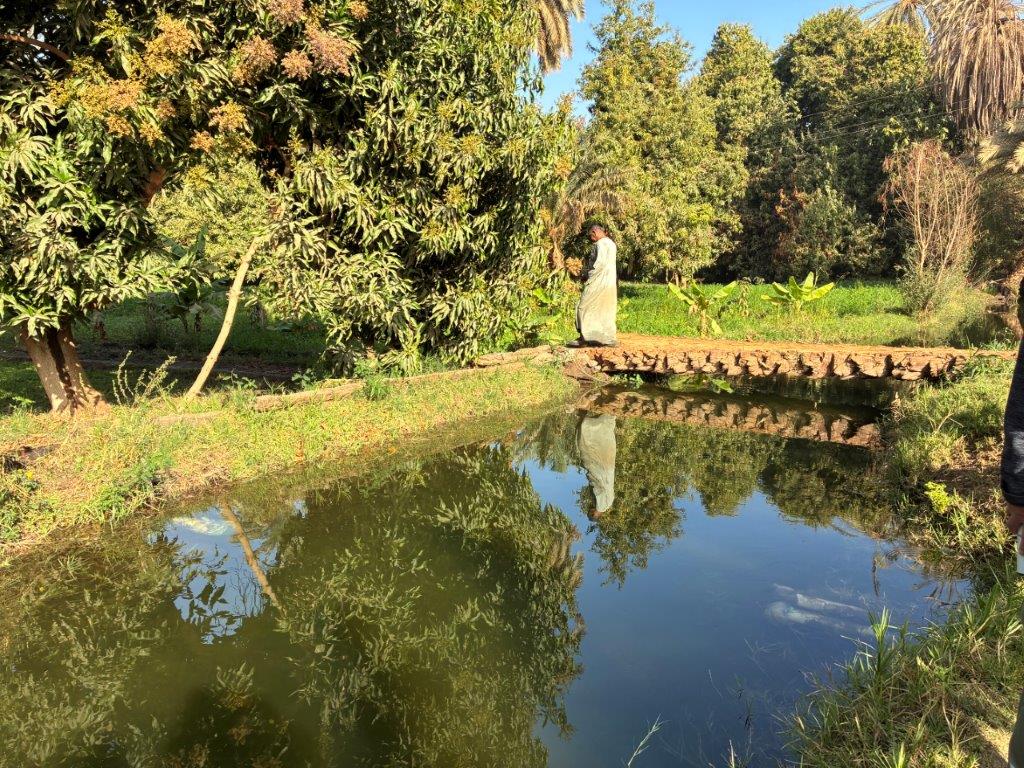
Another stop that is possible on a dahabiya is Bisaw Island. We moored up there early one morning to learn about bread-making from a local family. One type of their bread is made like pancakes, rolled very thin, then folded with oil between layers. Another is the classic Egyptian sun bread, which is shaped like the sun and served warm. The bread-making area is opposite the main family home and has both a mud-brick oven and a calor gas one. We then ate the bread and other delicious food at breakfast on the rooftop of the family’s home. Fifteen family members from different generations share the house and often eat meals together on the rooftop, which has a beautiful view of the Nile.
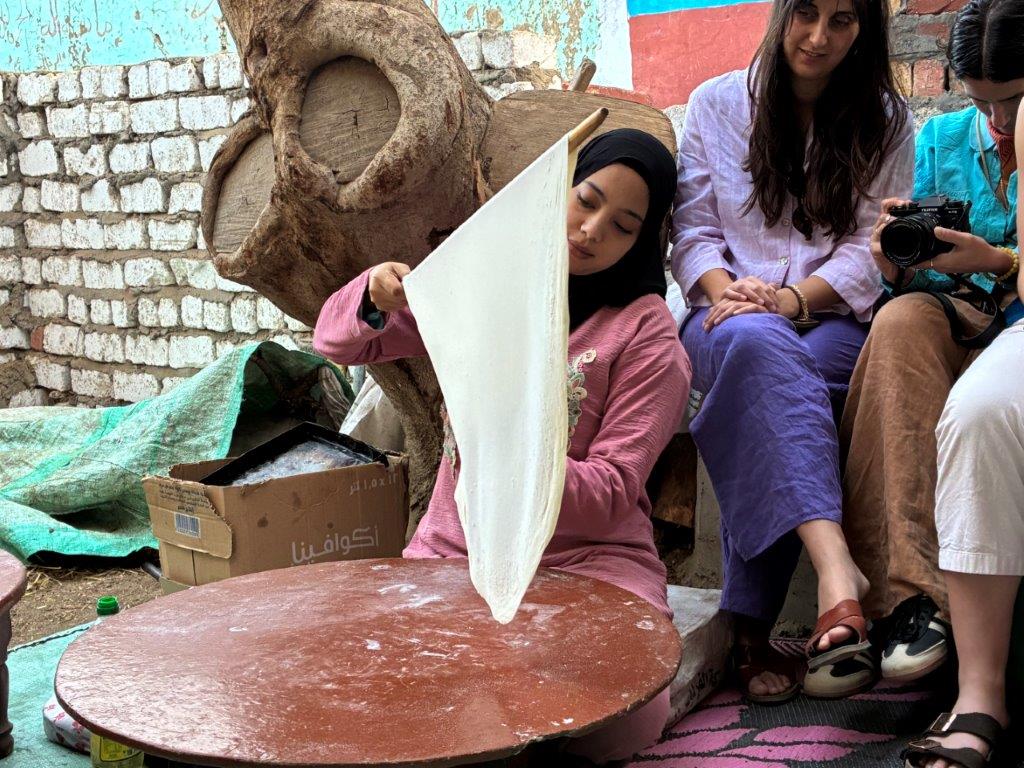
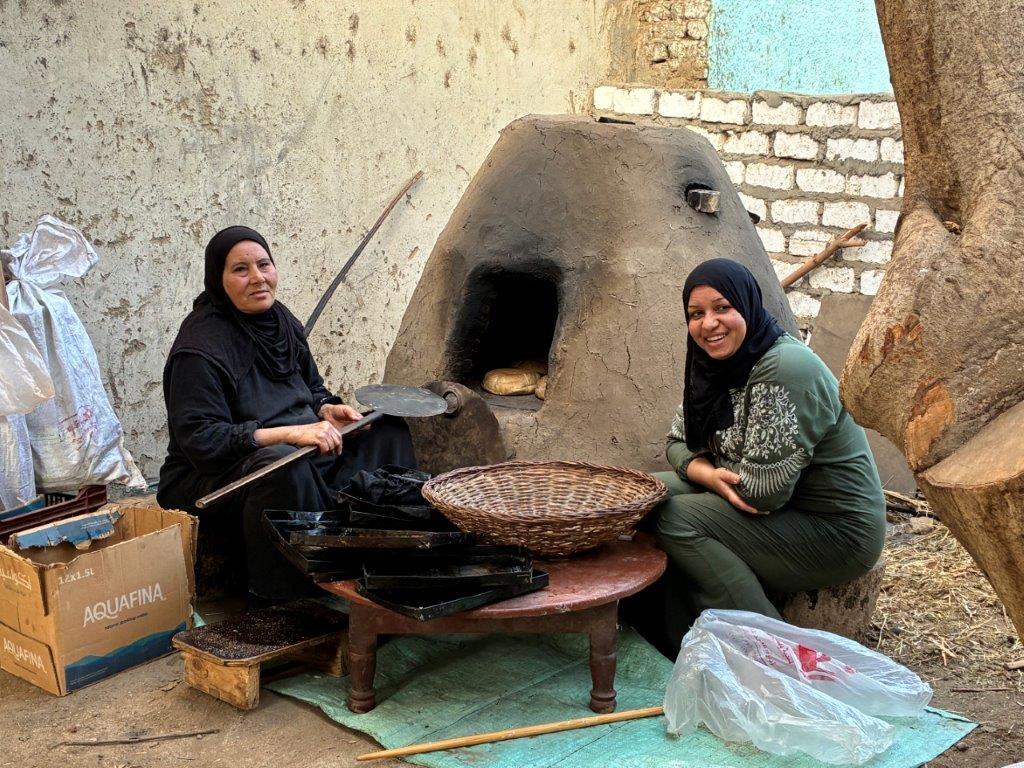
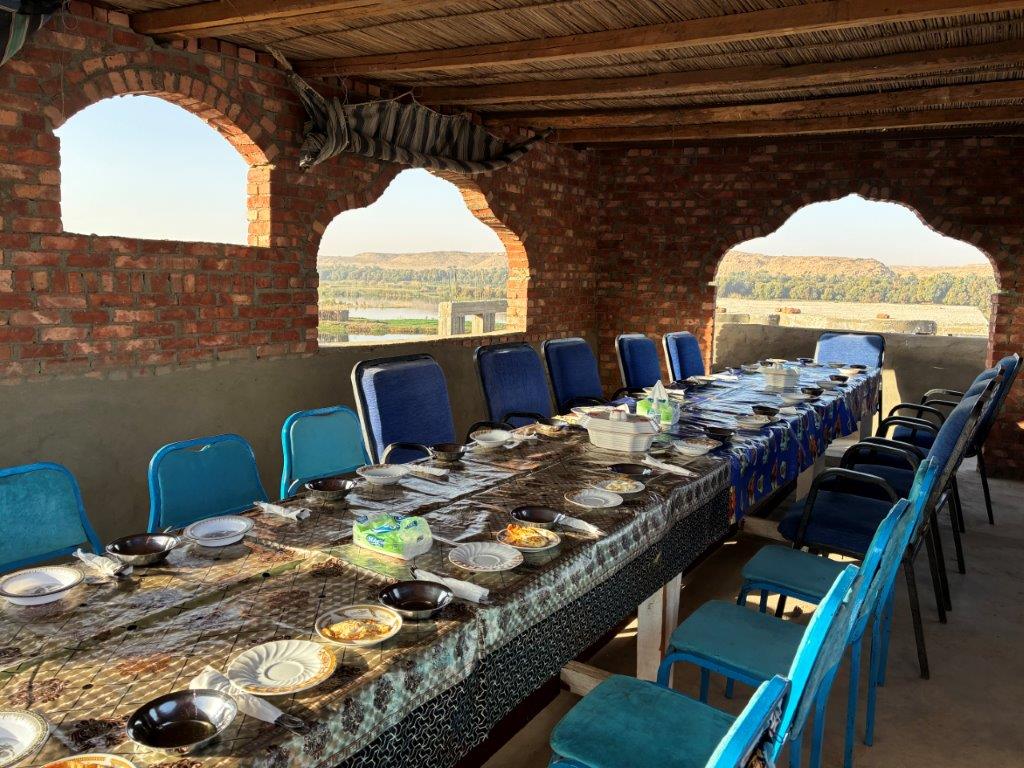
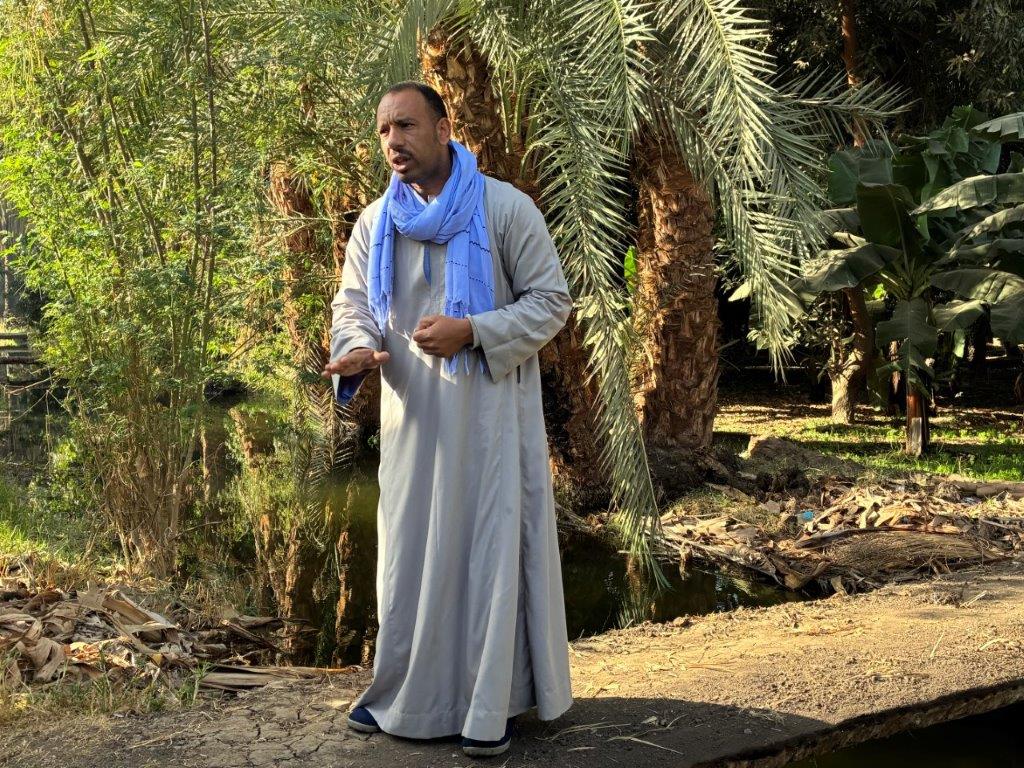
After breakfast, we learned more about the community when our host took us on a tour of the island. He explained that the population of 350 is made up of 10 families. They have a council with each family represented, and two women deal with any sensitive issues, such as marital discord. Having worked in local government, I loved seeing their version of the council chamber with no windows or roof!
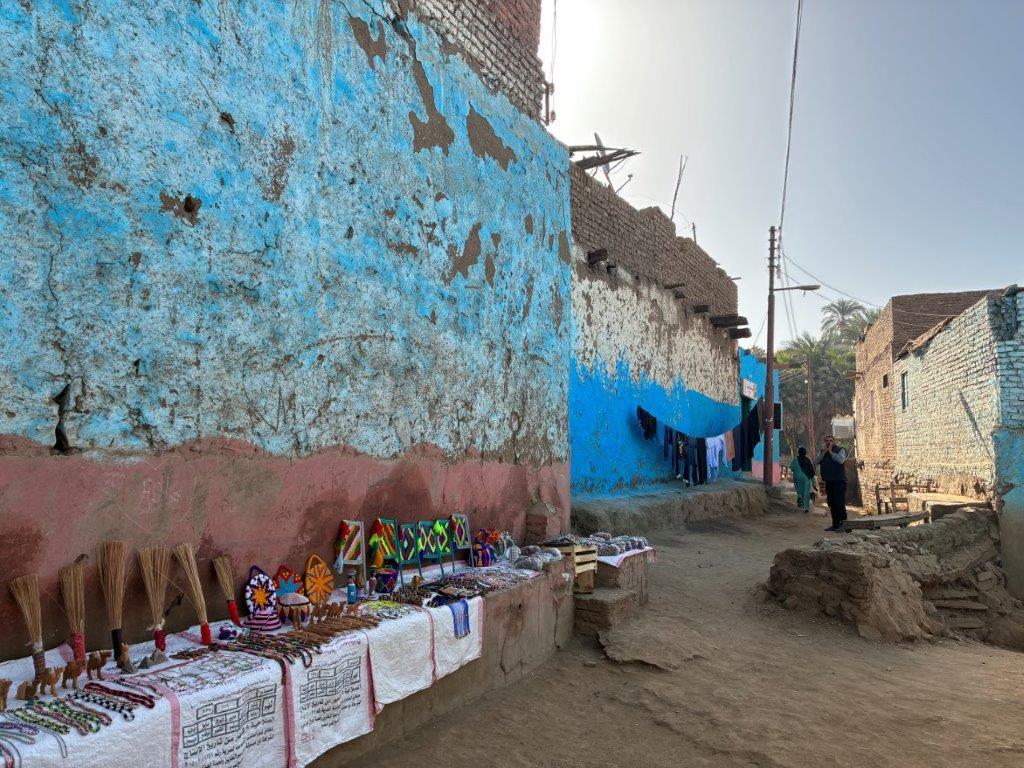
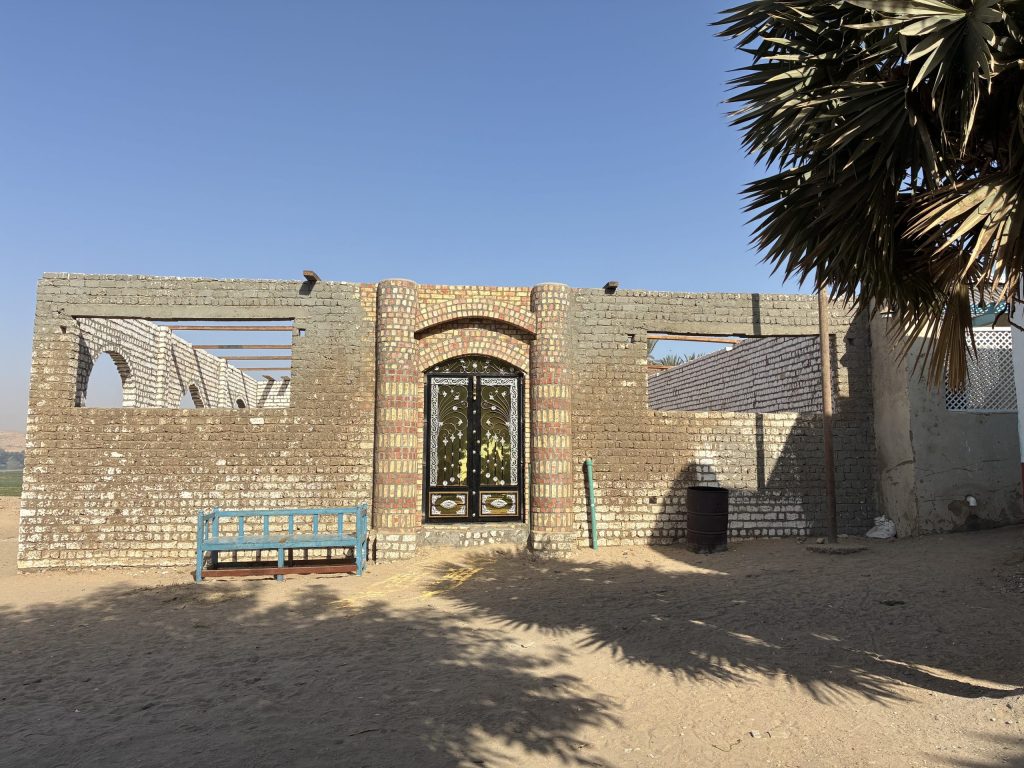 There are also two schools on the other side of the island from the main village, so the children travel there by boat. And between those two sides are 200 acres of farmland, while the families also own another 50 acres on a separate island. Crops grown include zucchini, okra, beans, dates and bananas. It’s a beautiful, tranquil place that we really enjoyed walking around. We were also pleased to find a small stall with local products for sale, and happily bought some to support this lovely, friendly island community.
 6. Fishing for dinner in the Nile
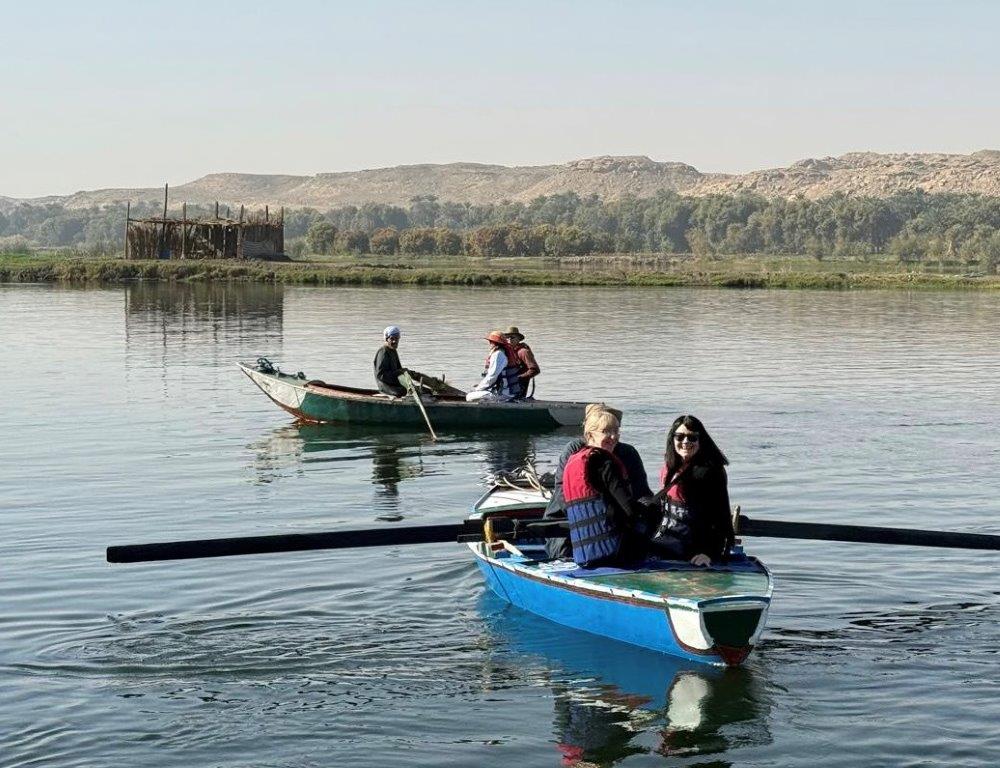
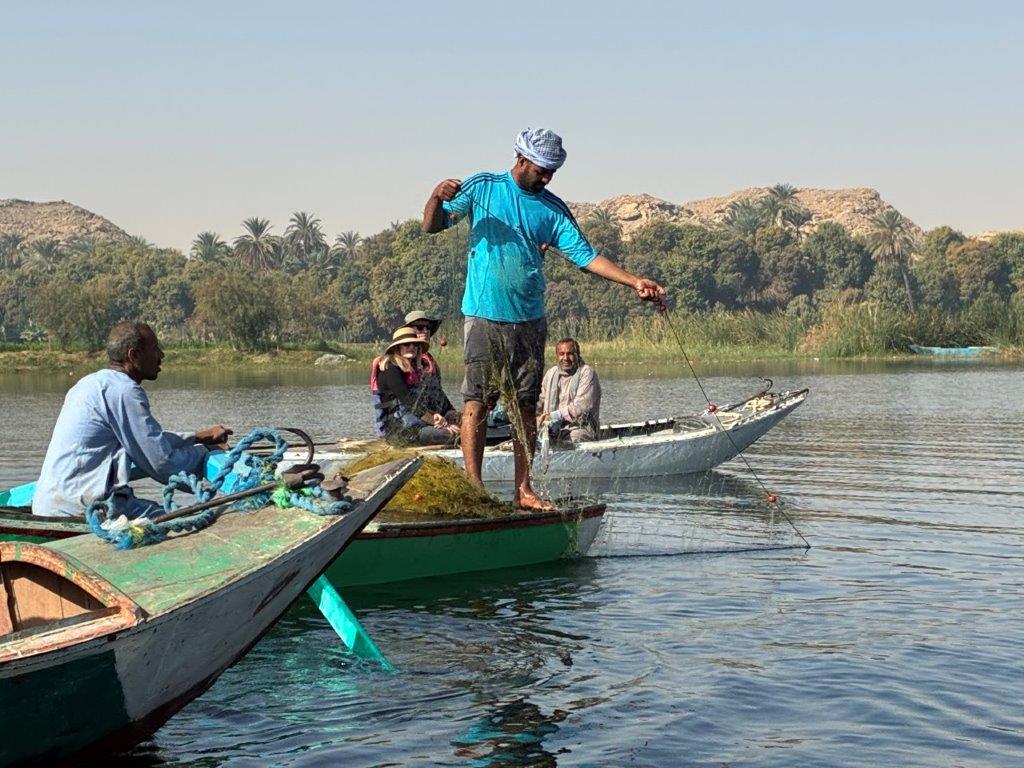
Our next adventure on Bisaw Island was fishing for our dinner. As well as growing crops on land, many of the locals are also fishermen. They go out on the Nile in small traditional boats, so we joined them in pairs. It was another great way to experience local life on the river. Though we didn’t catch much. Fortunately, the dahabiya chef anticipated that and went shopping for fish at a local market!
 7. Temple visits without the crowds
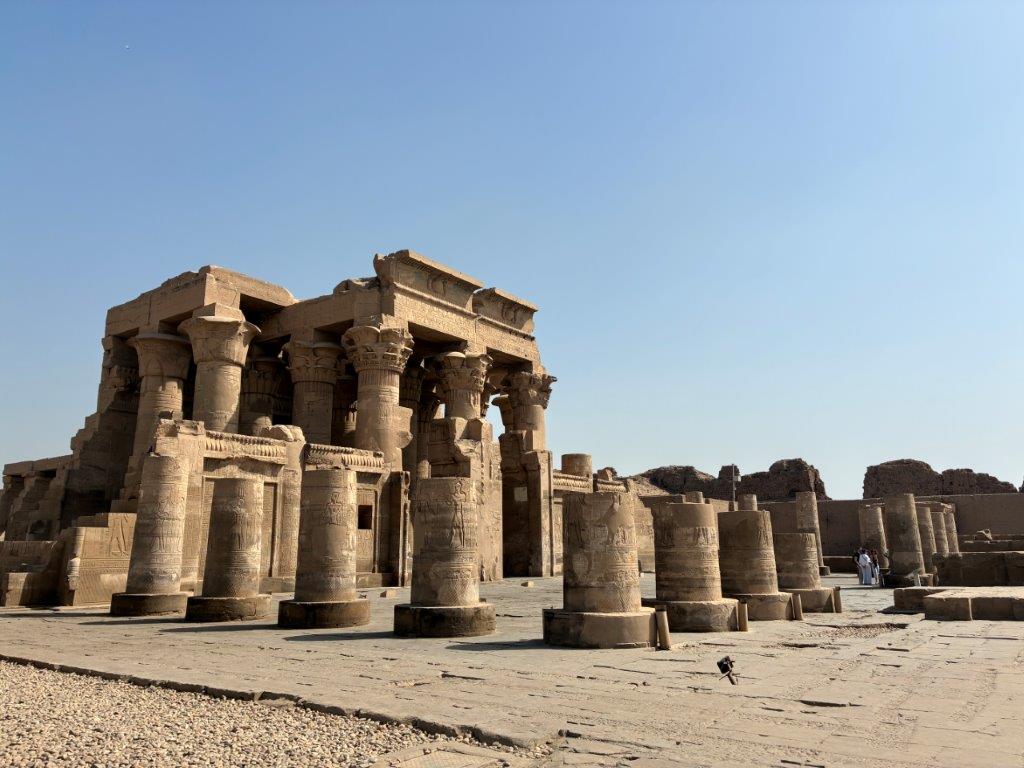
One of the biggest advantages to crusing the Nile by dahabiya is being able to do activities like the ones I’ve described while groups from the large ships are at the temples. We visited temples later when they were much quieter. The first one we saw was Kom Ombo, which is unusual because it’s a twin temple, dedicated to both the crocodile and falcon gods. That means there are symmetrical temples on either side of the main walkway.
The hypostyle halls are ruined, but you can see carvings of the temple gods. We also saw an entertaining relief that includes a depiction of a woman giving birth! Near the temple exit, there’s a crocodile museum. It has a collection of mummified crocodiles, but my friend and I went to the shop instead. We’d already seen a mummified crocodile at the Grand Egyptian Museum in Cairo, and one was enough for us!
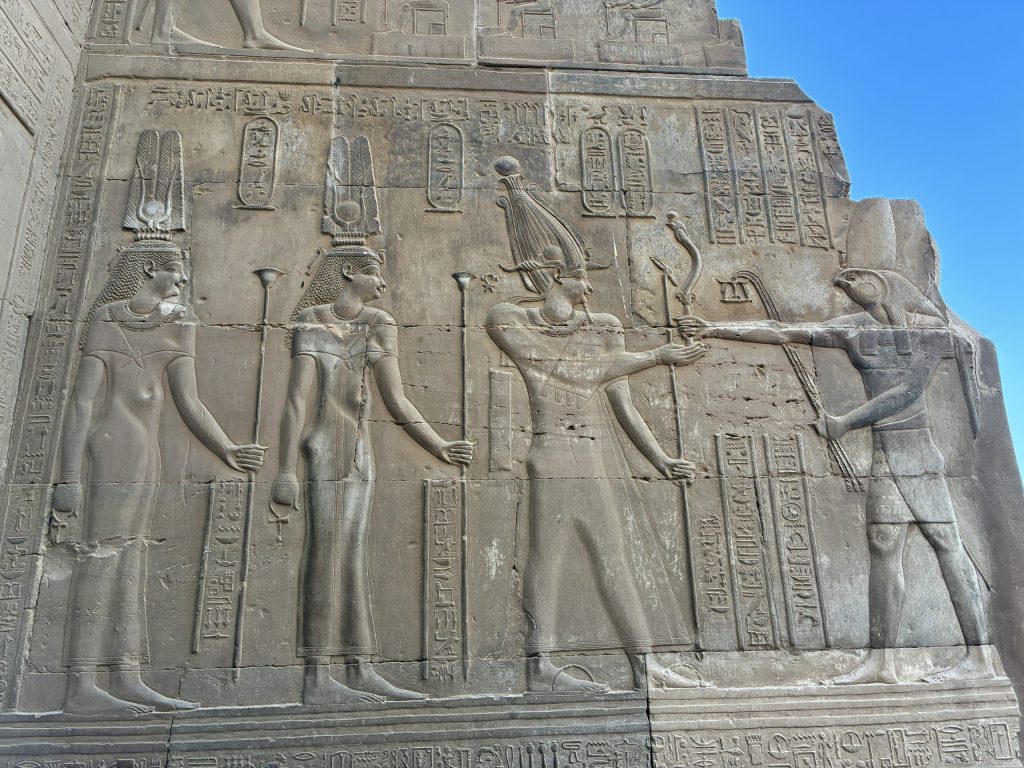
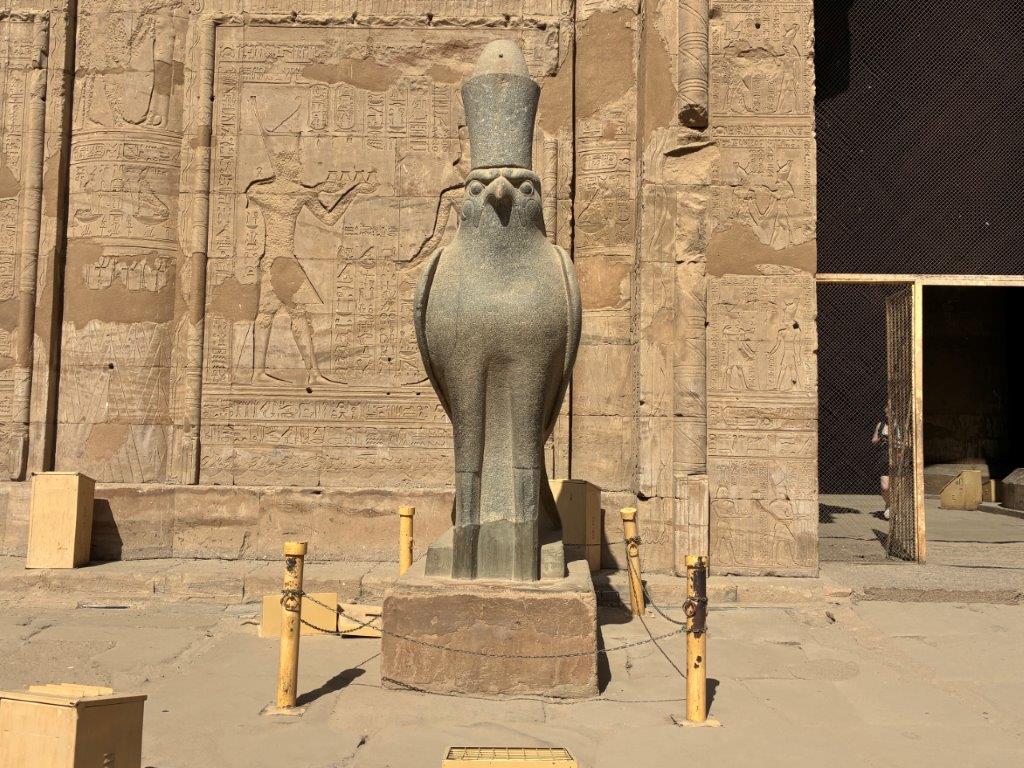
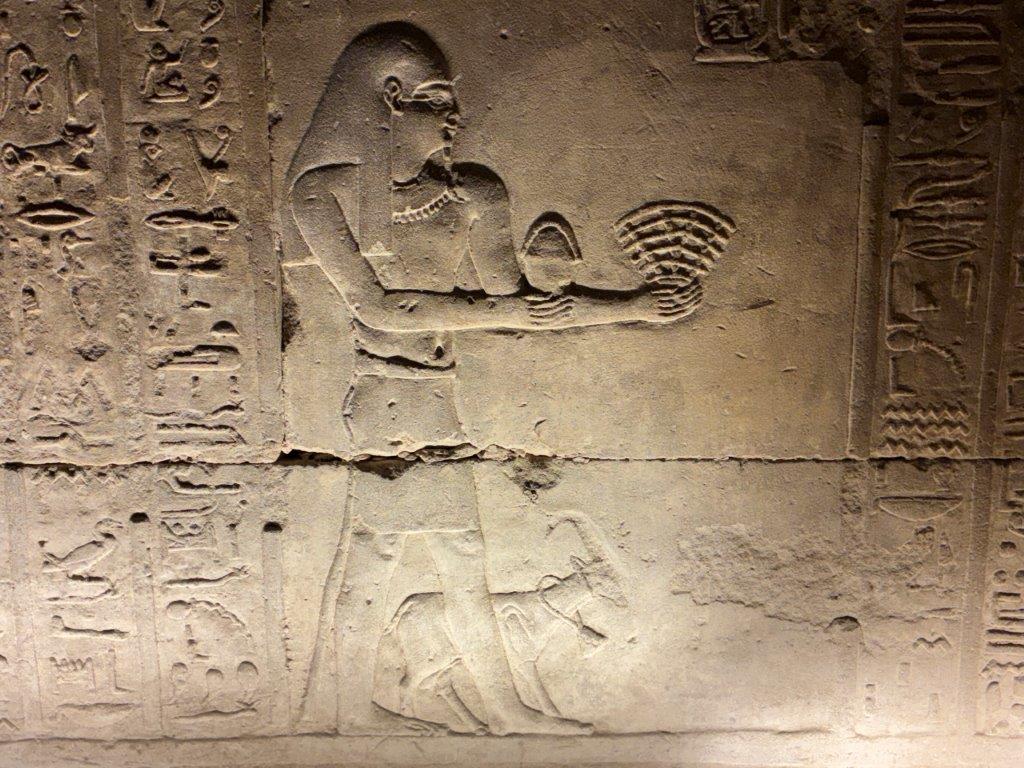
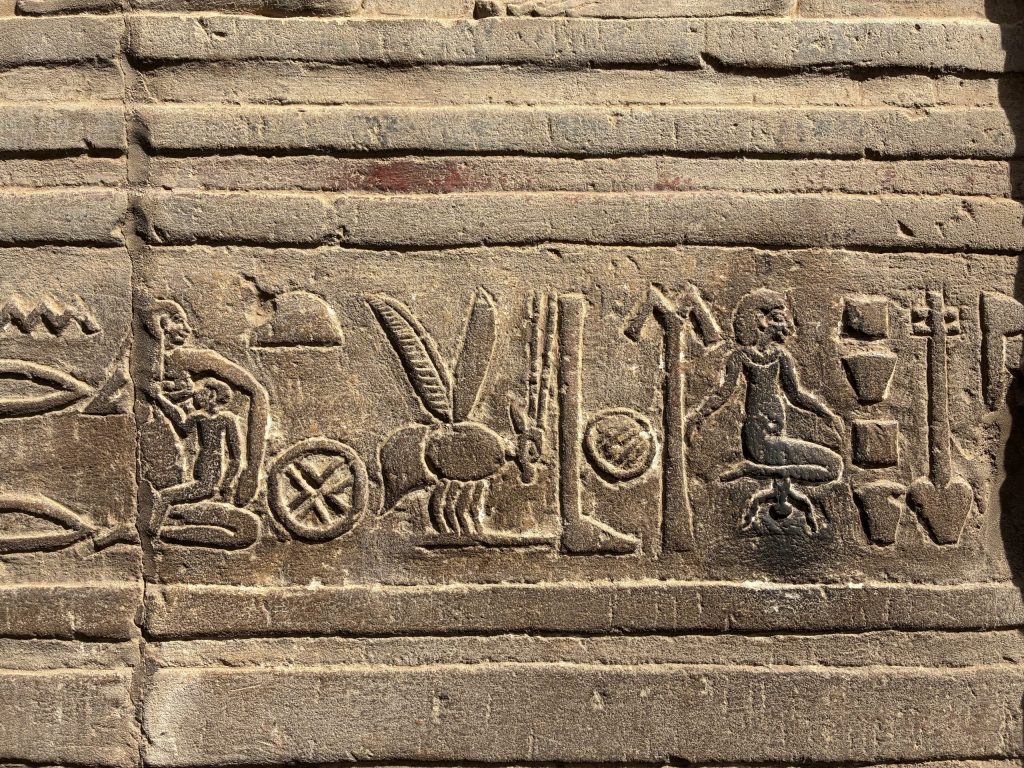 Another of the Nile’s great ancient structures is the Temple of Horus at Edfu. It sits about halfway between Aswan and Luxor and is regarded as one of the best-preserved temples in Egypt. Horus was the falcon god, and his temple was built on the spot where he killed his uncle to avenge his father’s death. All rather Shakespearean, but a long time before the Bard’s plays were written. There is plenty to see here, and I should add that it’s essential to visit places like this with a guide, as you see and learn so much more. On the dahabiya, we had a full-time guide who was brilliant. He gave us briefings on the boat and then made sure we didn’t miss anything once we were at the temples. At Horus, he even pointed out what looked like a WiFi symbol. Who knew the Ancient Egyptians were so advanced!

 8. Seeing restoration in progress at Esna’s temple
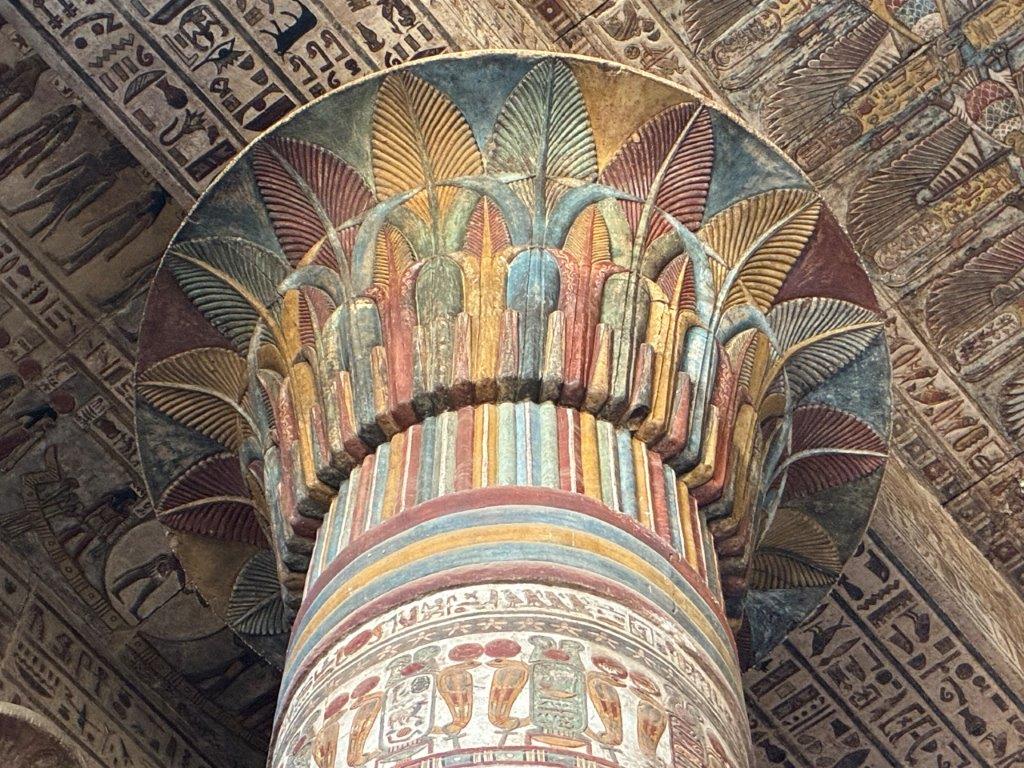
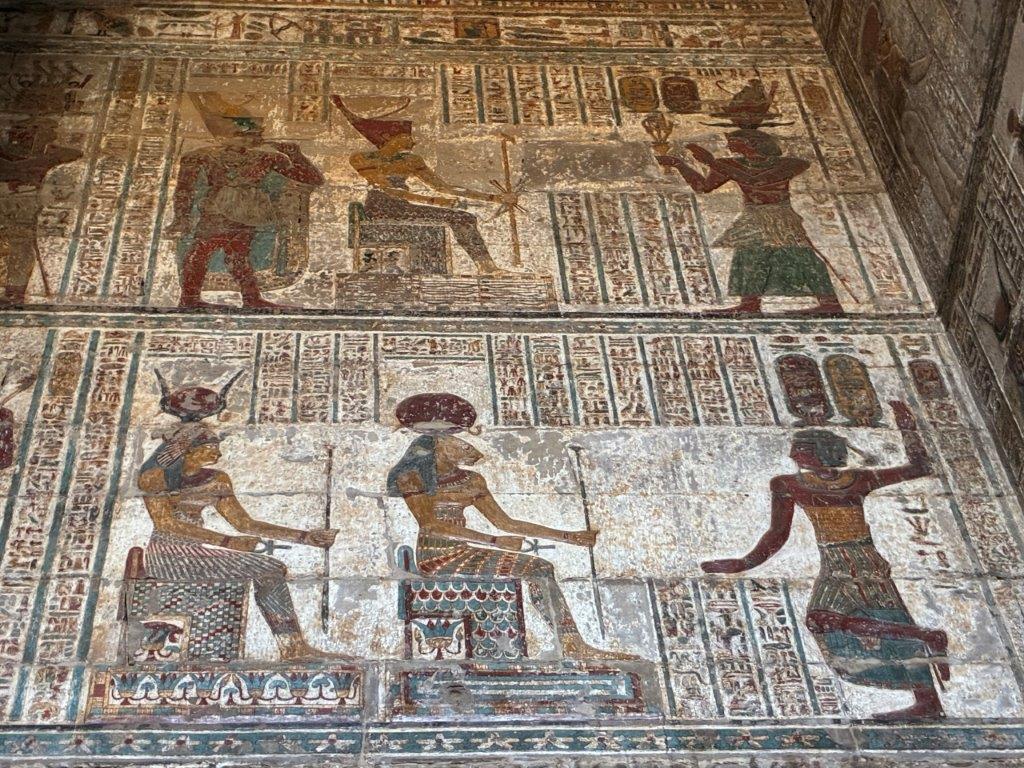
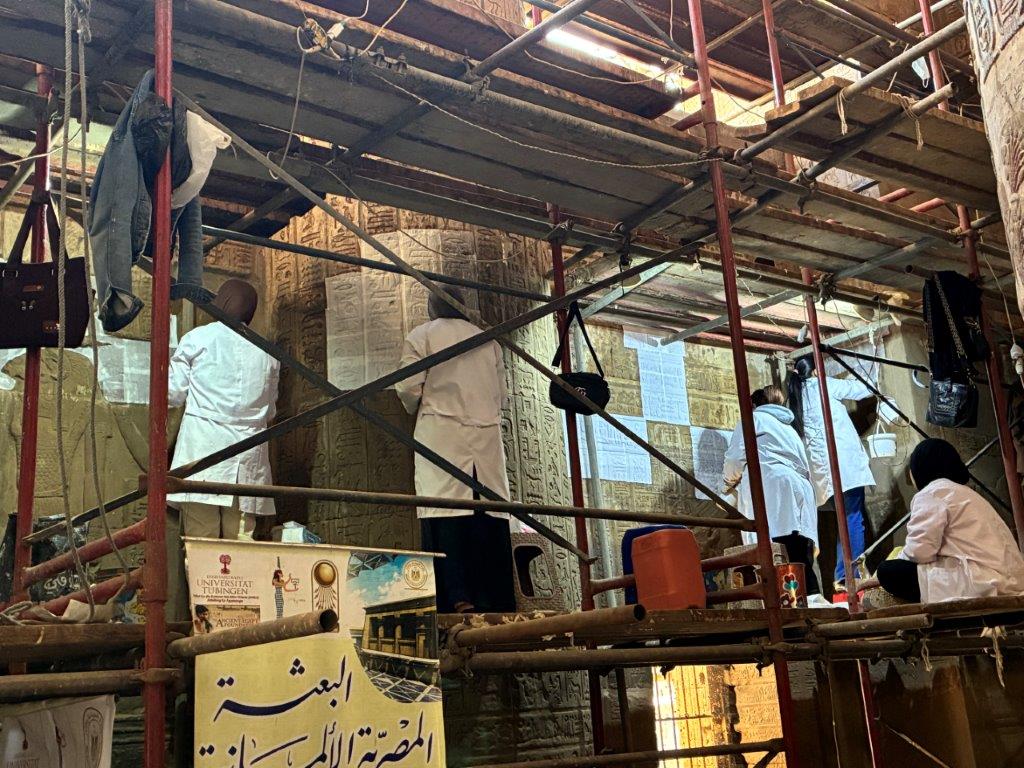
The final temple we saw was at Esna, where we disembarked the dahabiya, and is just over an hour’s drive from Luxor. The Temple of Khnum is quite a stunner. It was buried under sand for years and then excavated in the 19th century. The restoration work that followed means it’s full of colour. The columns in the main hypostyle hall all have different designs, while the ceiling is painted with cosmological scenes. On the walls are paintings of the temple patron making offerings to the gods. In one section of the temple, a group of experts were undertaking more restoration. We watched as they carefully cleaned more frescoes to reveal their gorgeous colours. Slow, but I’d imagine very satisfying work.
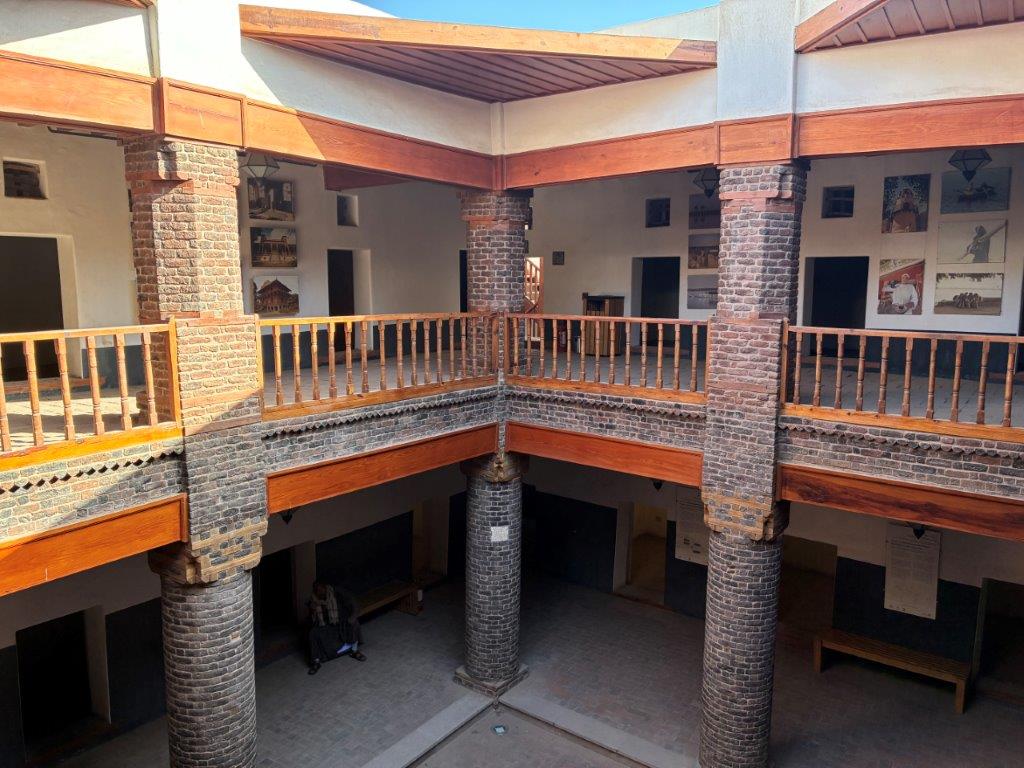
Close to the temple is another sight worth seeing, the Wakalat Al Jiddawi caravanserai. It dates from the 18th century and has also been recently restored. On the balcony upstairs is an interesting exhibition of paintings showing local life through the ages.
 9. Meeting amazing new friends
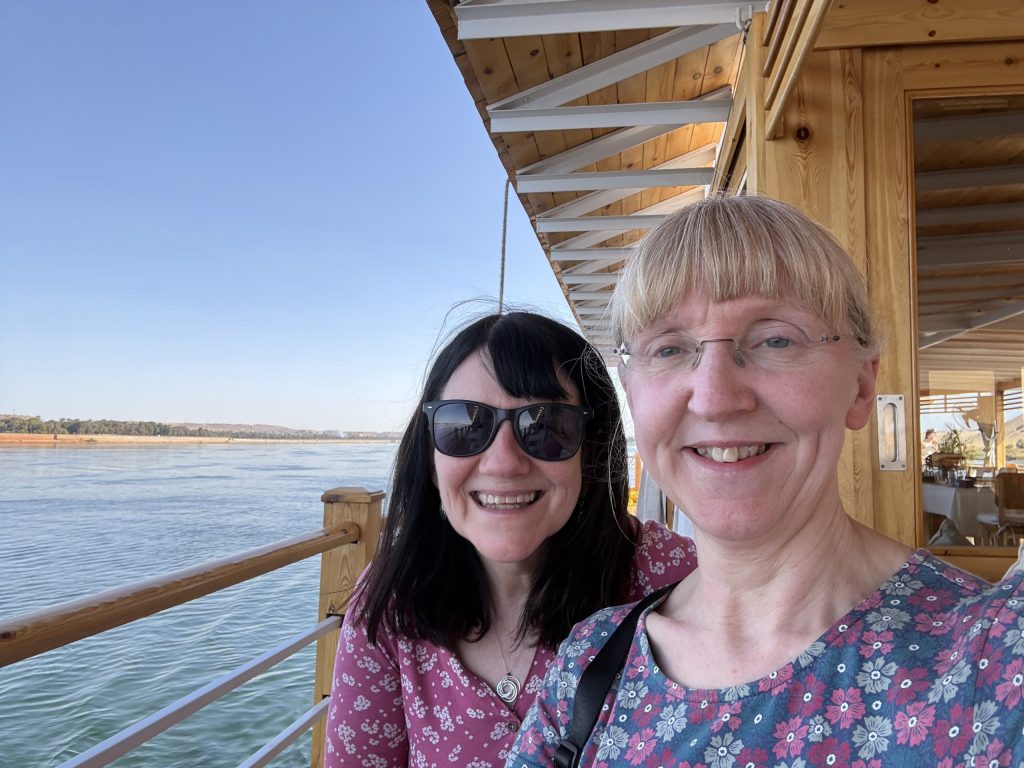
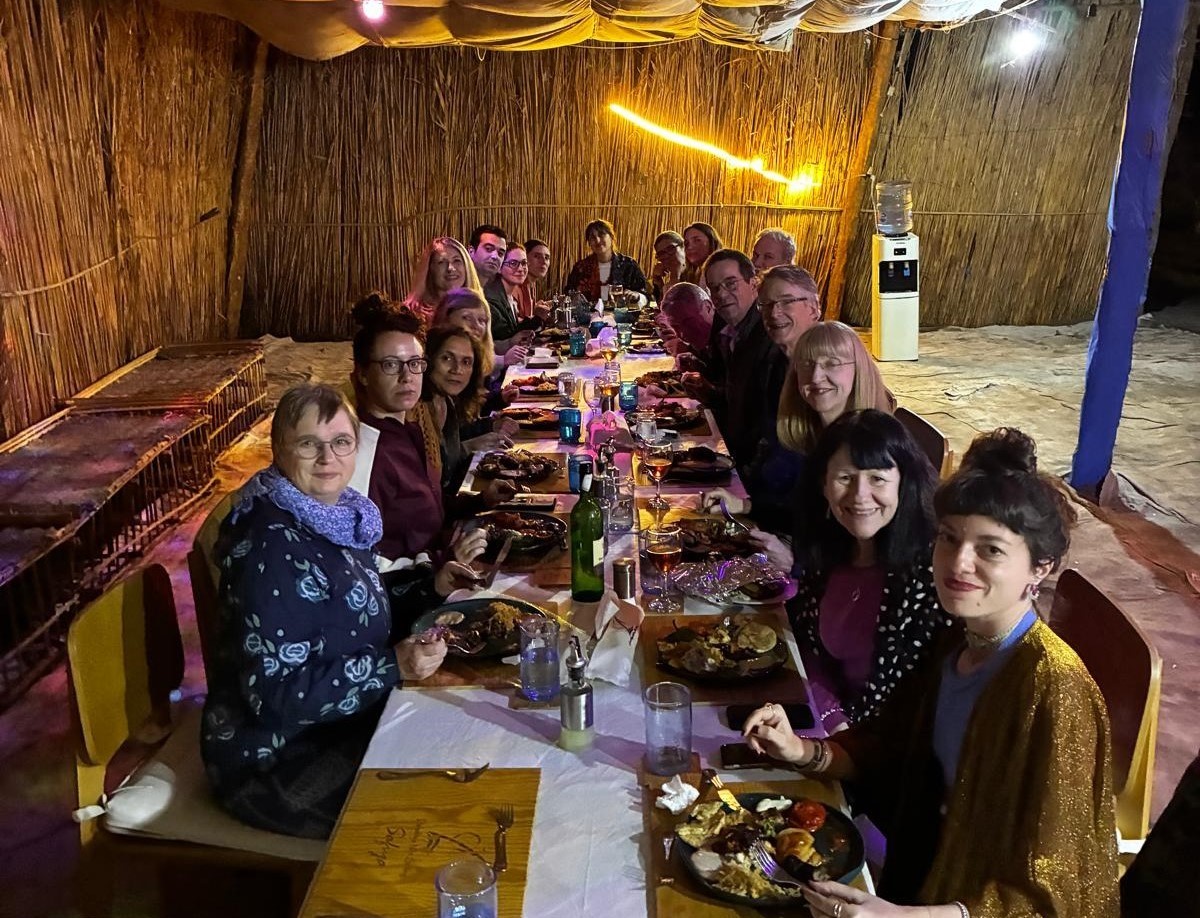
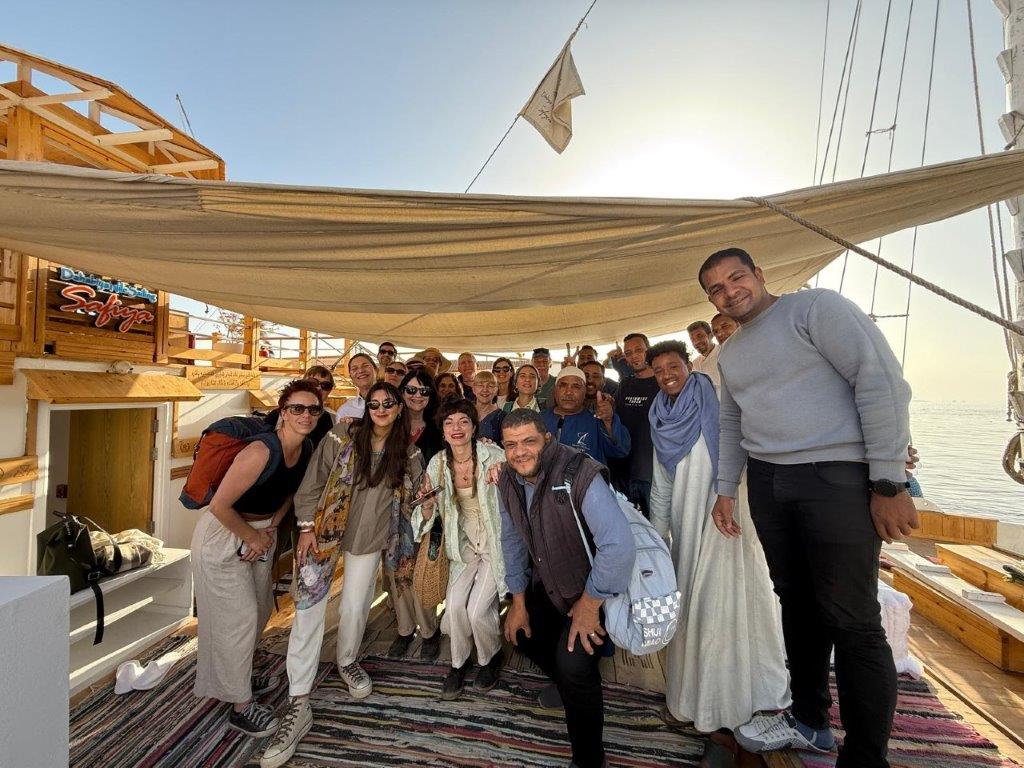
Undoubtedly, one of the main highlights of our time on the dahabiya was meeting new friends. There were just 18 guests, so we got to know everyone on board. Surprisingly, despite being a tour in English, my friend and I were the only two English people on board. We had a mix of people from many different countries, and it was great to chat to them over shared meals or while relaxing on the boat. We have already booked a trip to Malta later this year to visit some of the new friends we made!
 10. The fabulous crew of the dahabiya
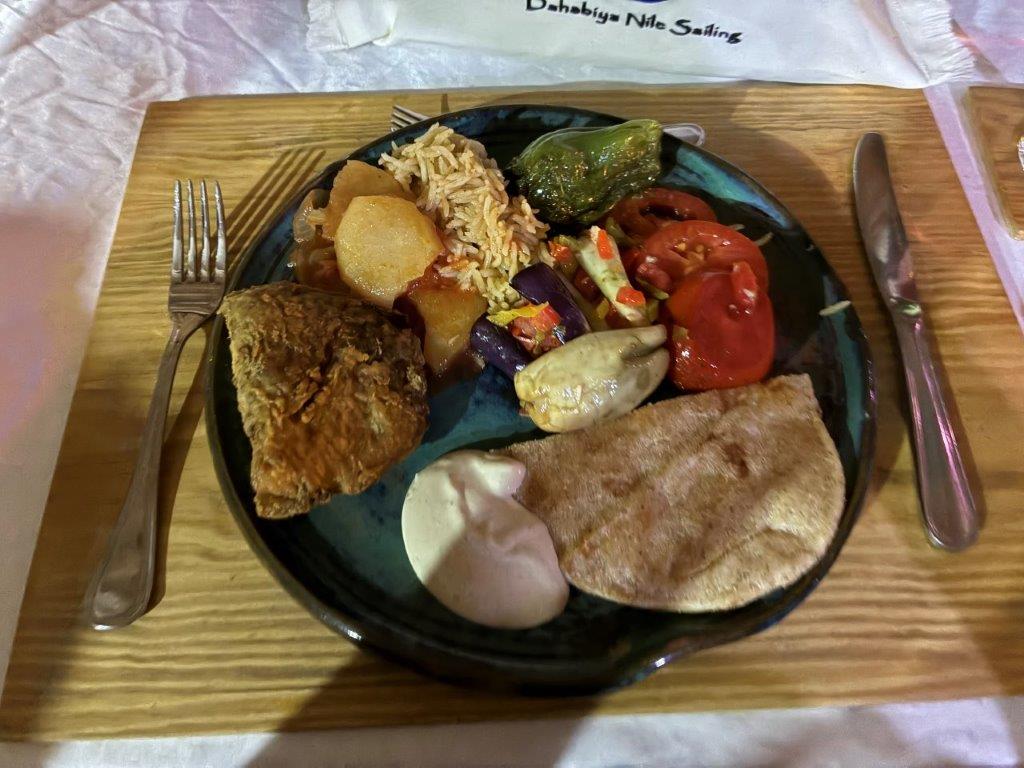
And finally, I have to talk about the fabulous crew on the dahabiya. As well as our guide, we had 12 people looking after us. Everyone from the boat captain and the chef to our hospitality manager were wonderful and dedicated to making sure we had a memorable trip. The food was excellent, and they catered for my friend and I not eating meat, with no difficulty. Though it was a learning that they don’t consider poultry to be meat, so they thought we would eat it! We hadn’t described ourselves as vegetarians when booking the trip, as we eat fish. But evidently, you need to be very specific in Egypt! We never went hungry, though, as there was always plenty of choice at meals and endless bowls of snacks in the seating areas.
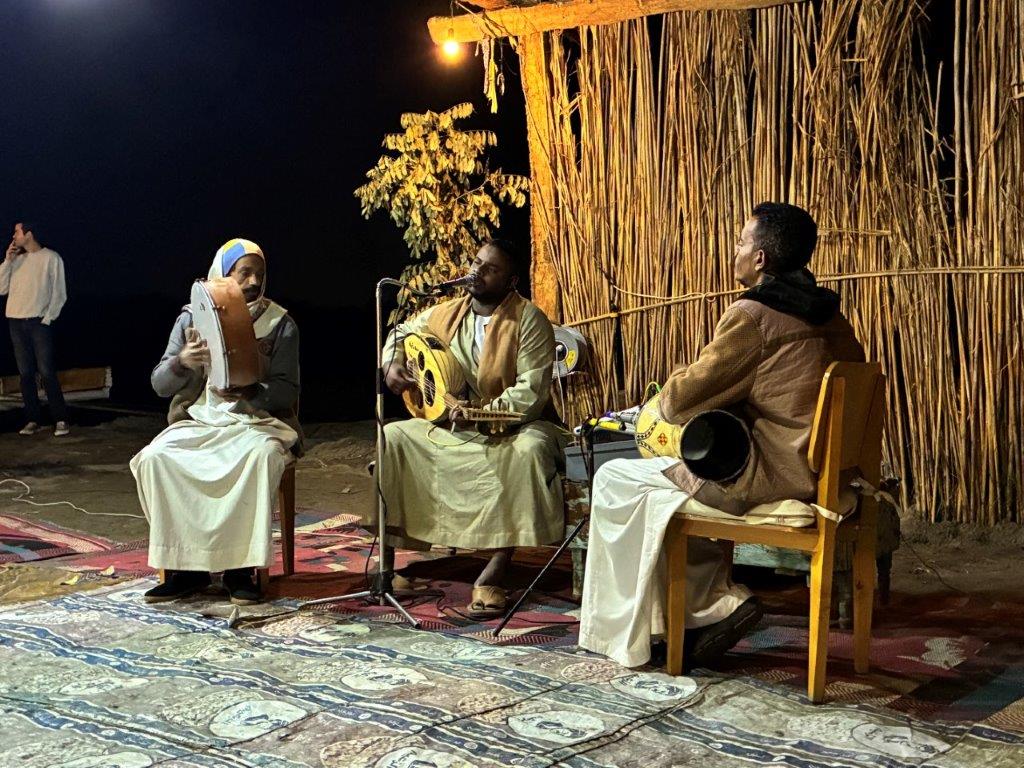
Drinks were plentiful, too, though you do need to take your own alcohol and serve it yourself. Like many people in Egypt, the crew are Muslim and don’t drink alcohol. But they do know how to party! One night, we moored up and got off the boat for a barbecue. After dinner, we were entertained by musicians, and the crew quickly got the dancing started. It didn’t take much persuasion for everyone to join in.
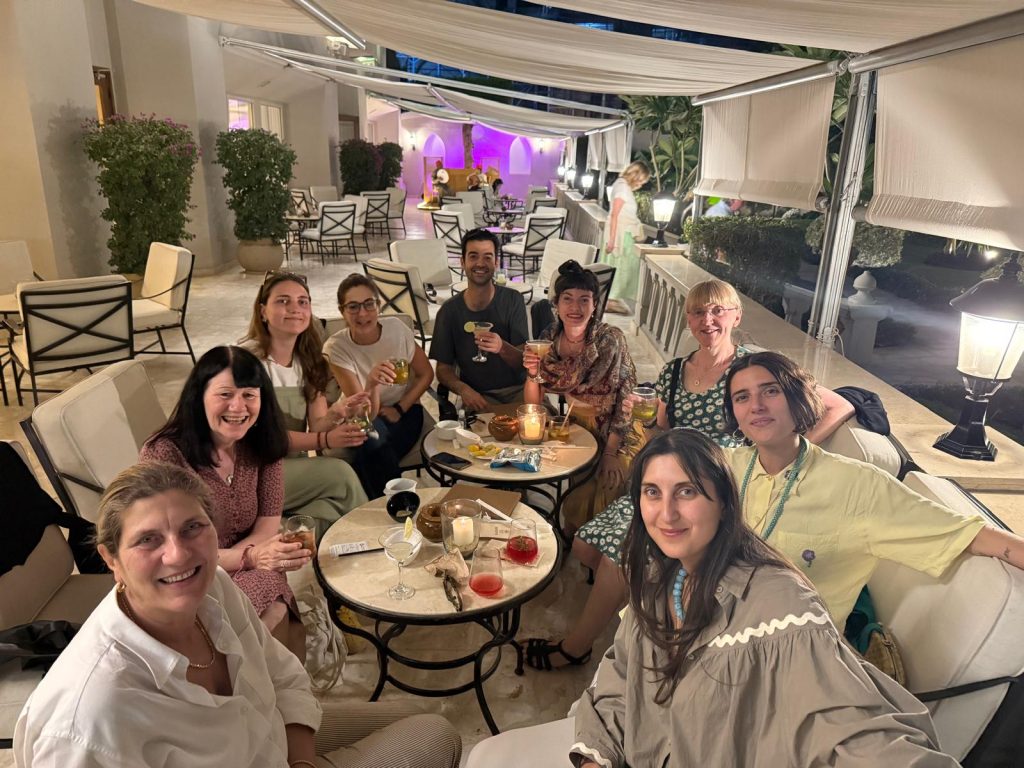
So all of those highlights and more are why dahabiya has become one of my favourite words. It was a trip that I won’t ever forget, and I was sad to say goodbye to the new friends and crew that we met. Although half of the group did come to our hotel in Luxor for drinks on the terrace later that evening!
 For more posts about my trip, visit the Egypt section of my blog.
Discover more from TRAVEL COCKTAIL
Subscribe to get the latest posts sent to your email.