There’s no disputing that Frida Kahlo is an icon. So it’s no surprise that Tate Modern’s current exhibition reflects that in its title. What’s more interesting is ‘The Making of’ part of the title, as it’s an exhibition that provides a real insight into the life, work, influences and legacy of Mexico’s most famous artist.
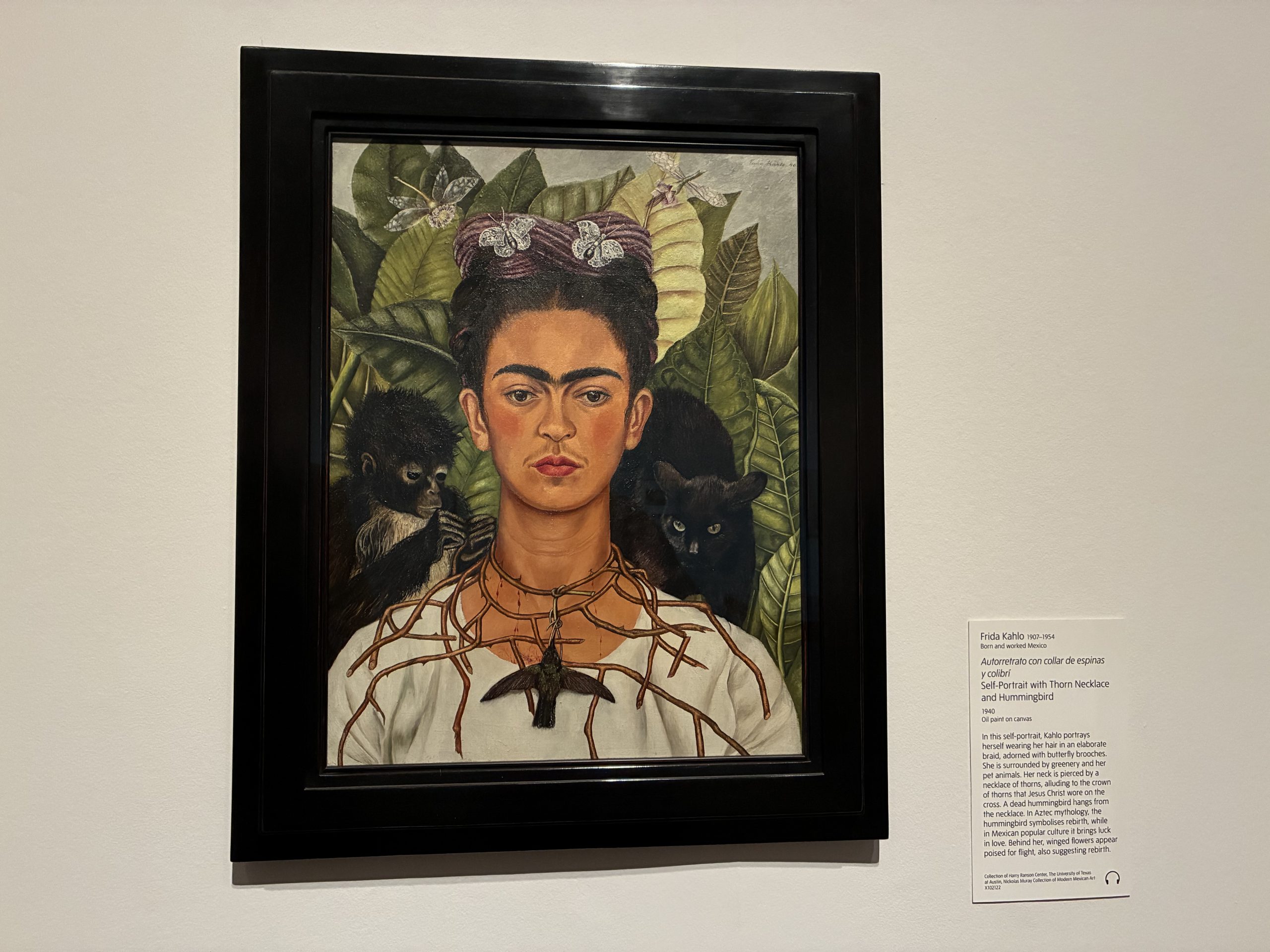 Frida: The Making of an Icon features over 30 of Kahlo’s most iconic works that introduce her ‘many selves’. The dedicated wife, the intellectual, the modern artist, and the political activist. But there are also more than 200 works by her contemporaries and the artists she inspired.
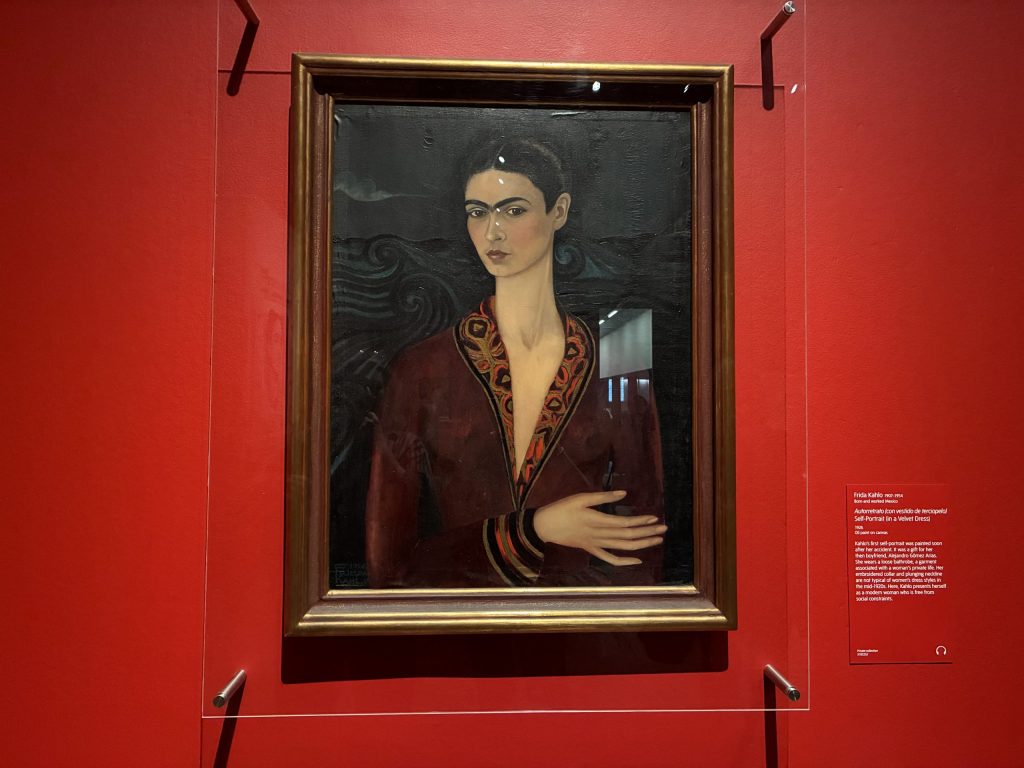
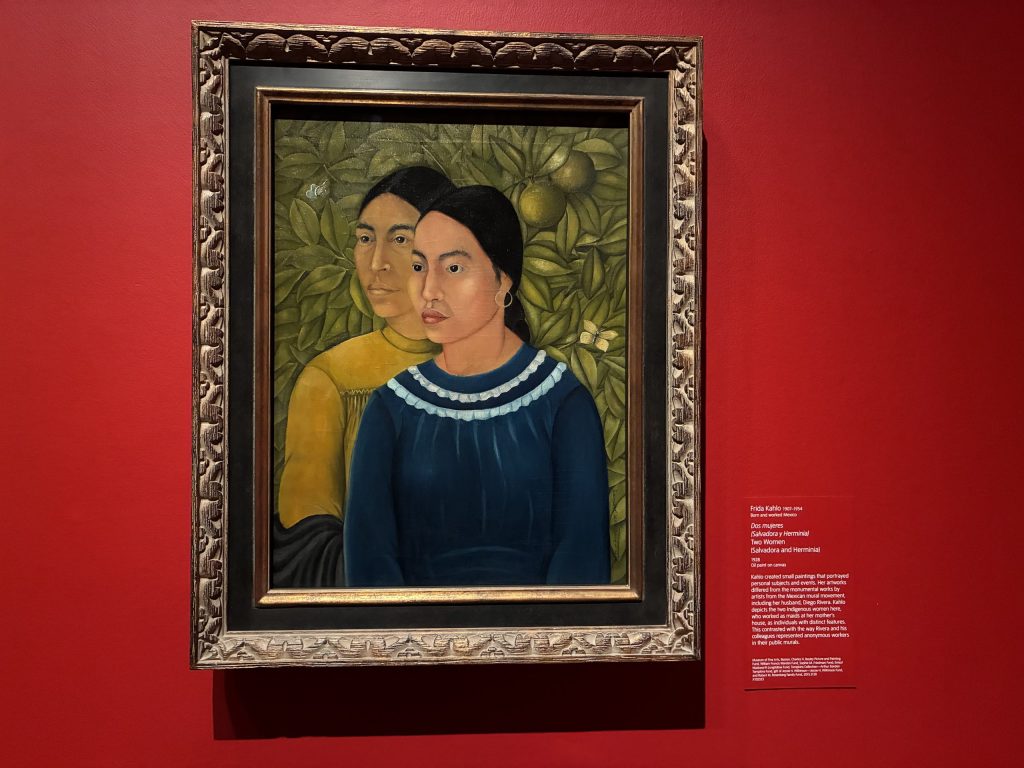
The exhibition starts with Frida Khalo’s early experimentation with art. Something that only happened after her original plan to go to medical school was derailed in 1925 by a bus accident. At only 18 years old, Frida was left with a broken spine, foot and pelvis. Injuries that created lifelong issues. It was while she recovered in bed that she started painting with an adapted easel. Some of her earliest works are on display, including her first self-portrait from 1926 and Two Women, a portrait of two indigenous women who worked in her mother’s house.
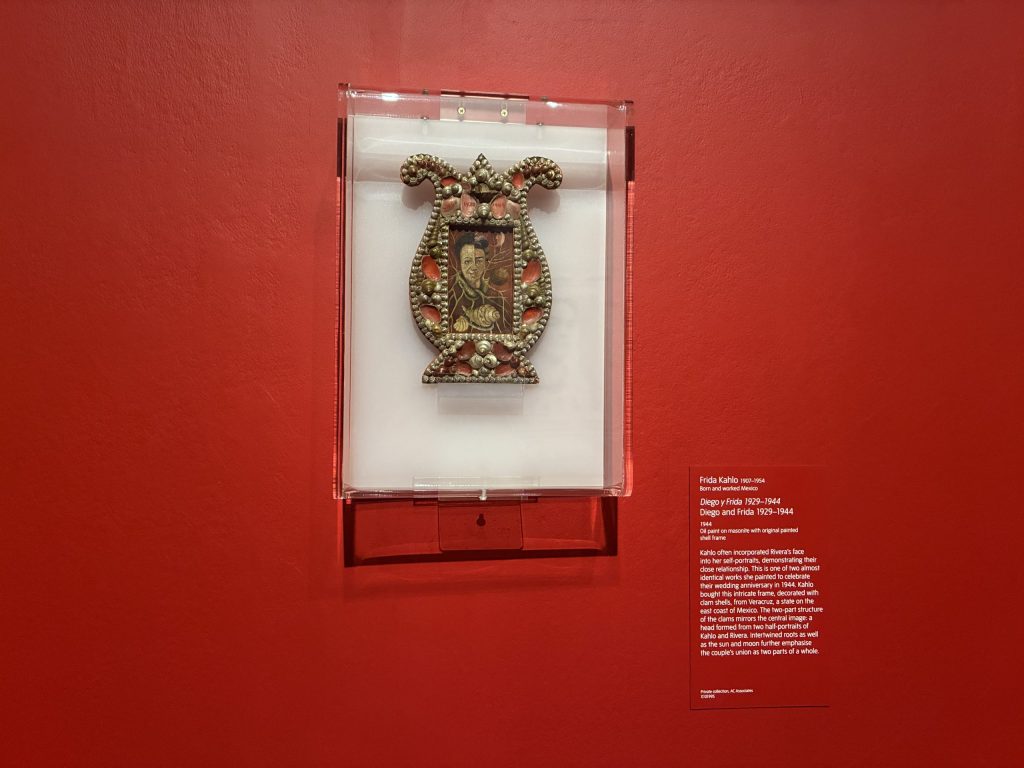
 In June 1928, Frida met the famous Mexican mural painter Diego Rivera. Despite being 21 years older than her and having two common-law wives, they started a relationship and married the following year. Frida was just 21, and her parents referred to it as a “marriage between an elephant and a dove”. A reference to the fact that Rivera was tall and overweight while Frida was petite and fragile. There is plenty of material on display, including video footage, to show this startling difference. But it seemed to work, and there are Frida Kahlo self-portraits designed to show their closeness in which she incorporated her husband’s face.
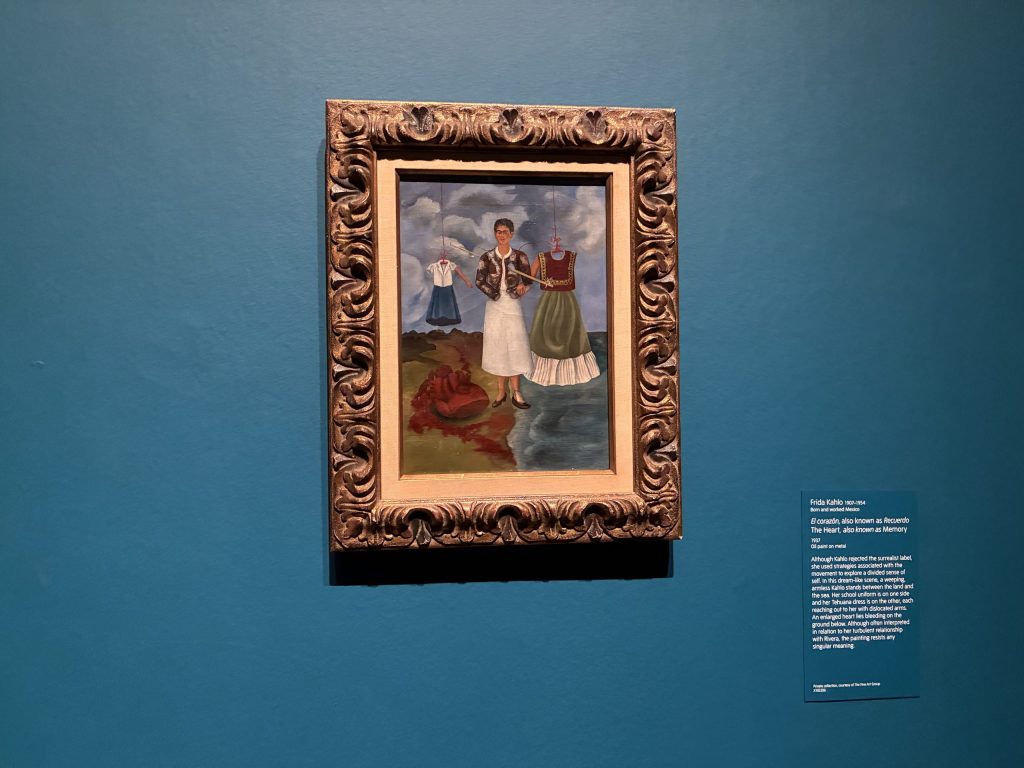
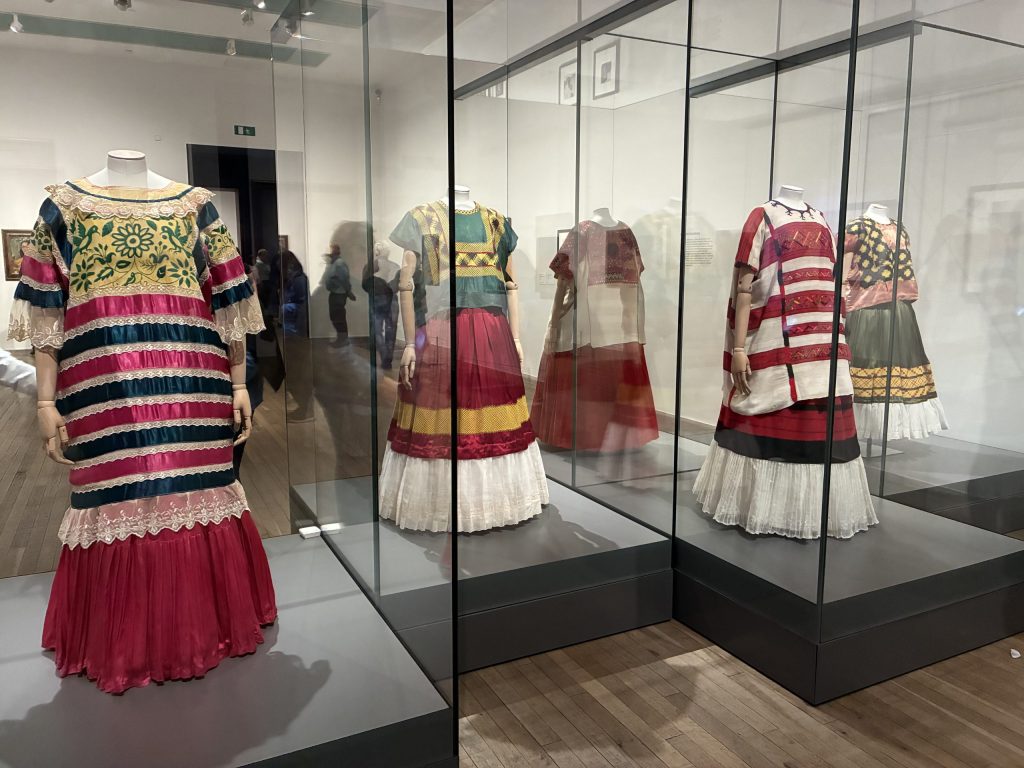
 Later sections include other famous Frida Kahlo works such as The Heart. Here she shows her divided self, with the most complete version in the middle, albeit armless, with a sword piercing her chest and wearing a leg brace. A likely reference to the injuries caused by the bus crash. Her disembodied arms are in two floating outfits on either side. One is her school uniform and the other her Tehuana dress. At the bottom is a large bleeding heart. It’s somewhat surreal, but Frida Kahlo rejected that label, and there are clear factual references to her challenging life. Tehuana dresses also feature in the exhibition, as Frida was committed to Mexican culture.
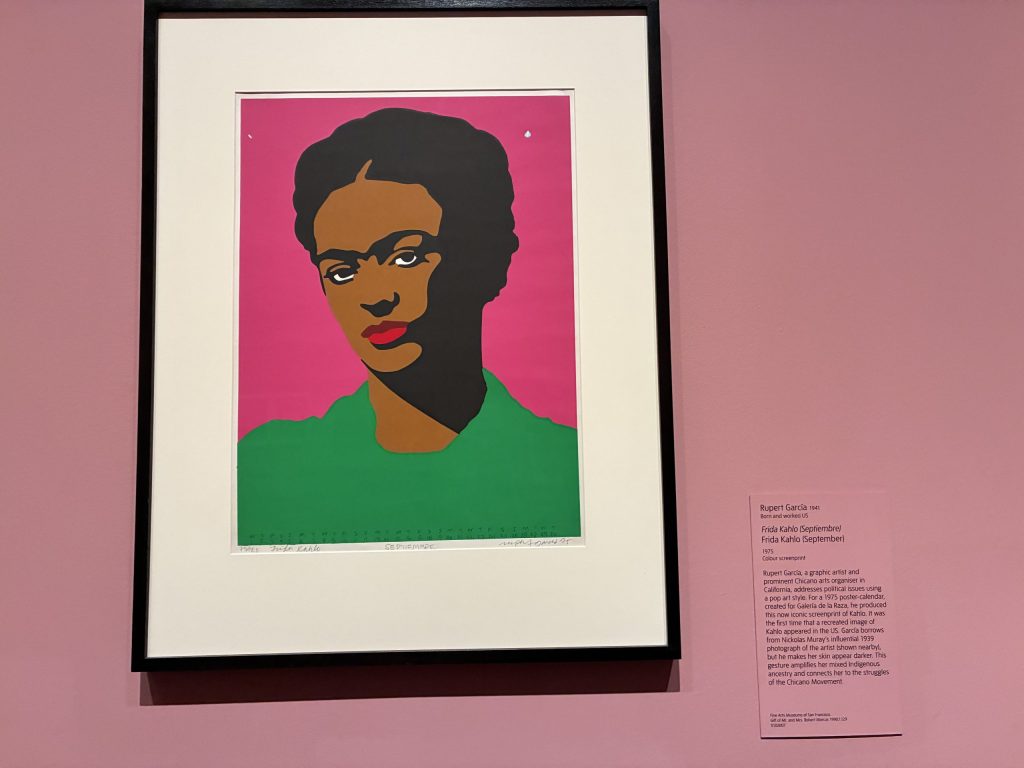
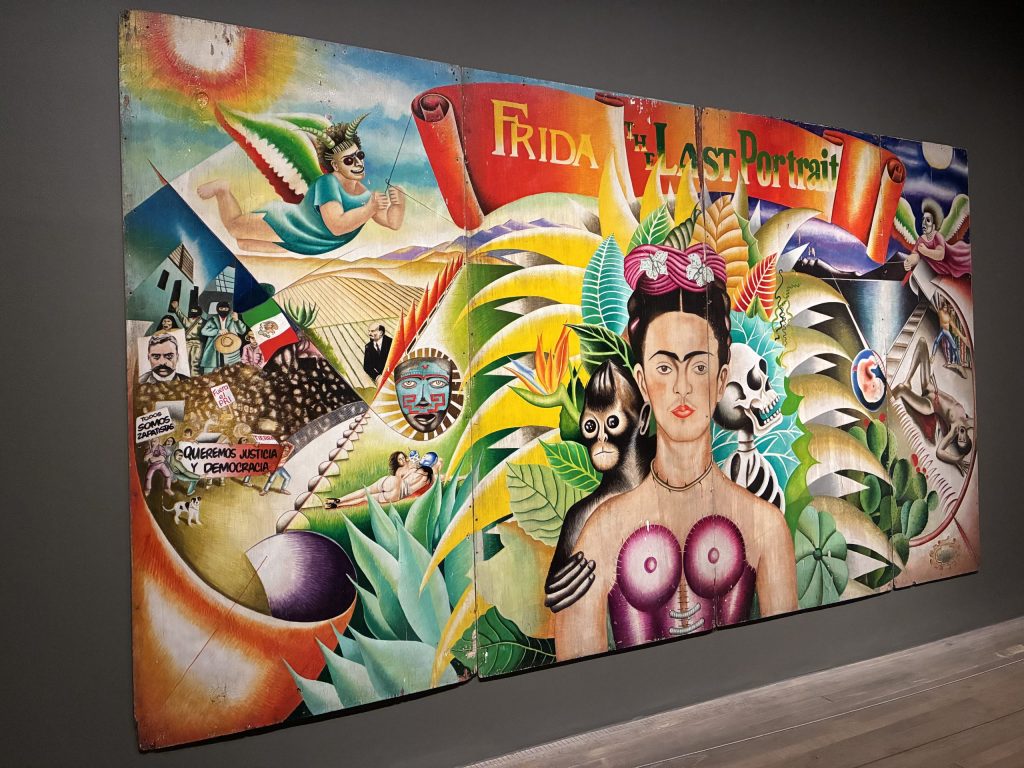
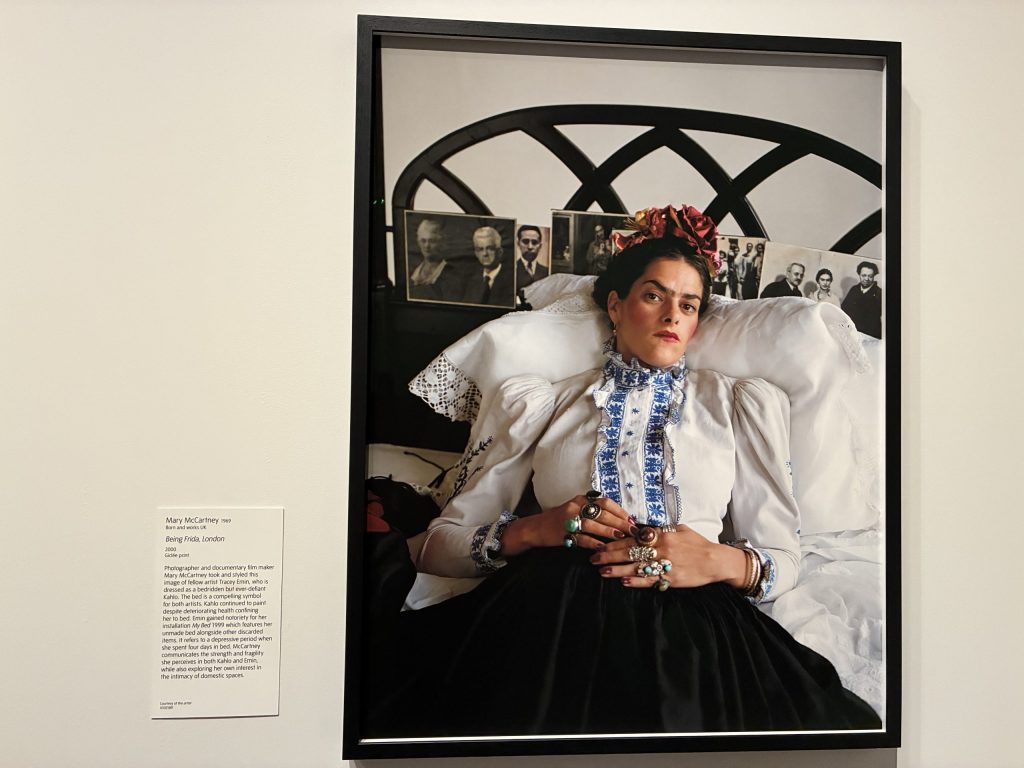
 Works by Khalo contemporaries who influenced her are included, such as Manuel Rodriguez Lozano and Abraham Angel. As are a variety of portraits of Frida painted by other artists. These range from a pop-art style portrait by Rupert Garcia to a four-panel mural by Marcos Raya. Named ‘Frida the Last Portrait ‘, it was created for a one-person play about her life staged in Chicago in 1985. Also included is the iconic Mary McCartney photo of Tracy Emin dressed as a bedridden but still defiant Frida.
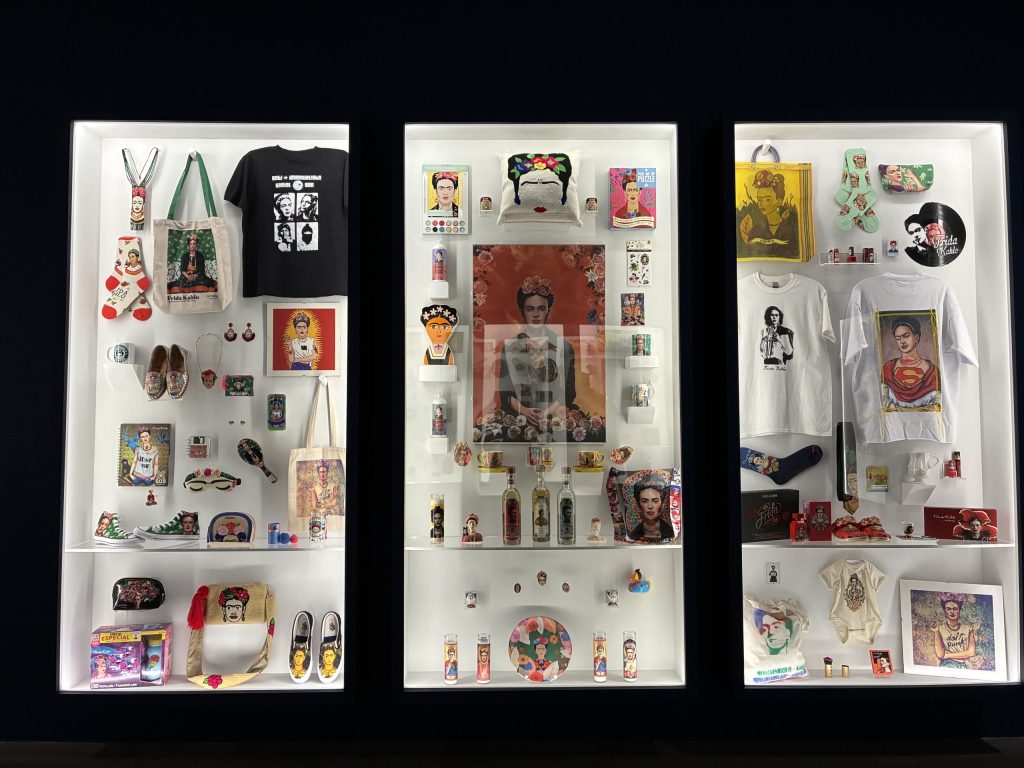
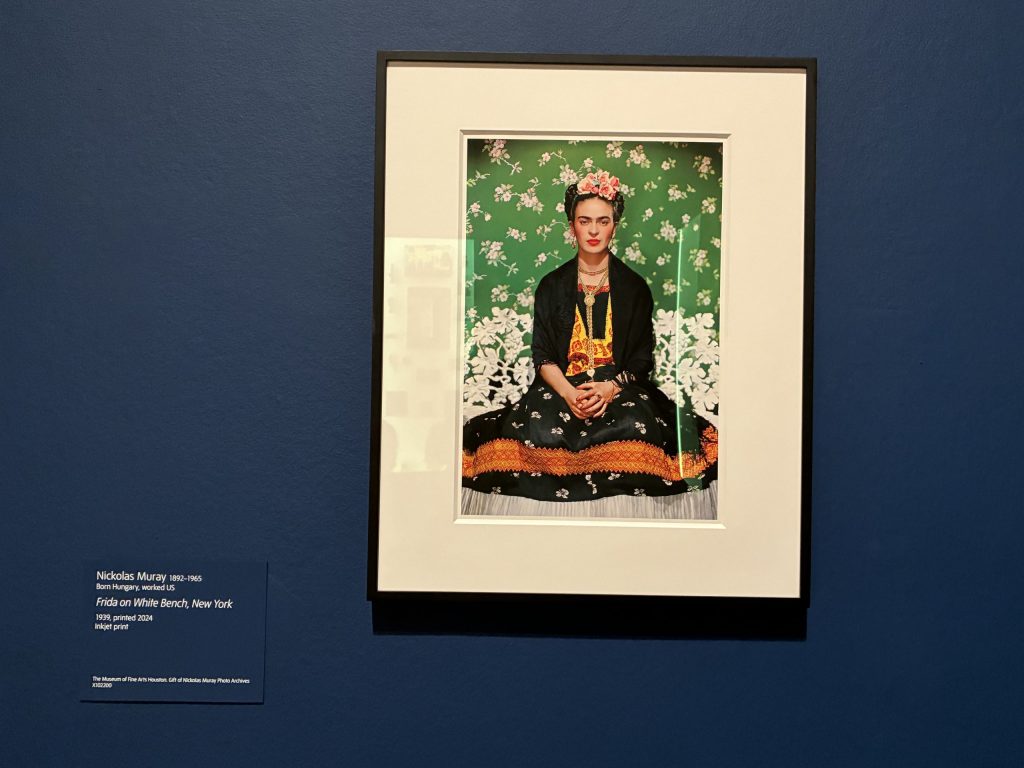
 The last part of the show is dedicated to ‘Fridamania’. Frida’s art, image, style and persona evolved into a global brand that is showcased by the 200 commercial objects on display. Frida-inspired merchandise includes household items, clothes, accessories and jewellery. Also on display is Nickolas Muray’s 1939 photo ‘Frida on White Bench, New York ‘, the inspiration for the majority of the goods that have been created. It turned Mexico’s most famous artist into a global commodity. But I couldn’t help but wonder how many purchasers of the products know much about the extraordinary woman featured on them.
 Frida: The Making of an Icon is running at Tate Modern until 31 January 2027. For more reviews of theatre, art, exhibitions, comedy and music, check the Arts section of my blog.
Discover more from TRAVEL COCKTAIL
Subscribe to get the latest posts sent to your email.