Giza wasn’t the original plan for a Cairo hotel, but after deciding what my friend and I wanted to do in the city, we felt it would work better. And we were very glad we did when we saw the view from the rooftop restaurant of the Great Pyramid Inn.
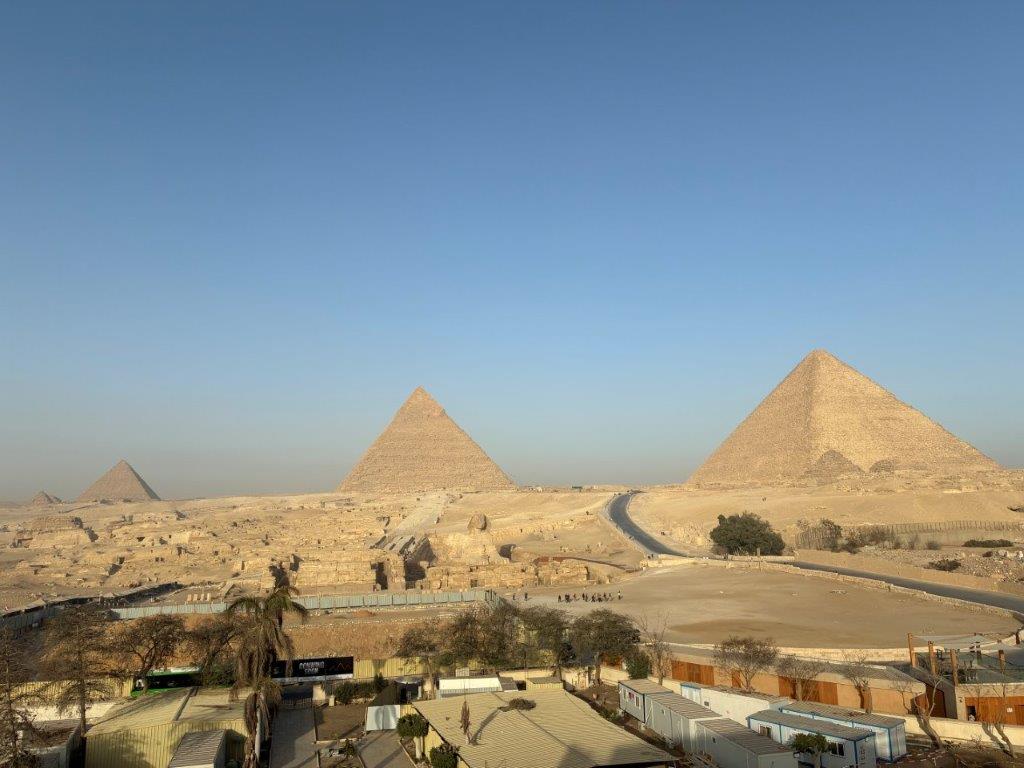 The Great Pyramid of Giza is the last remaining wonder of the original Seven Wonders of the World, and it’s not hard to see why it made the list. Along with the other smaller pyramids and the Great Sphinx statue, the Giza Plateau is an extraordinary sight. Made all the more extraordinary by its proximity to the centre of Cairo, Egypt’s chaotic capital city.
Here’s why I think staying in Giza is a great choice, and how you can visit both the Giza plateau and the new Grand Egyptian Museum without a guide and driver.
Incredible pyramid views day and night
As mentioned, we chose to stay at the Great Pyramid Inn. It’s one of many hotels in Giza, but its biggest advantage is unobstructed views of the pyramids and the Sphinx. Quite a few hotels in Giza have views but are on busy main roads. Our hotel was on a small street directly opposite the Giza Plateau site. The only thing between us and the pyramids were the offices of the Sound and Light show and the roads within the necropolis.
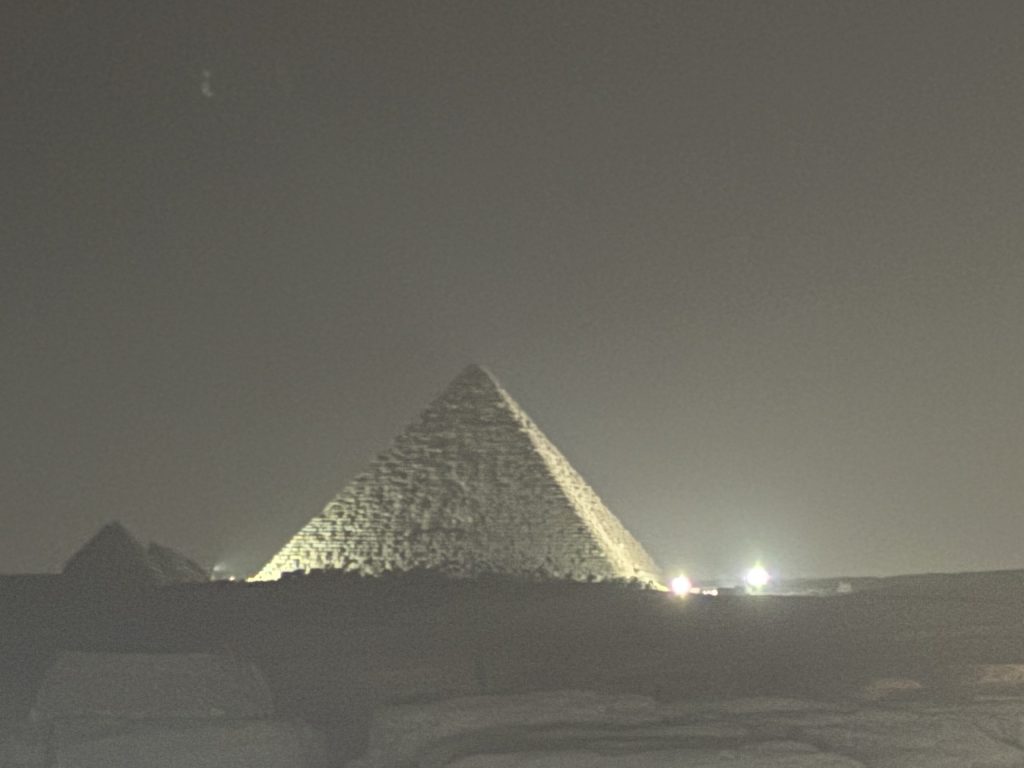
We had dinner at the hotel restaurant, Rooftop 7000, when we arrived, with a view of the Pyramid of Menkaure, the smallest pyramid and the only one that is lit up at night. Unless you are there on an evening when the Sound and Light Show is operating, as you can see it for free from the restaurant. The only thing to note is that, like many small hotels and local restaurants in Egypt, alcohol isn’t served at Rooftop 7000.
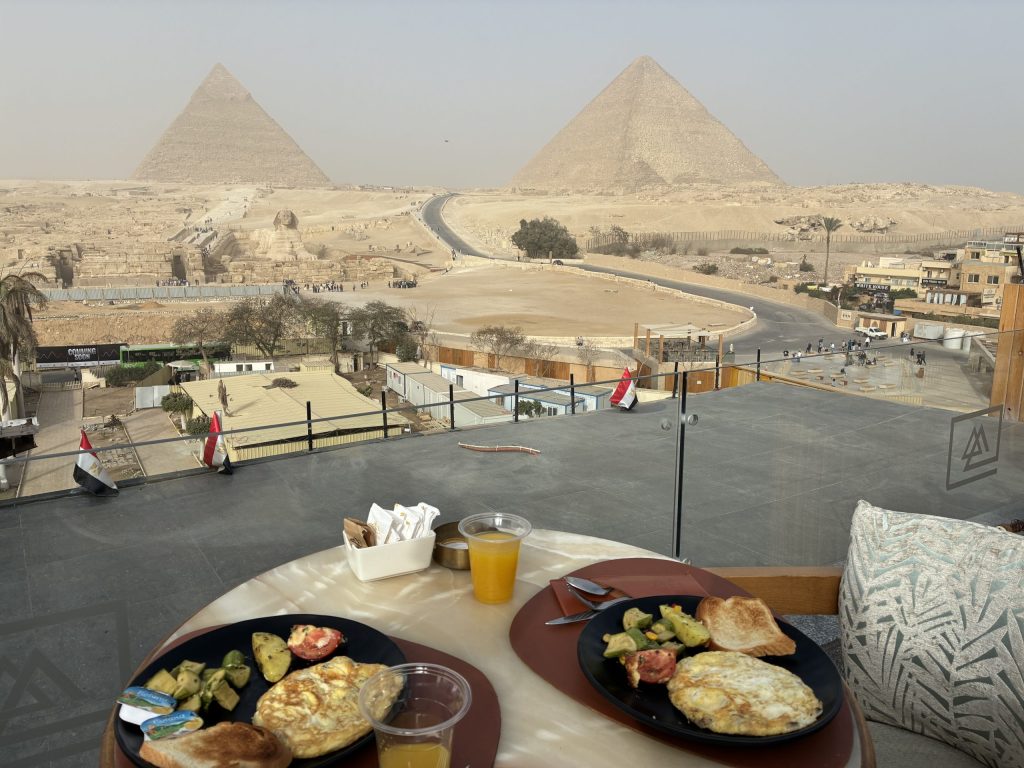
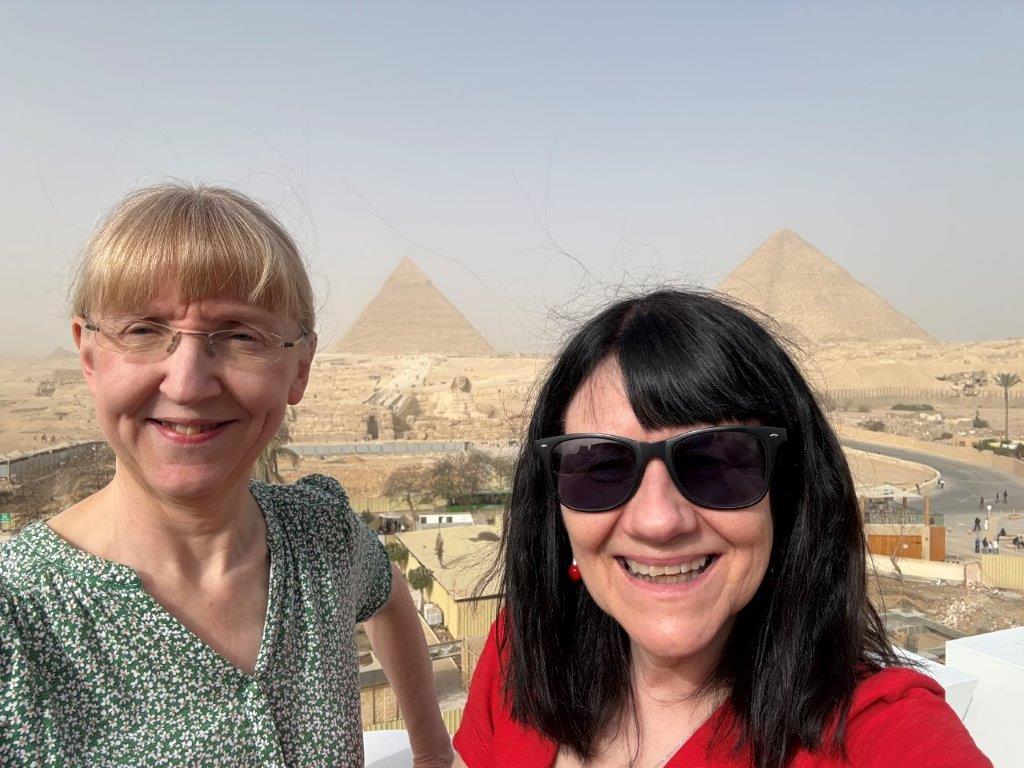
 The next morning, having breakfast on the rooftop was a stunning way to start the day. The hotel has even created an area where you can take photos and selfies, so you don’t need to interrupt the diners who have a front-row seat.
 The Sphinx entrance is a quick and easy way into the Giza Plateau
Another advantage of the hotel’s location is that it’s just a few minutes’ walk to the Sphinx entrance of the Giza Plateau. This is a smaller, quieter entrance, as tour groups and most people arriving by taxi go to the main entrance. We bought our tickets in advance online, so we were through security and inside very quickly. From there, it’s best to start by visiting the Sphinx, so you need to turn left and walk towards the shuttle bus stop before entering the Sphinx area on the right. And what a sight it is to see. There is a walkway that runs along the side of the sunken pit that holds the Sphinx, so you can spend as long as you want admiring its vast scale and brickwork. If you walk along towards the back of the sculpture, the huge paws are well worth a closer look.
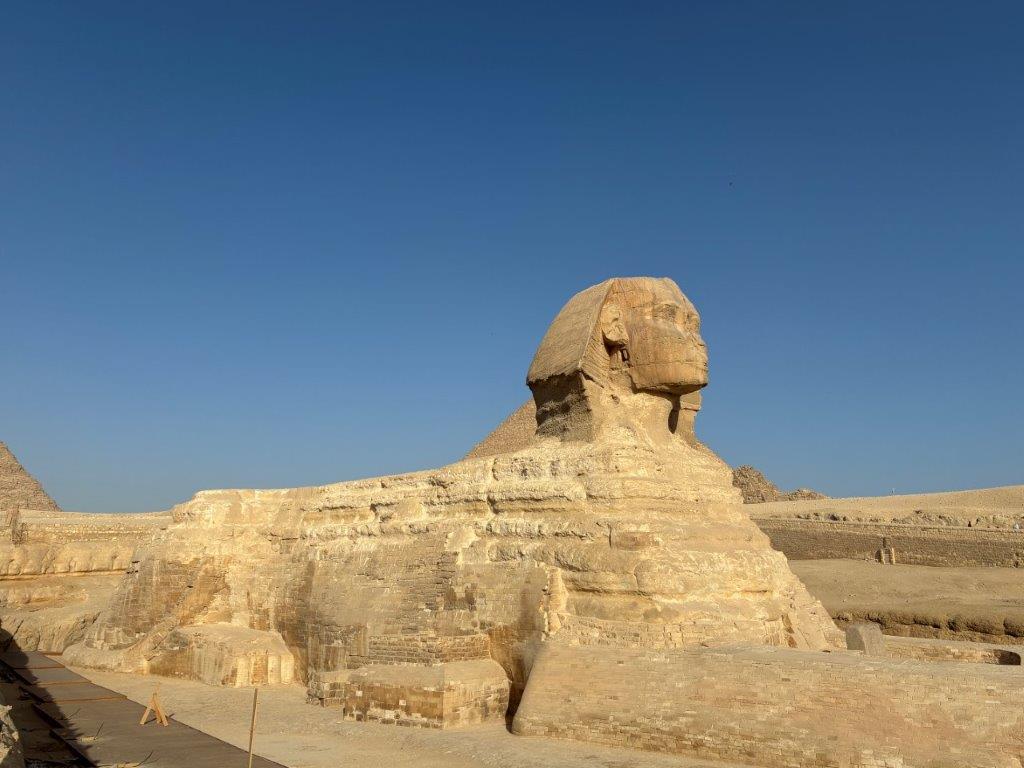
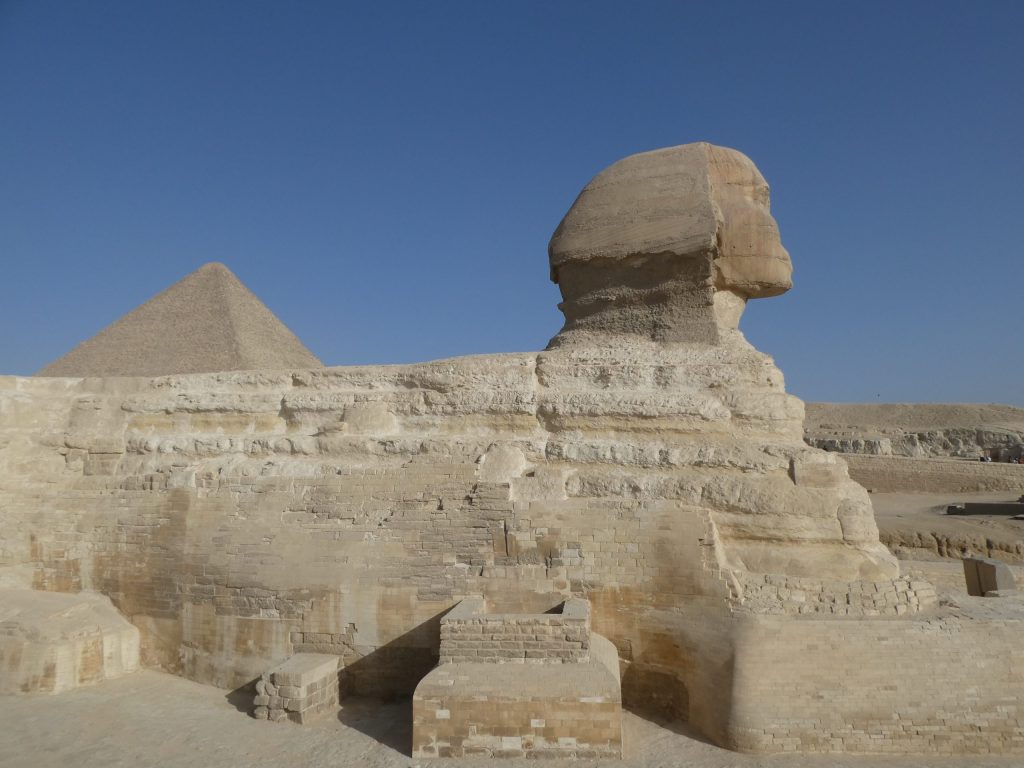 It’s a short walk from the Sphinx to the Pyramid of Khafre
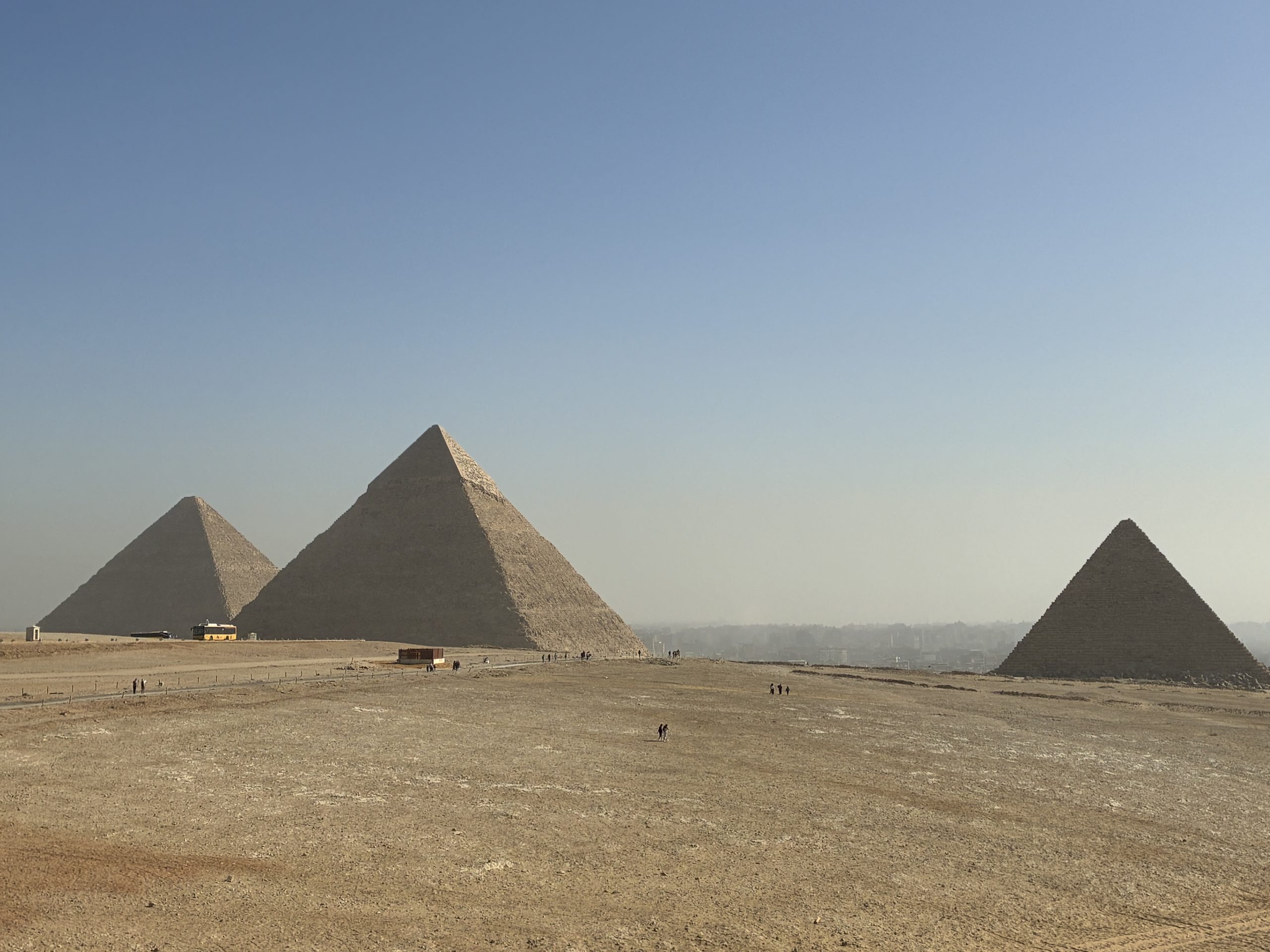
We’d heard a lot about the new electric shuttle buses that transport visitors around the site. But to get the bus, we’d have needed to double back on where we came in. We could see the Pyramid of Khafre was not far away, so we decided to walk. And what a great decision it was. There was no one ahead of us as we ambled up the rock-paved path to Khafre’s Valley. And our views of the pyramid ahead of us were amazing. Khafre was the son of Khufu (who built the Great Pyramid), and his pyramid is the second-largest of the three at Giza. It’s quite distinctive as it’s the only one still capped with its original polished limestone casing.
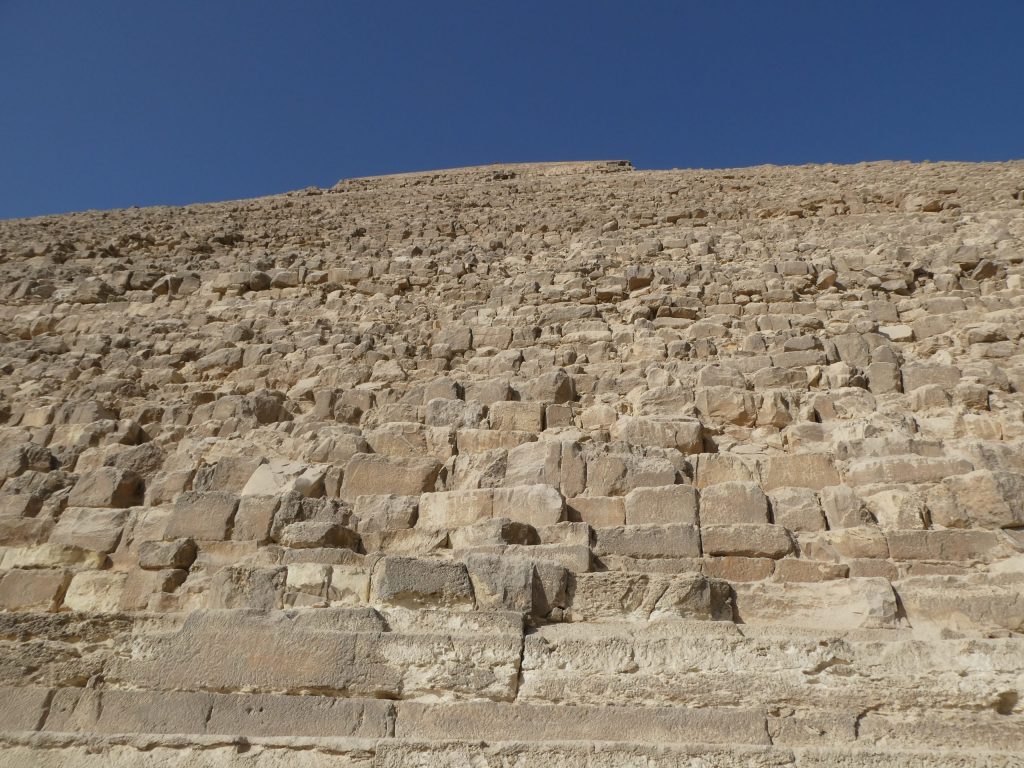
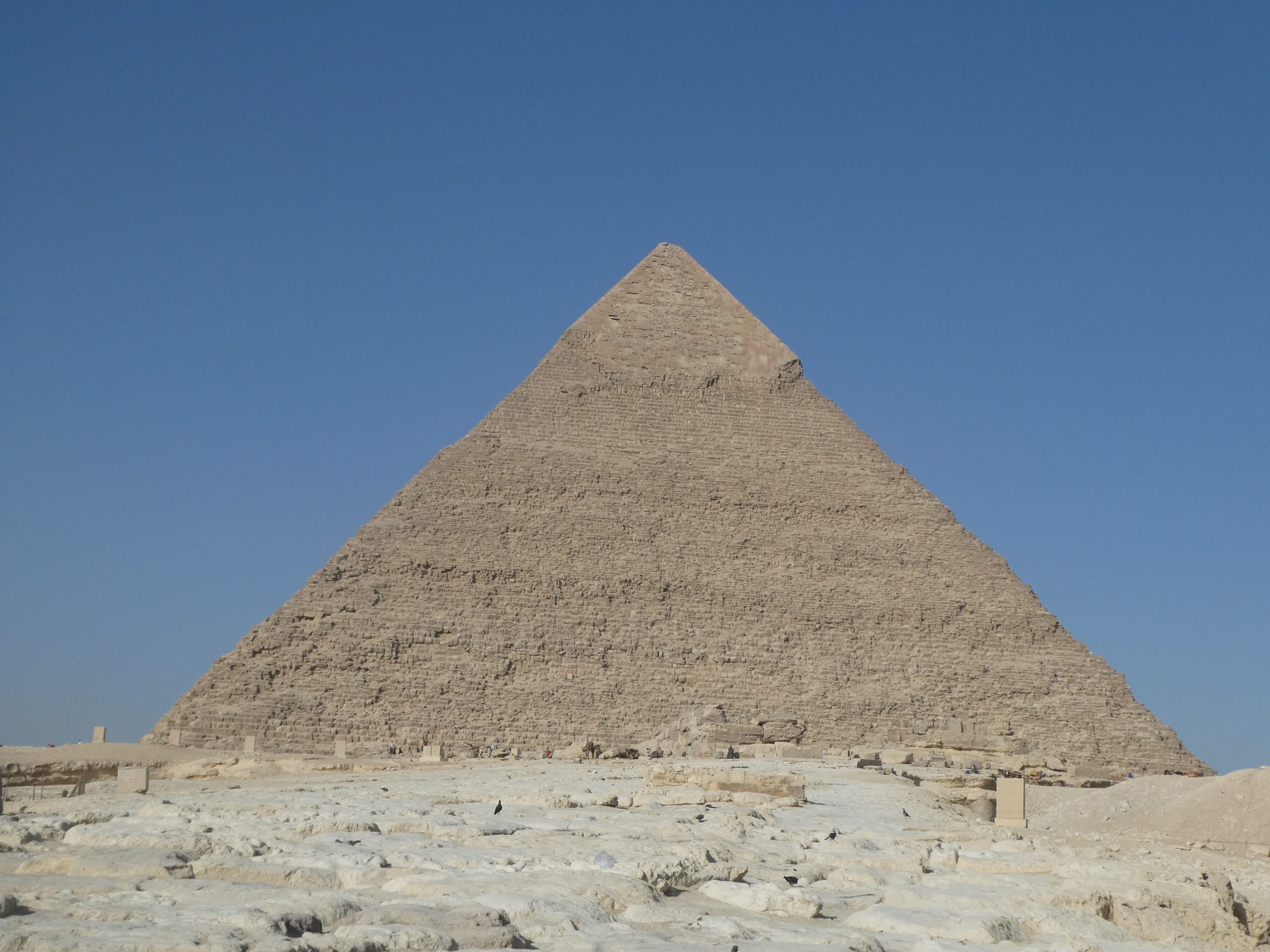 Just before you reach the pyramid, you walk through the remains of Khafre’s funerary temple, where the pharaoh was worshipped after his death. Then, when you get there, you see how different the pyramid looks close up. The stones are much more uneven than they look from further away.
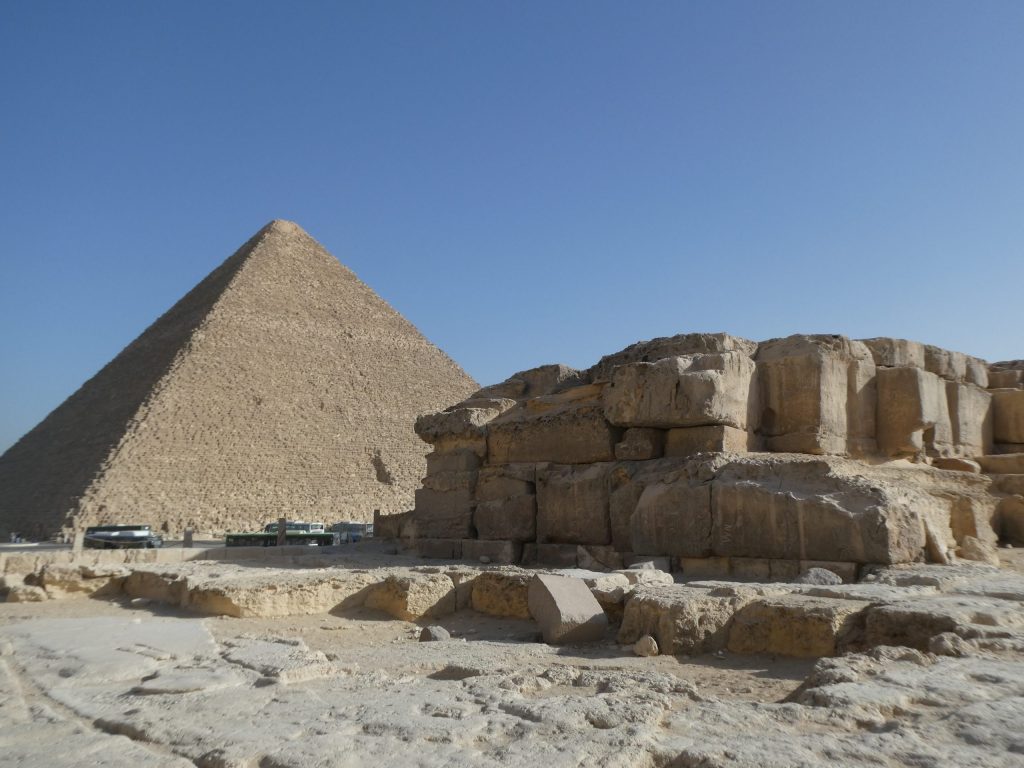
The Giza Plateau’s smallest pyramid is very close by
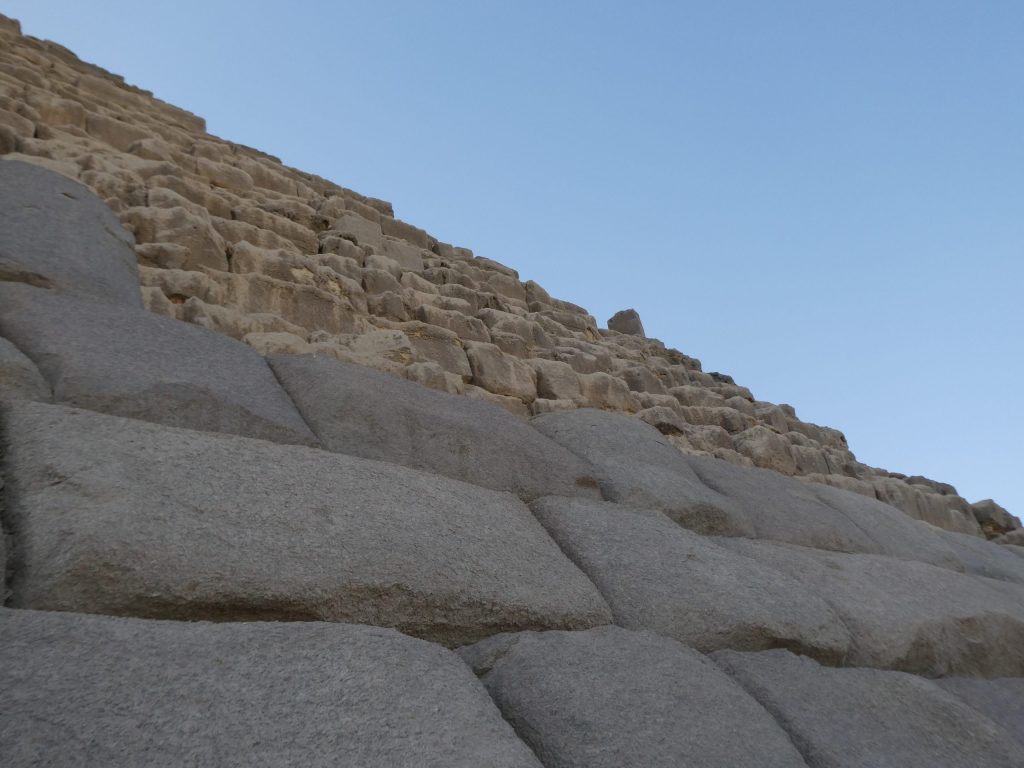
After taking a good look at Khafre’s pyramid, we decided to continue on foot as the Pyramid of Menkaure, built by Khafre’s son, is very close by. It’s the smallest of the trio, only around a tenth of the size of the Great Pyramid. The pharaoh decided to use granite rather than the limestone used by his father and grandfather. But the logistics of transporting the stone from Aswan meant he switched to limestone a quarter of the way up. King Menkaure then died before the pyramid was finished, so there are pieces of granite at the bottom that were never smoothed.
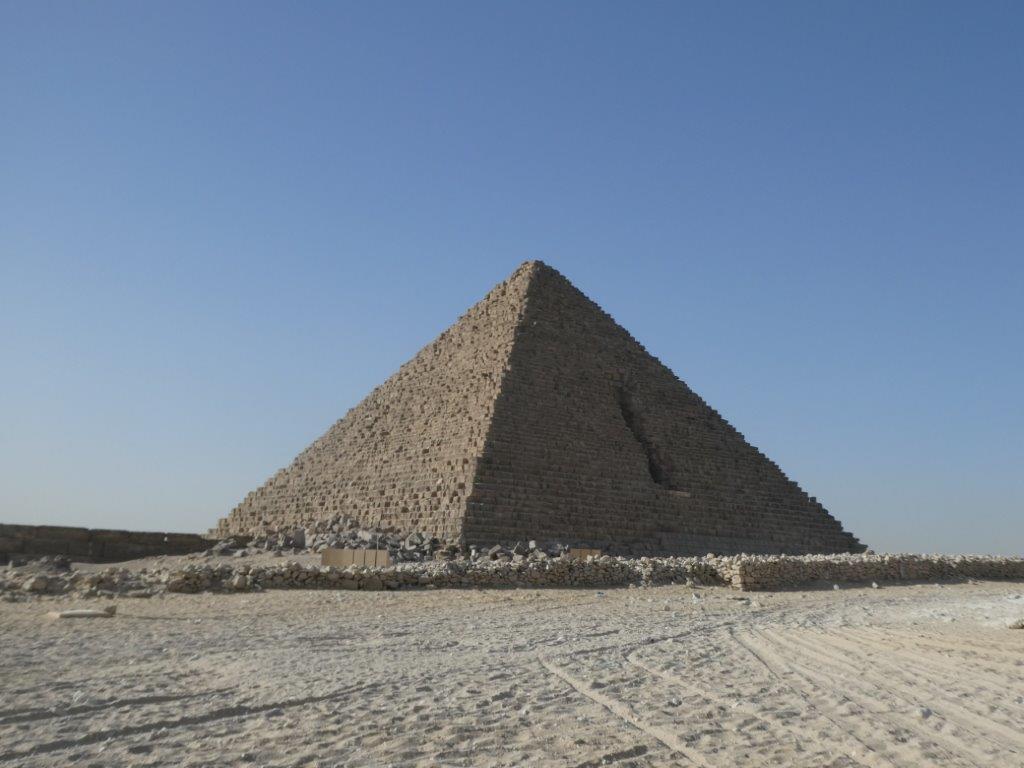
 When we visited, the Pyramid of Menkaure was open to go inside. The Great Pyramid is always open, but the other two alternate. To visit inside, you need to book a separate ticket when booking your entrance. We decided against going into either of the open pyramids as we read they are very claustrophobic and there’s nothing much to see inside!
Don’t miss the Panoramic Viewpoint, but notice the perspective!
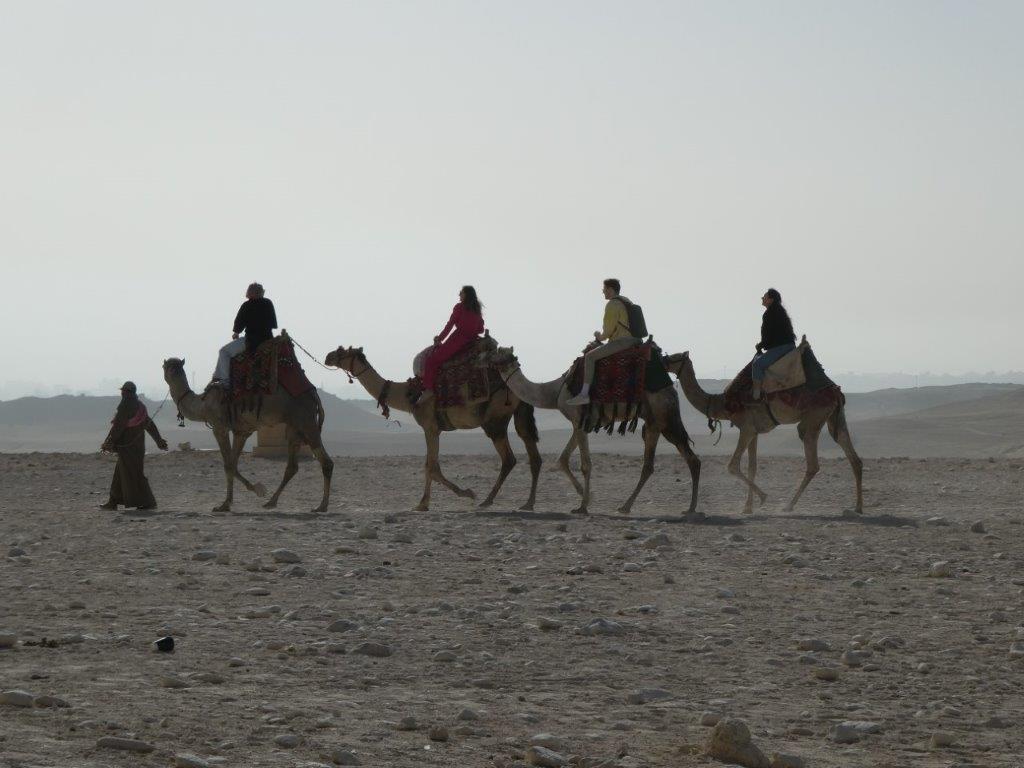
Just west of the Pyramid of Menkaure is the Panoramic Viewpoint. Again, it didn’t look far, so we walked up, passing a few groups of people riding camels. The viewpoint is one of the main areas where camel and horse and carriage touts hang out. Having previously ridden camels in Australia, we decided against doing this. The animals don’t always look well cared for, and agreeing on a price can be a hassle. If it’s something you really want to do, then going with a guide might be helpful as they’ll negotiate for you. You also won’t be faced with the scenario where you get on the camel and then the price increases. We heard stories of this happening and people having no choice but to pay up if they wanted to get off! All that said, the viewpoint is worth going to, as you can see all three pyramids. The only thing to bear in mind is the perspective. From this angle, it looks like the Pyramid of Khafre is the biggest, but that is definitely not the case.
 Shuttle to the Great Pyramid of Khufu
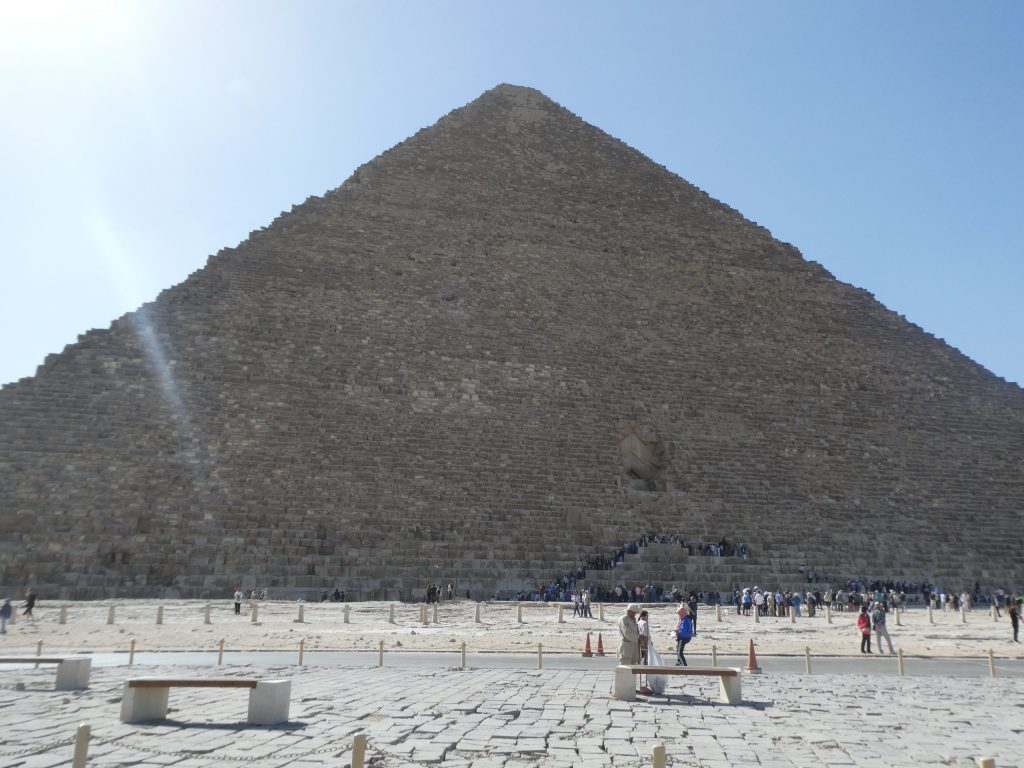
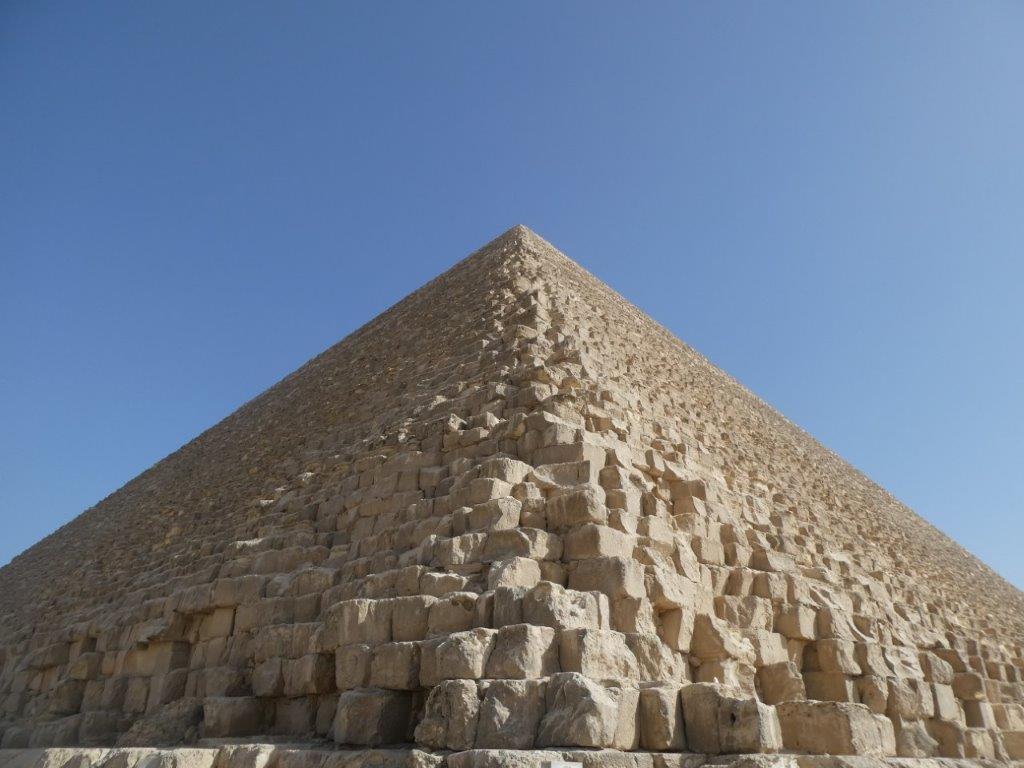
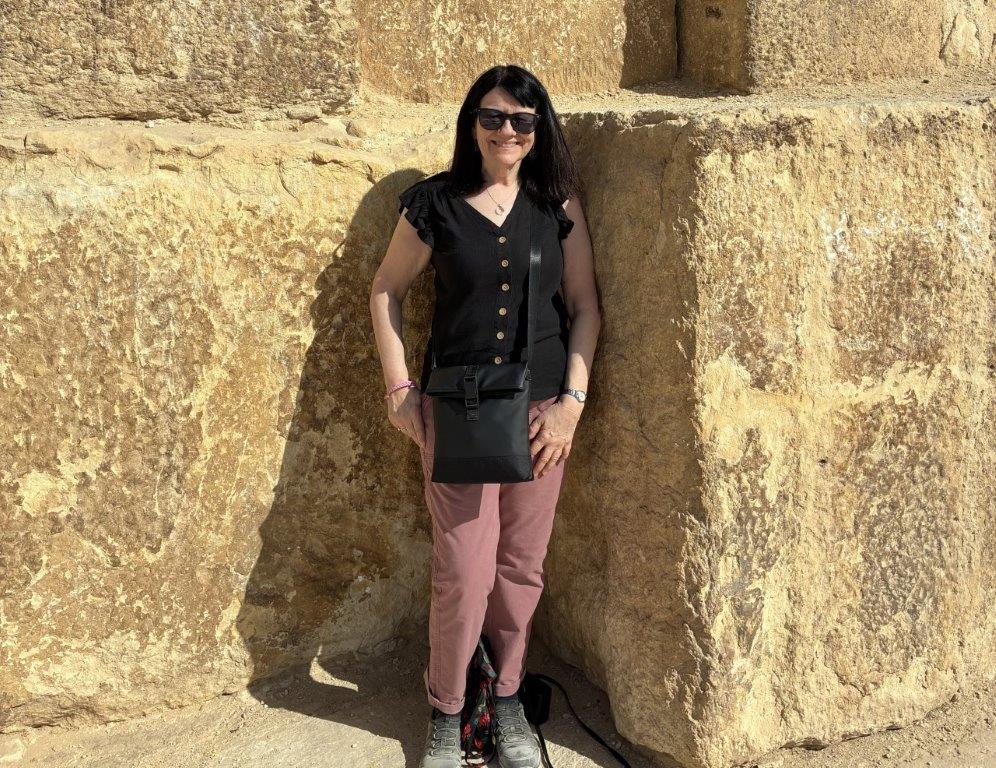
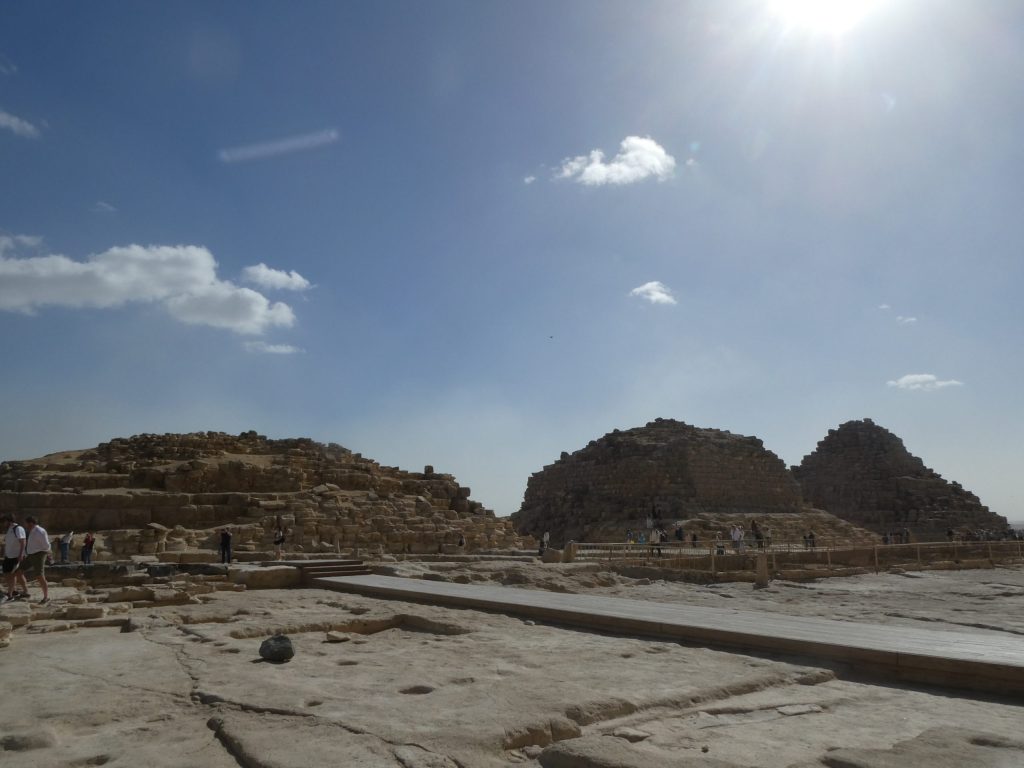
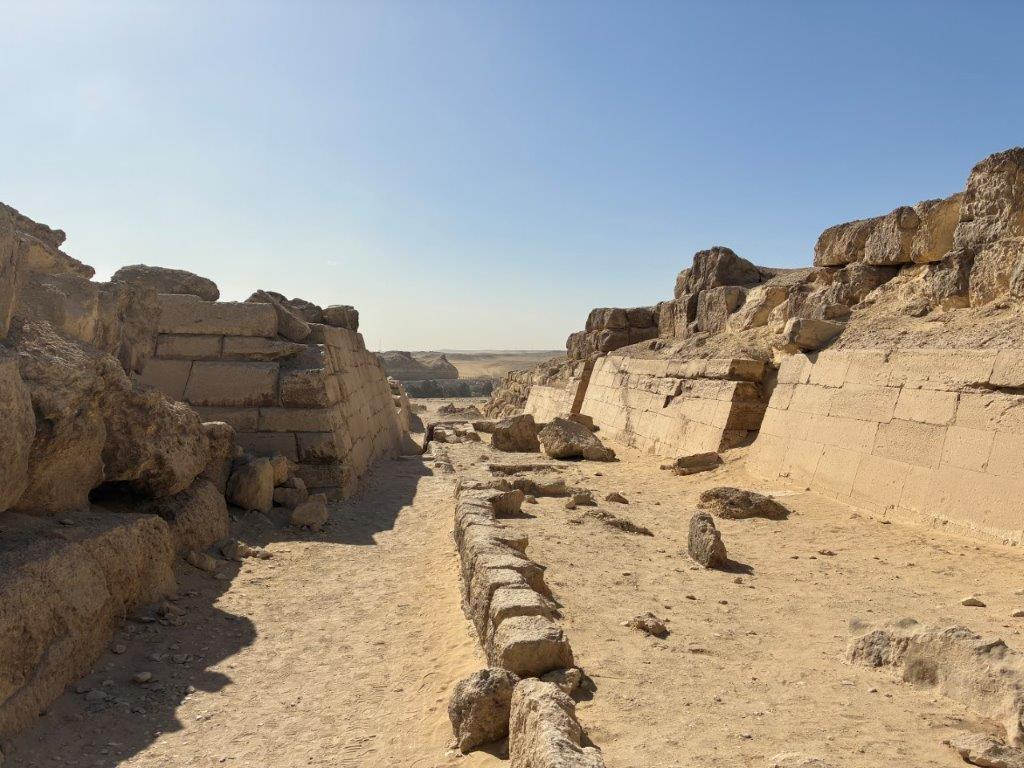
From the viewpoint, we decided to give our feet a rest and hop on the shuttle bus to the Great Pyramid of Khufu. And to be fair, if it had been warmer, we might have walked less. In February, the temperatures were perfect. Unsurprisingly, there were many more people around the Great Pyramid, including a long queue to get inside. We were happy to wander around outside, taking in its vastness and examining its construction closely. Each stone block weighs 2.5 tonnes, and there are 2.3m of them. I stood next to the bottom layer of the pyramid, and it was almost as high as my 5ft 4 frame. It’s also worth taking a look at the Queens’ Pyramids that are alongside the Great Pyramid. These three pyramids were built for Khufu’s mother, wife and probably a daughter. They are not in great shape, more like large piles of rubble. Quite the contrast with the men’s pyramids!
 Hunt down the Tomb of Meresankh III
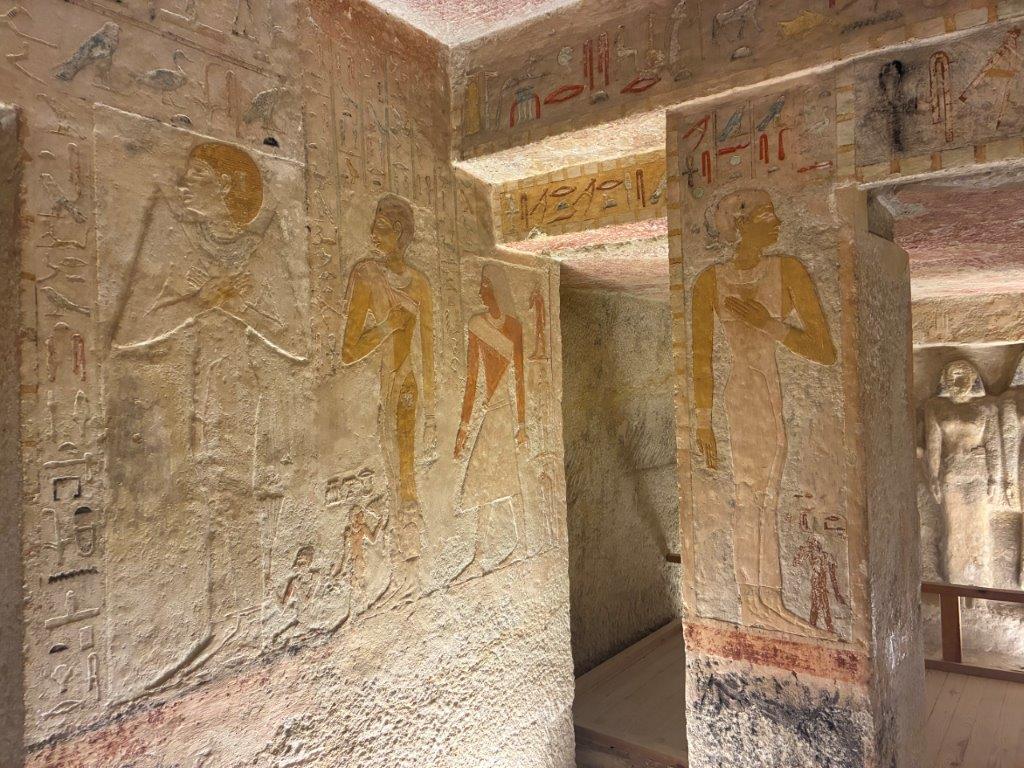
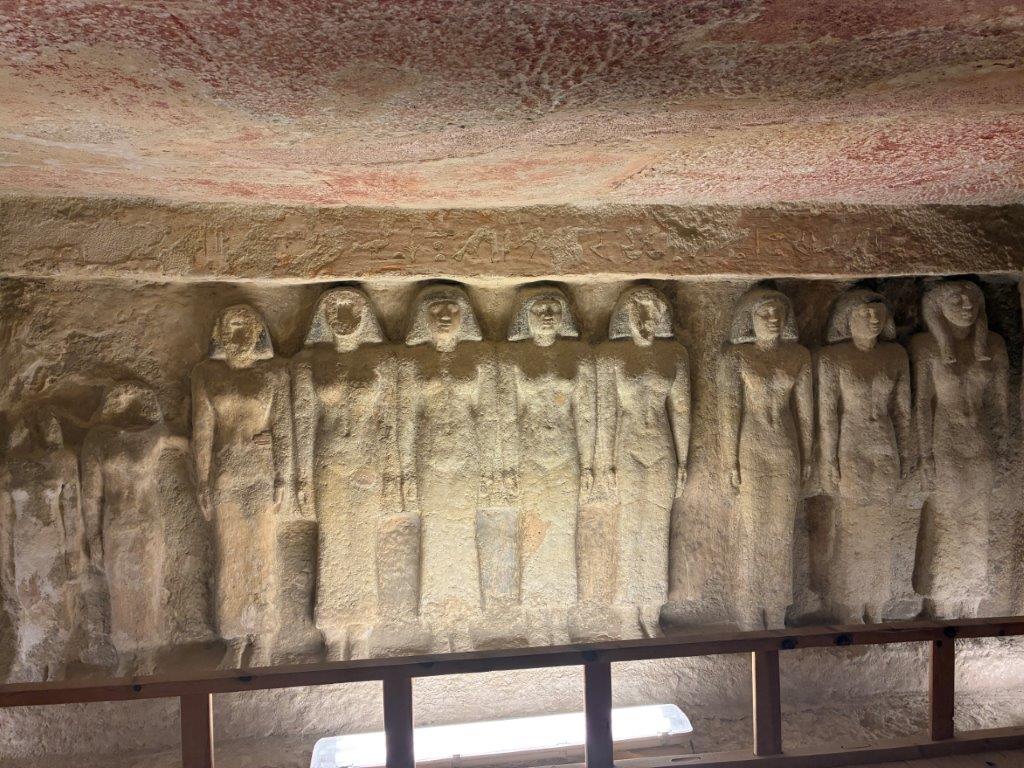
Close to the Queens’ Pyramids and in better shape is the Tomb of Meresankh III. This is in the Eastern Cemetery, where royals and high-ranking nobles were buried, including Khufu’s granddaughter, Meresankh. Unlike the pyramids, this tomb has wall paintings and statues inside. So, although it takes a bit of tracking down, it’s worth doing. We found Google Maps worked pretty well, and then spotted a signpost for the tomb. There’s an extra charge to go inside the tomb, so we booked the tickets online with our general admission tickets.
 Take a taxi to the Grand Egyptian Museum
An advantage to visiting Giza with a guide and driver is transport from the pyramids to the Grand Egyptian Museum. It’s not an easy walk, and there are no shuttle buses between the two, though I’d hope that will change now that the museum is fully open. But we found it was pretty quick to pick up a taxi. When we left the plateau, we thought we were heading for the main exit, but found ourselves coming out by the Mena Marriott Hotel, where several taxi drivers were looking for fares.
Book a tour to see the museum’s highlights
The Grand Egyptian Museum (GEM) has probably had more publicity than any museum opening in recent memory. Not least because it took 20 years to come to fruition and is the largest museum in the world that is focused on a single civilisation. But it was worth the wait as the GEM is a very impressive place. The design features pyramids throughout, including a large glass and alabaster pyramid over the entrance that is covered in hieroglyphs and cartouches. Immediately inside, the Grand Hall is just as stunning with a huge 11m statue of Ramses II at its centre.
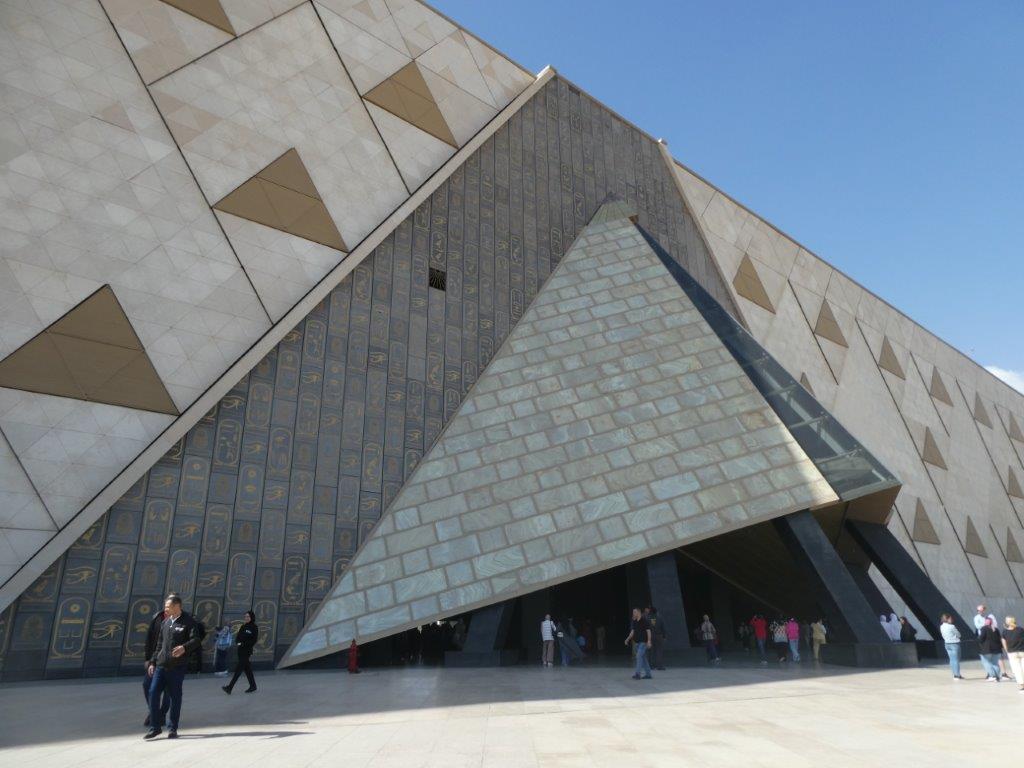
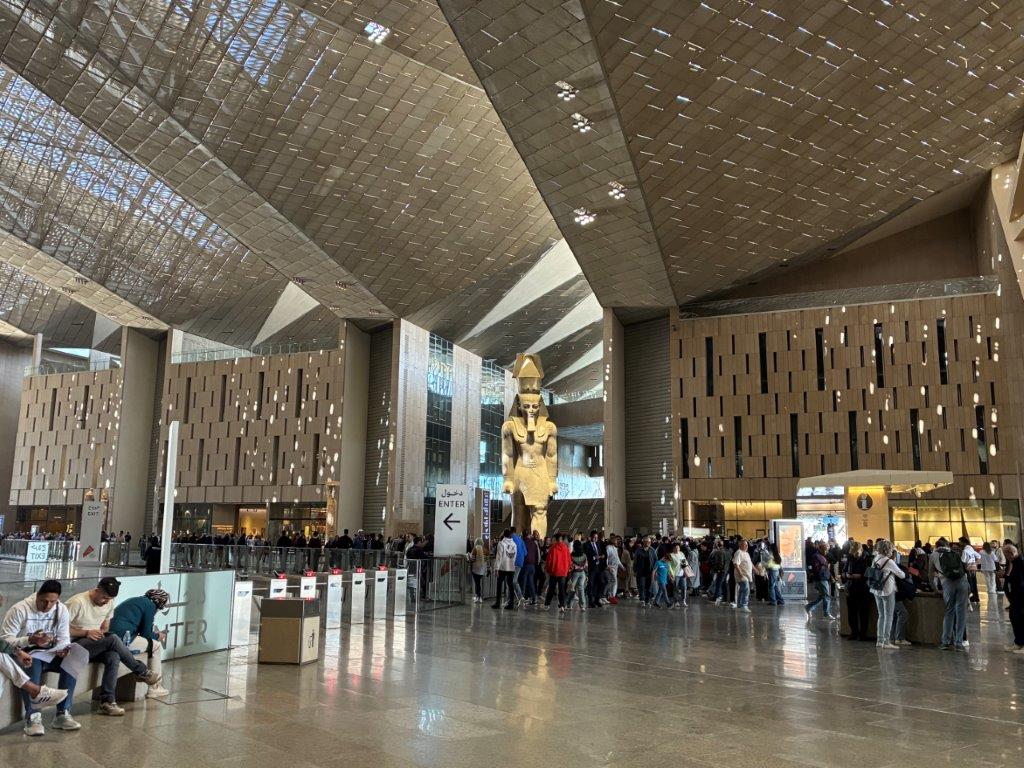 The final GEM galleries opened in late 2025 and are dedicated to Tutankhamun. All 5,000 artefacts that were recovered from the young pharaoh’s tomb are on display together for the first time. With 12 main galleries in addition to the Tutankhamun section, there is a huge amount to see at GEM. So my advice is to start with one of the museum’s guided tours. They last two hours and need to be booked in advance online (as does general entry to the museum). On arrival, you pick up a headset at a window on the left-hand side. You need to leave a form of ID as security, but they were happy with a driving licence rather than a passport.
The tour starts at the nearby Information Desk, and our guide was excellent. She started by taking us up the Grand Staircase by escalator, where you can admire various artefacts on the way. At the top are floor-to-ceiling windows with views of the Pyramids of Giza. Then it’s into Gallery 1 to start the tour. Incredibly, the first three galleries cover a period that starts as far back as 700,000 BC. It’s pretty hard to wrap your head around items being that old. I’m not going to detail everything we saw, but will include a few taster photos below. They include a fabulous kneeling statue of Queen Hatshepsut and vessels that were used to preserve a dead person’s organs. Plus some of the treasures from Tutankhamun’s tomb, such as necklaces, his throne and the famous death mask.
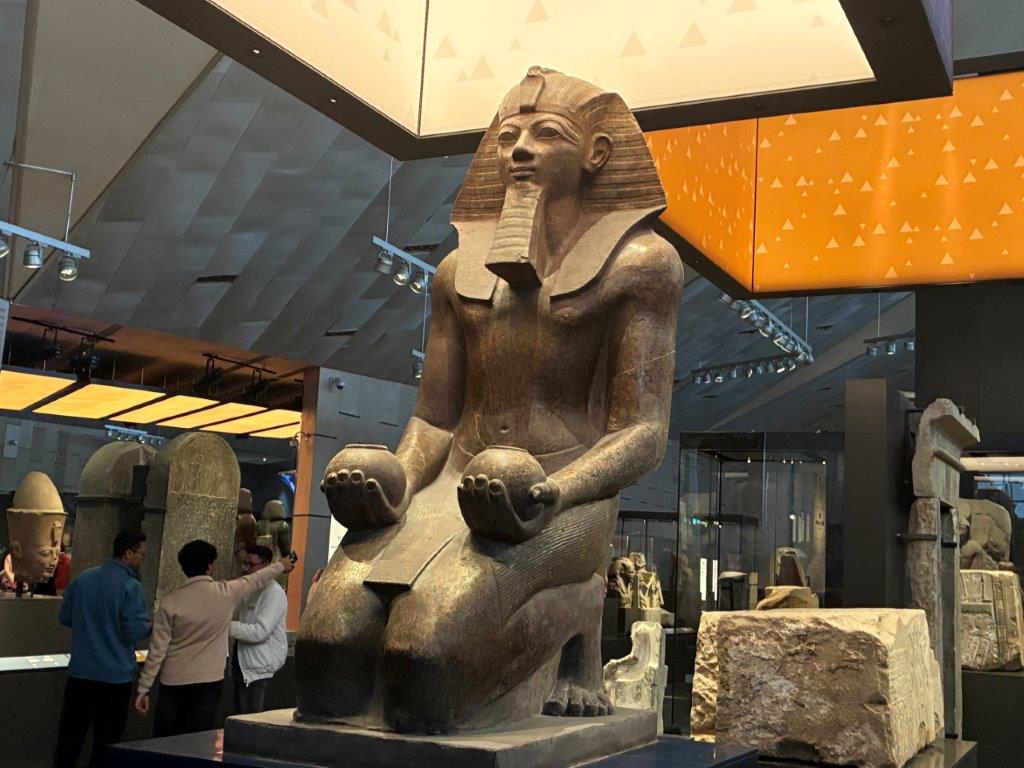
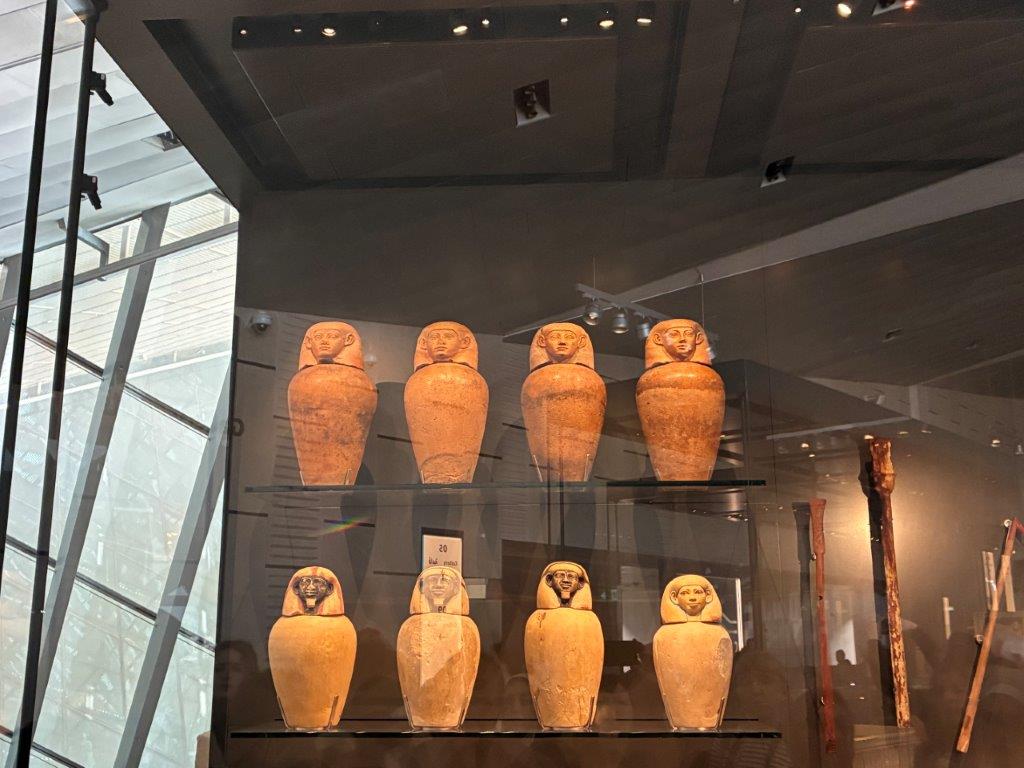
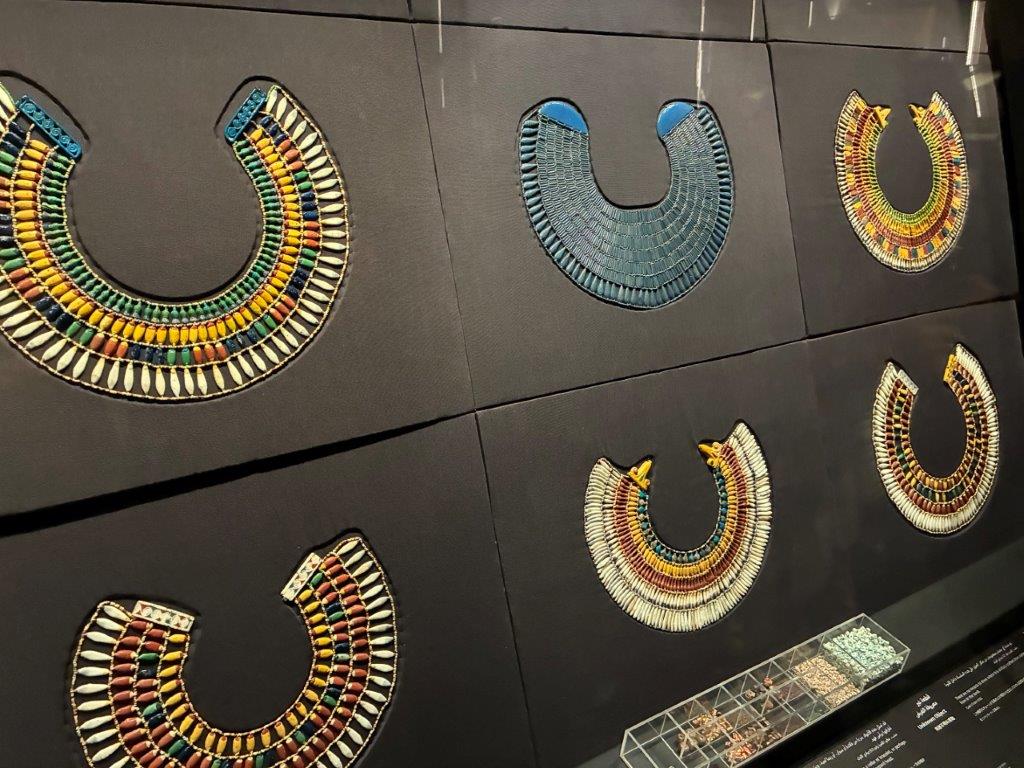
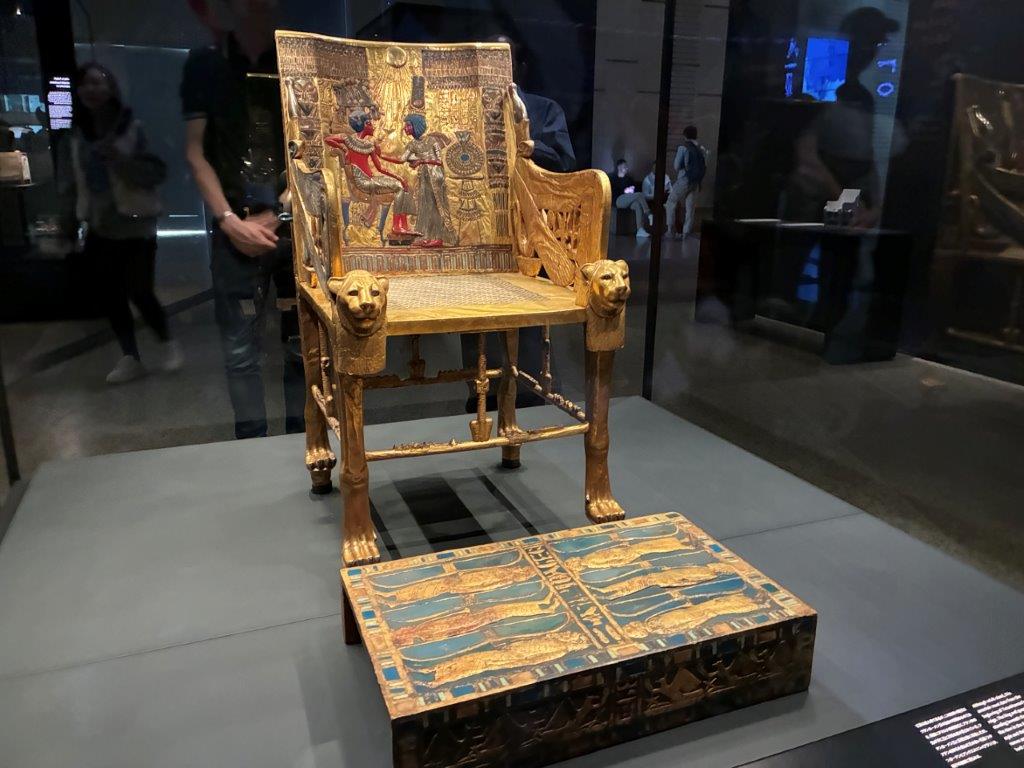
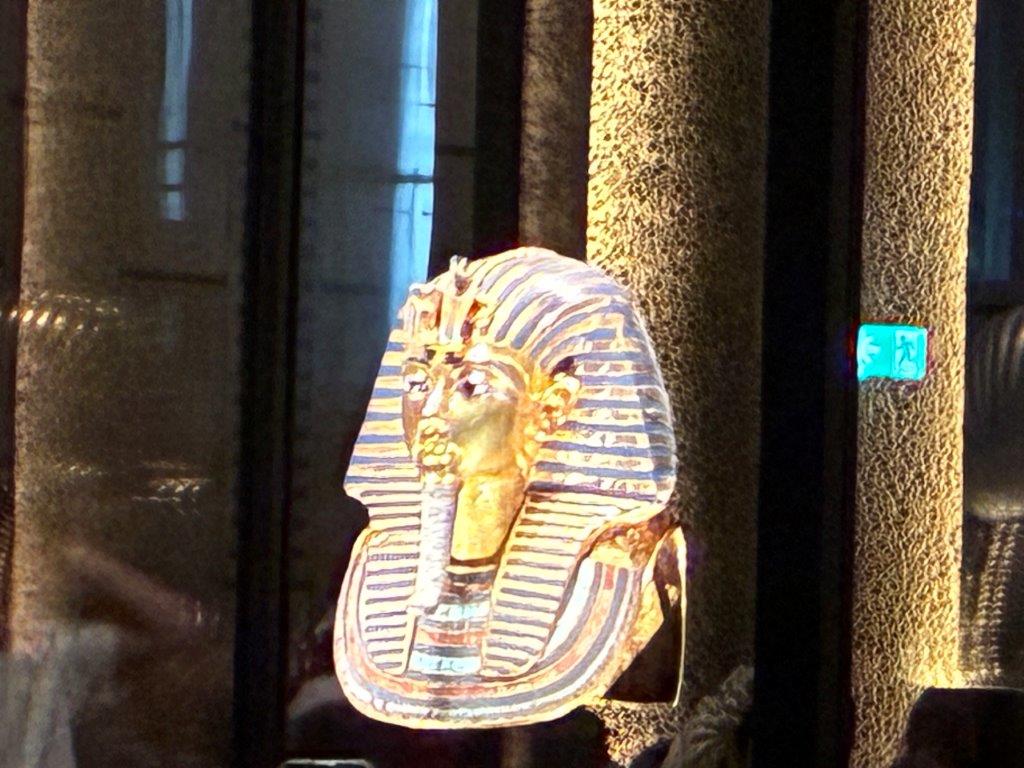 At every stop, the guide explained what we were looking at and the stories that went with the artefacts. So it’s a great way to navigate the museum and see its highlights in a relatively short amount of time. And then you can go back to explore further if you have the time and inclination. You can also spend time shopping and eating there, as there is a wide array of shops, cafes and restaurants in the museum. My friend commented that it’s not unlike an airport terminal!
Once you’re ready to leave the GEM, there are plenty of taxi touts in the car park. Inevitably, it’s not the cheapest ride you’ll get, but we felt it was quicker and easier than exiting onto the busy main road to try and find an Uber. And in Egypt, we found everything very cheap compared to London, so we didn’t mind the occasional bit of overcharging if it made life easier for us. And at the end of our day in Giza, we were happy we took the DIY approach and didn’t pay for a guide and a driver who would have spent a lot of time waiting outside entrances!
To read about the day we spent in the centre of Cairo, visit the Egypt section of my blog. There are also posts about my visits to Aswan, Abu Simbel, Luxor and a fabulous Dahabiya cruise on the Nile.
Discover more from TRAVEL COCKTAIL
Subscribe to get the latest posts sent to your email.