Henry Moore was undoubtedly influenced by the natural world when he created his monumental bronze sculptures. So where better to display them than amongst the trees and plants of London’s Kew Gardens?
Kew’s exhibition, Henry Moore: Monumental Nature, is a visual treat that sets 30 of Henry Moore’s huge sculptures within its landscape. Even the rain-parched grass didn’t detract from seeing the iconic pieces amongst living botanical collections.
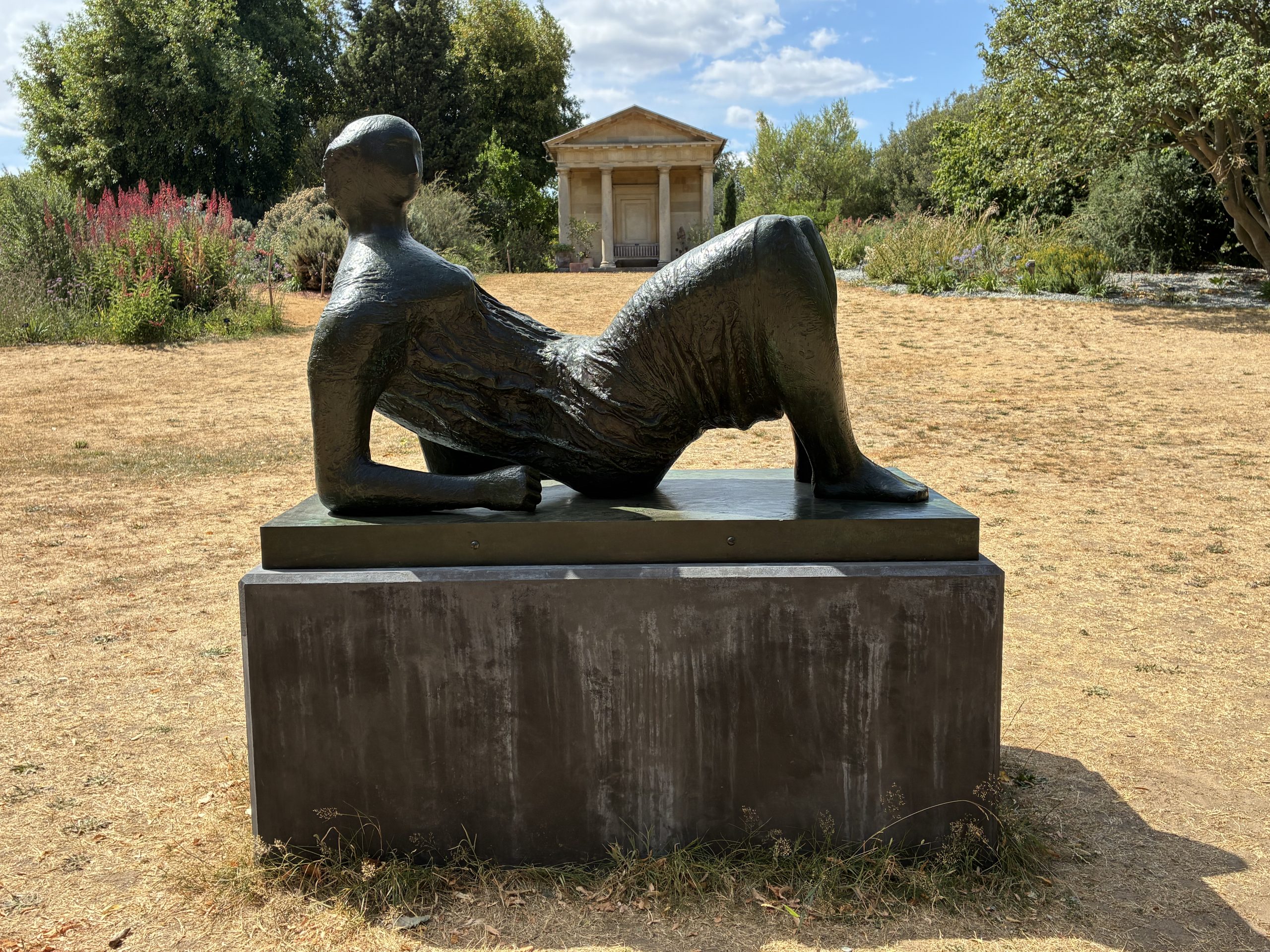
 The Kew summer guide includes a map of all 30 sculptures, numbered to suggest a route, though following it didn’t seem essential. There’s also a family trail, and I saw plenty of youngsters enjoying exploring it. Albeit I also saw the occasional parent allow their child to clamber on a piece for a photo. Despite the many signs asking visitors not to do that!
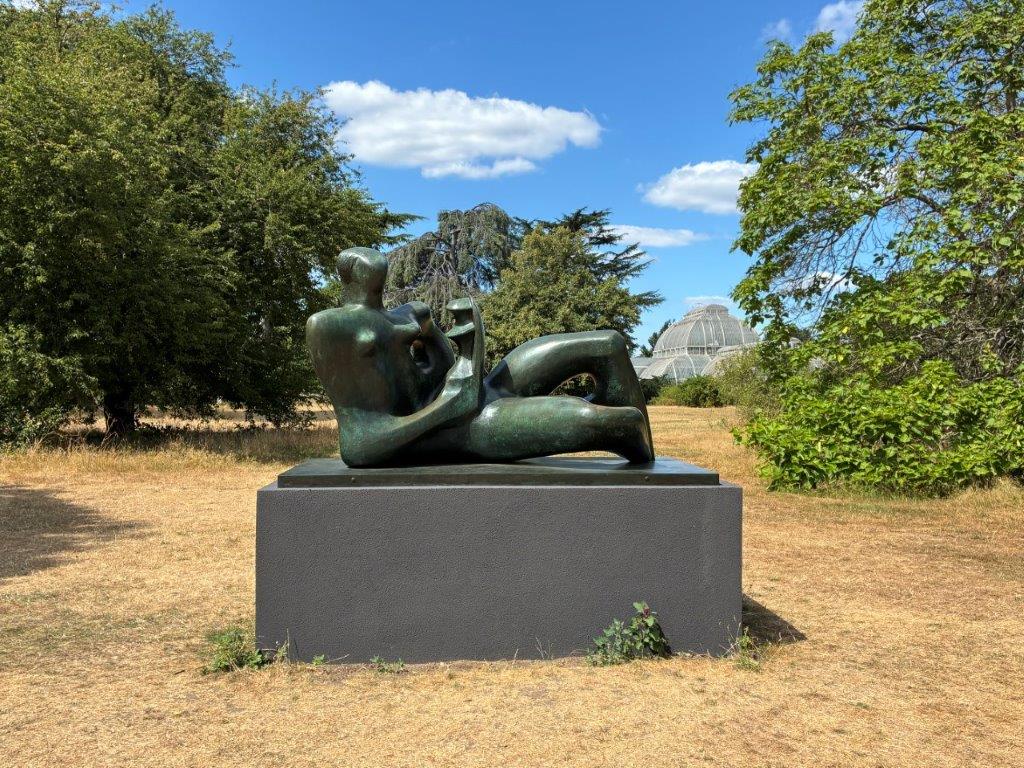
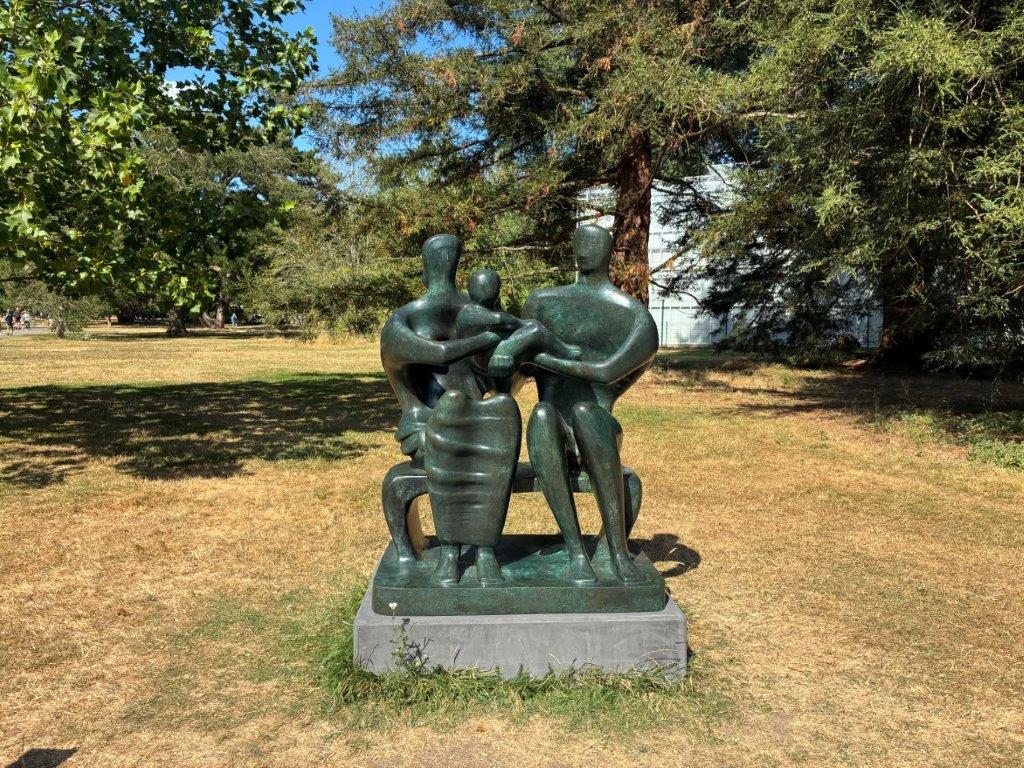
Henry Moore was actually close to his own mother, so the mother-child relationship was a theme that captivated him and regularly recurred in his work. One of his most famous sculptures, Reclining Mother and Child, is on display at Kew and brings together that fascination with another of his themes, reclining figures. I also really liked the Family Group piece, which explores beyond just a mother and child.
 As well as the pieces on display in the gardens, there is also an indoor element to the exhibition in Kew’s Shirley Sherwood Gallery of Botanical Art. It encompasses over 90 works including sculptures, drawings and the models for what became much larger pieces. The biggest piece on display here is Reclining Figure 1959-64, which differs from Henry Moore’s bronze work as he carved it directly from a massive single block of elmwood.

 The gallery is definitely worth visiting to understand more about the artist’s process. But you can’t beat seeing Henry Moore’s incredible artworks in nature. Double Oval is a classic one that looks different from different angles and frames varying views of the landscape. Oval with Points has a similar effect.


Whether you’re a particular fan of Henry Moore or not, it’s an exhibition that’s well worth making time for. Not least to see Kew Gardens in daylight. I go every year for Christmas at Kew but hadn’t been on a day visit for years. I’d forgotten how big and beautiful it is – the perfect setting for those big, beautiful sculptures!
 Henry Moore: Monumental Nature is running at Kew Gardens until 31 January 2027 and is free to view with entry to the gardens. Booking online is usually cheaper than paying on the gate.
For more reviews of theatre, art, exhibitions, comedy and music, check the Arts section of my blog.
Discover more from TRAVEL COCKTAIL
Subscribe to get the latest posts sent to your email.